2026 edition
Healthcare Marketing Playbook
A practical growth guide for healthcare teams that need stronger patient engagement, cleaner acquisition systems, and search visibility built for trust.

- Complete 50-page playbook
- Healthcare growth
- 3 chapters
A quick look inside
Read the complete playbook on email marketing, social media campaigns and medical SEO, plus a practical 90-day plan. Choose a topic to start reading.
Overview - 90-day operating system
For healthcare marketing managers and practice owners
Use this as a working reference for patient acquisition, list growth, and content planning — focused on what a marketing lead or practice owner can actually review before publishing: consent, copy clarity, patient context, and whether the tactic helps someone decide with more confidence.
The next 90 days turn that into an operating system. Start with one service line, one audience, and one measurable next step — the goal isn't to publish more, it's to make each campaign easier to trust, review, and improve.
Healthcare results behind this playbook


chapter 01
Patient engagement through email
chapter 1 - section 1
Boosting Patient Engagement with Email Marketing
Healthcare email should help patients, caregivers, or partners understand what to do next without turning every signup into a sales push. Before collecting addresses, decide whether the program is educational, promotional, or operational, then write the consent and follow-up path around that promise. The useful test is simple: subscribers should know exactly what they are opting into before they give you their email.
Brenton Way’s email marketing services cover signup journeys, segmentation, and follow-up campaigns. Use the methods here to brief the offer and the message that follows registration.
Collect Email Addresses
- Host events
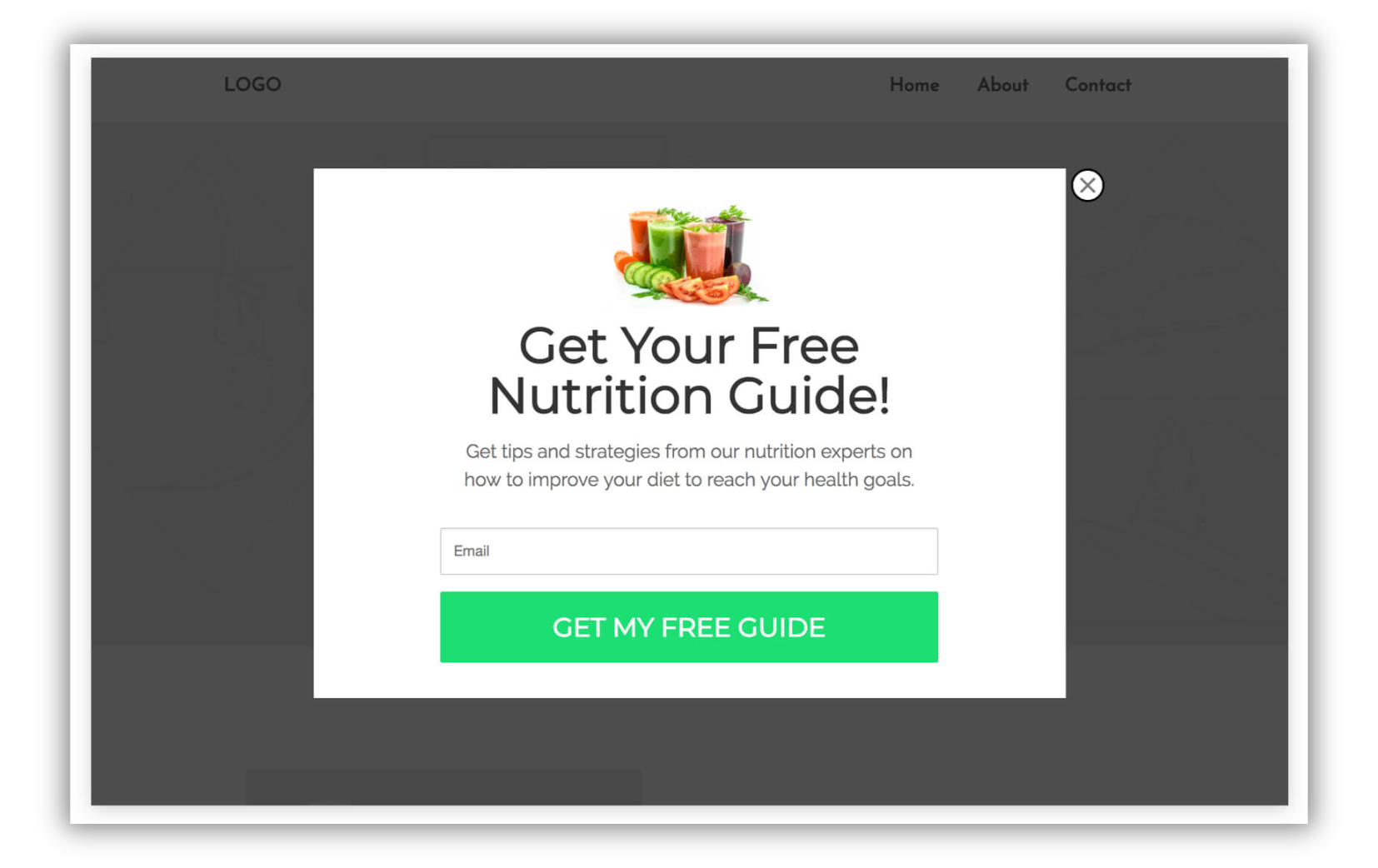
- Free ebook
- Gated content
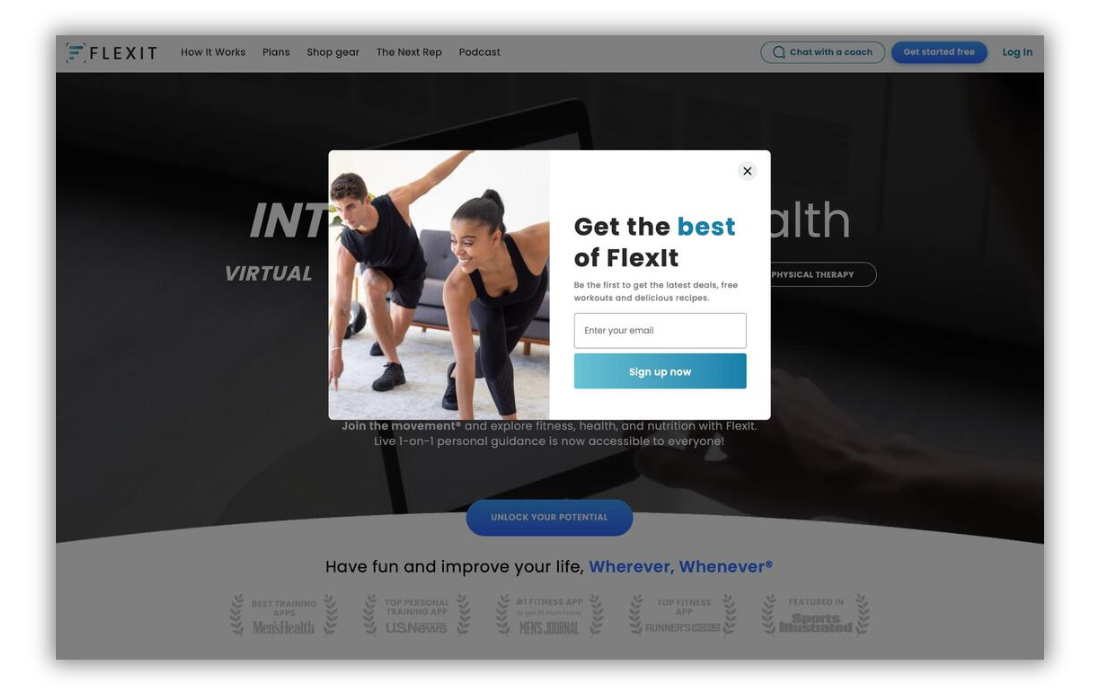
- Pop-up forms
- Free health quizzes
chapter 1 - section 2
Free ebook
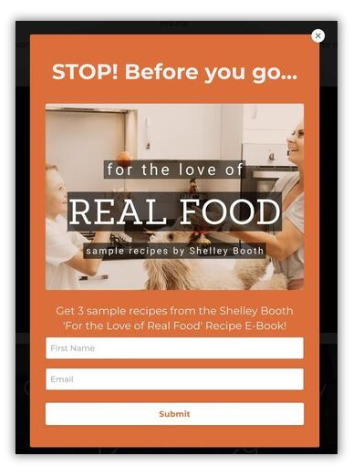
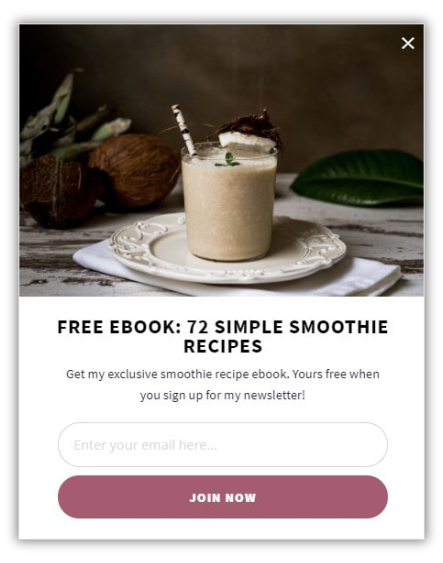
A healthcare ebook should earn the email address by answering a specific patient question. Keep the topic focused enough to attract the right audience, but avoid making it feel like diagnosis or treatment advice. The page should make the download, the email follow-up, and the next step clear before the form asks for contact information.
Our content marketing services cover planning and production for guides, articles, and campaign content. Start with the question the resource needs to answer.
chapter 1 - section 3
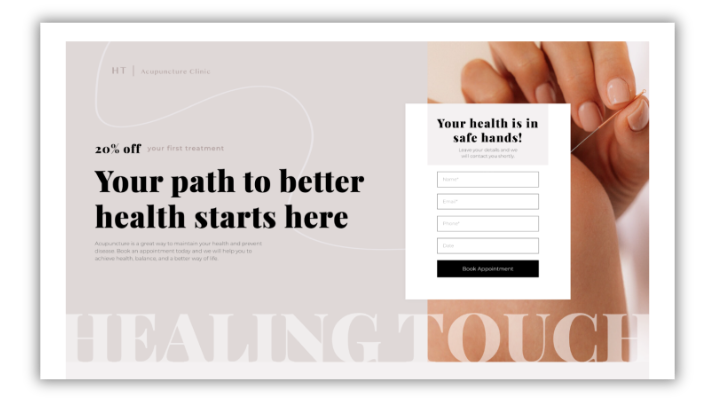
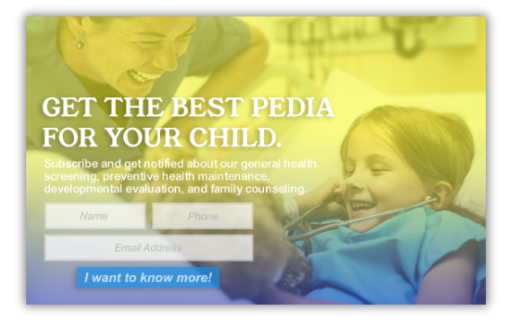
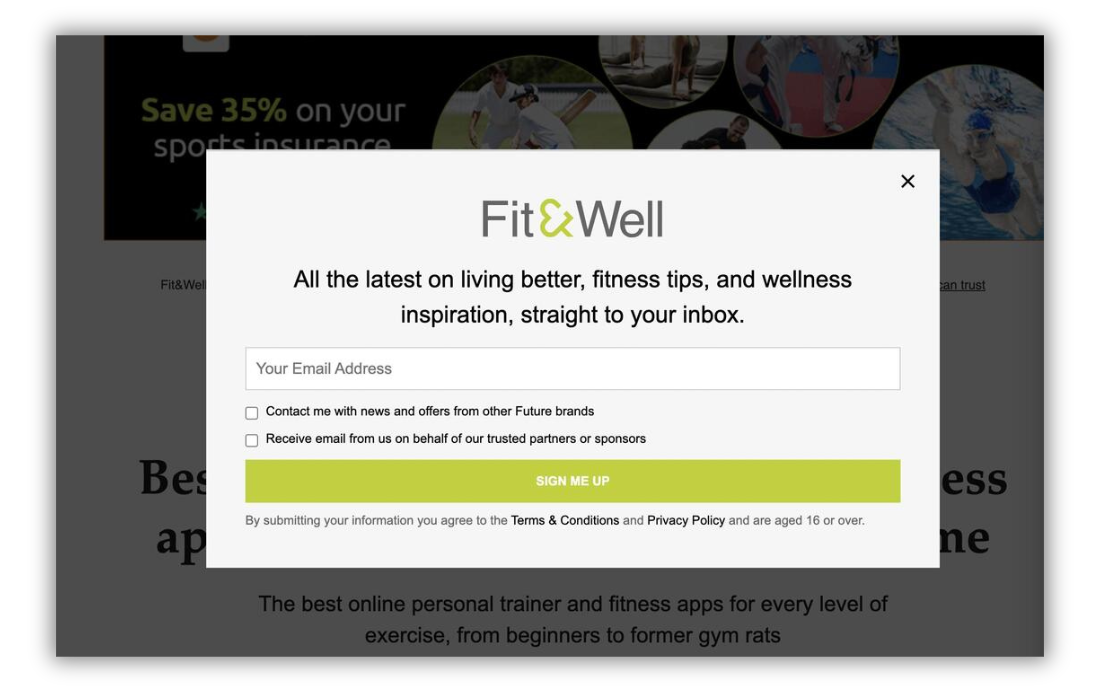
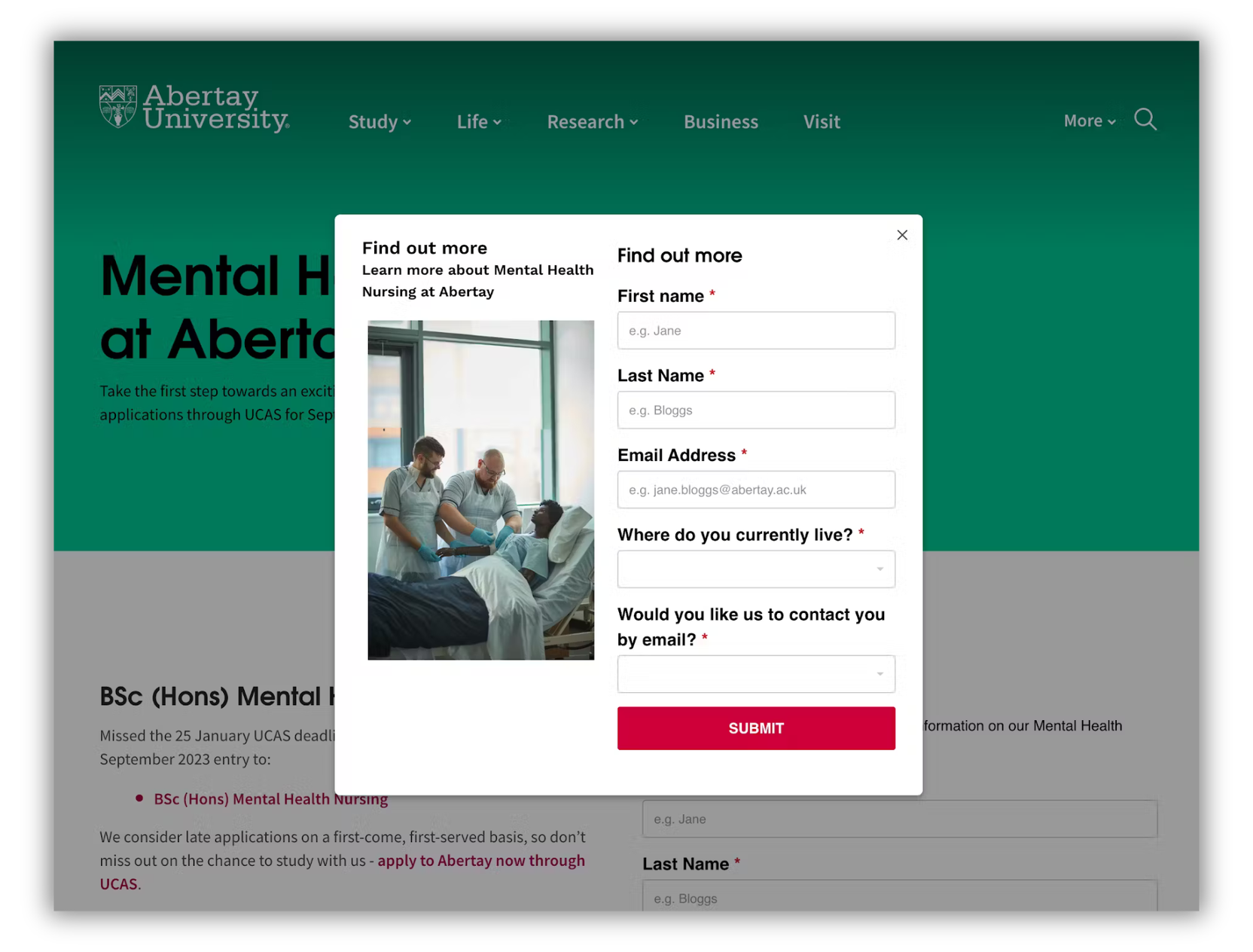
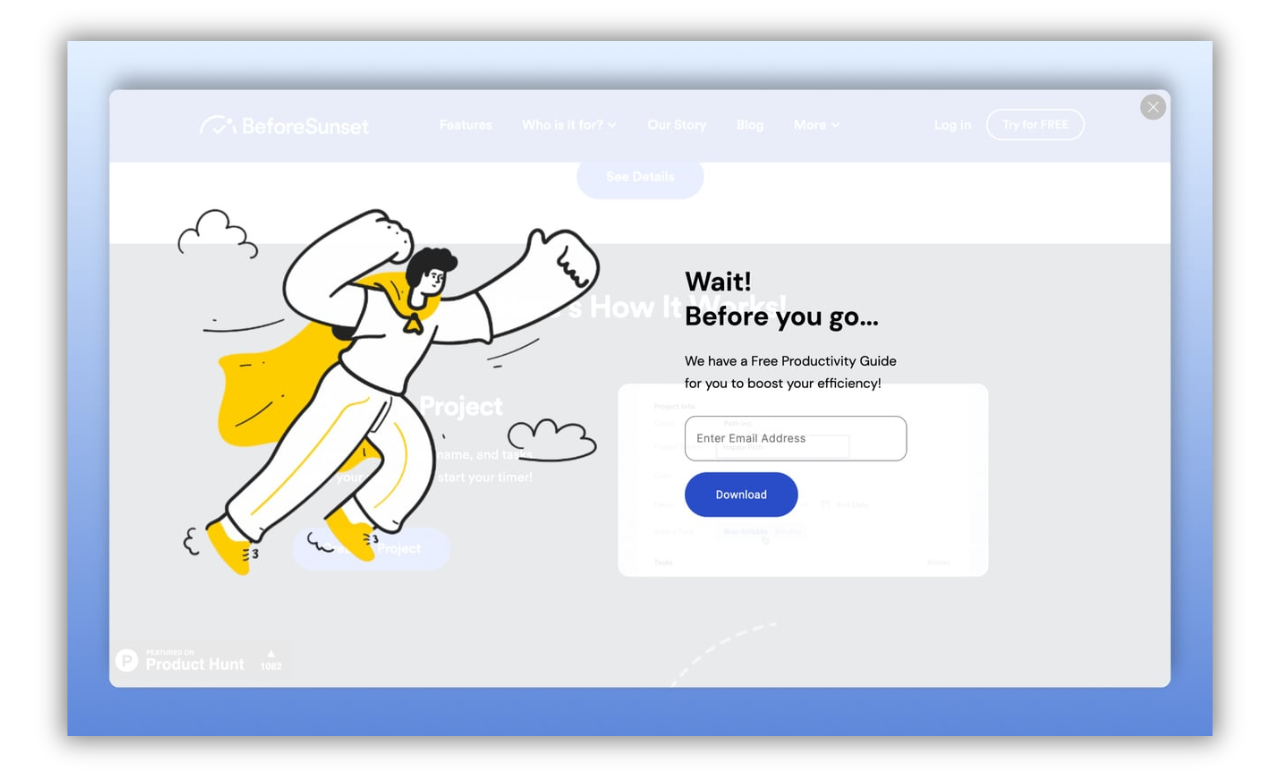
Pop-up forms
Use pop-up forms for low-risk education offers, such as health tips, newsletters, or downloadable guides. Do not use them as casual condition screeners. If a form could reveal symptoms, diagnosis, treatment intent, or medication interest, it needs a tighter privacy and compliance review before launch.
chapter 1 - section 4
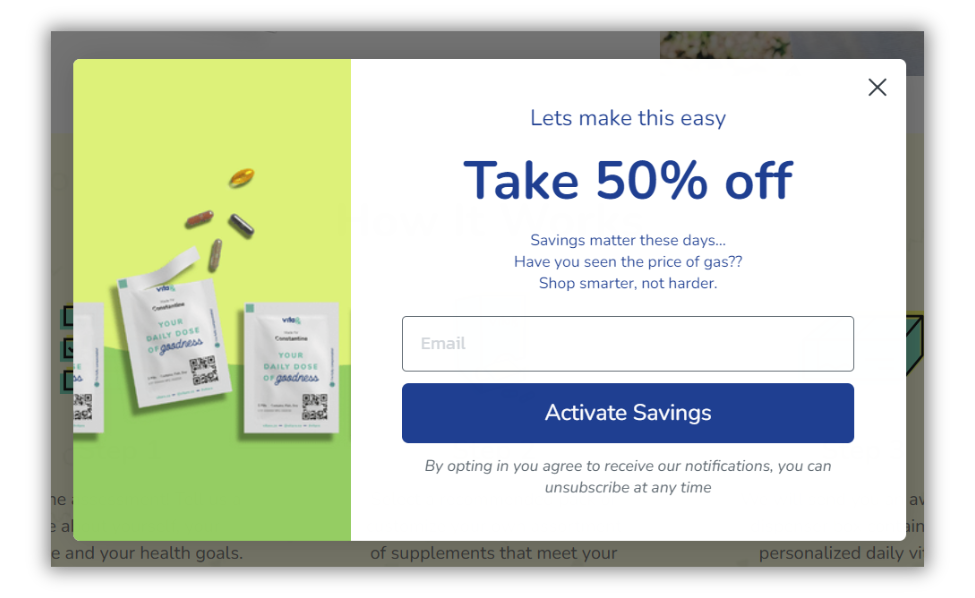
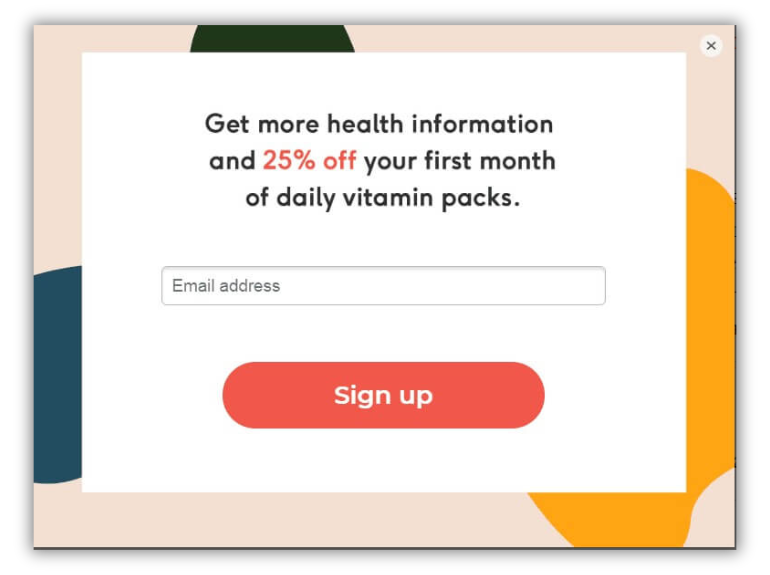
Pop-up copy that converts
Write pop-up copy that names the value, not the pressure.
"Get the recovery checklist" is stronger than vague urgency because it tells a patient or caregiver why the interruption is worth it.
chapter 1 - section 5
Host events
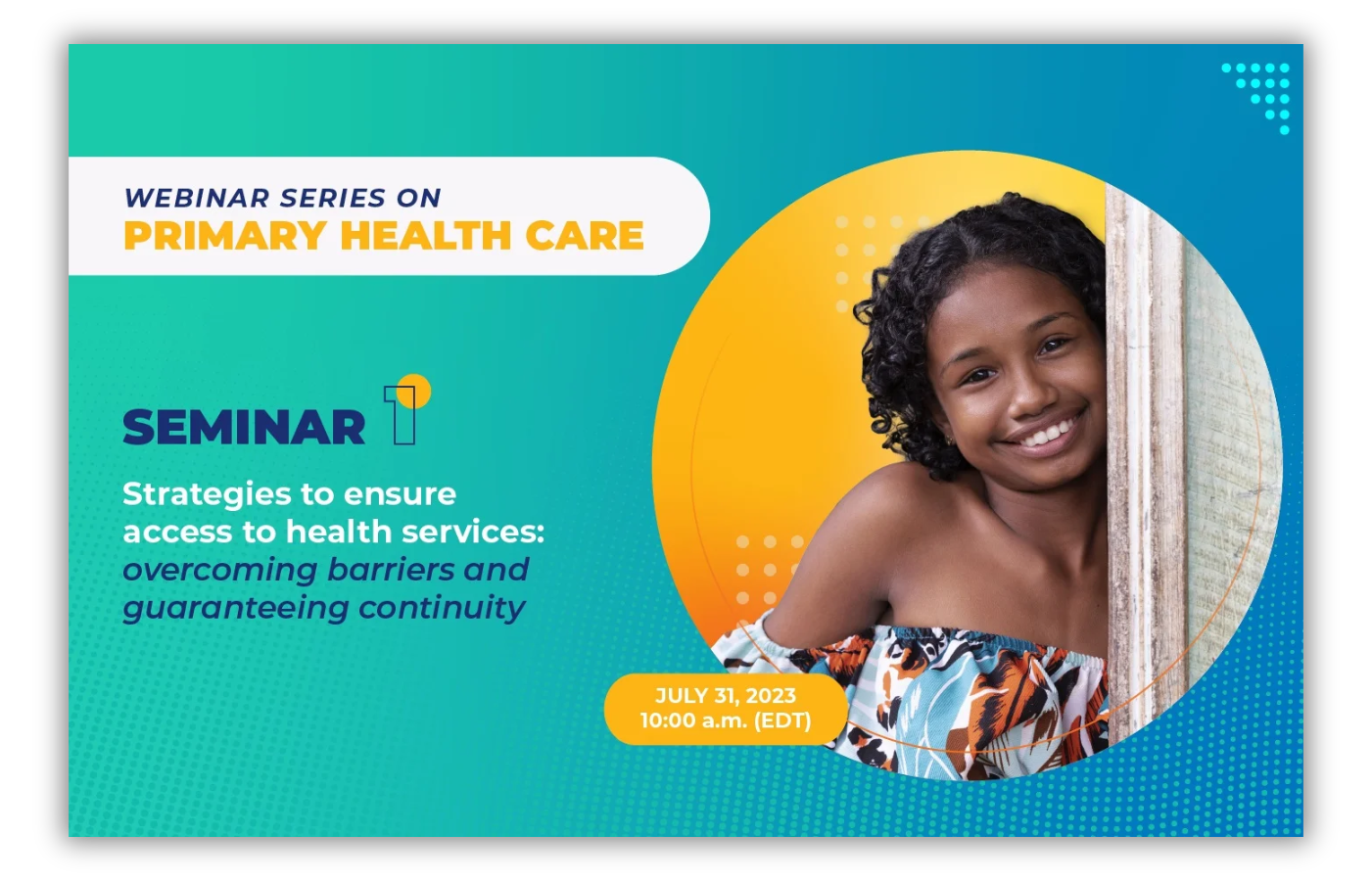
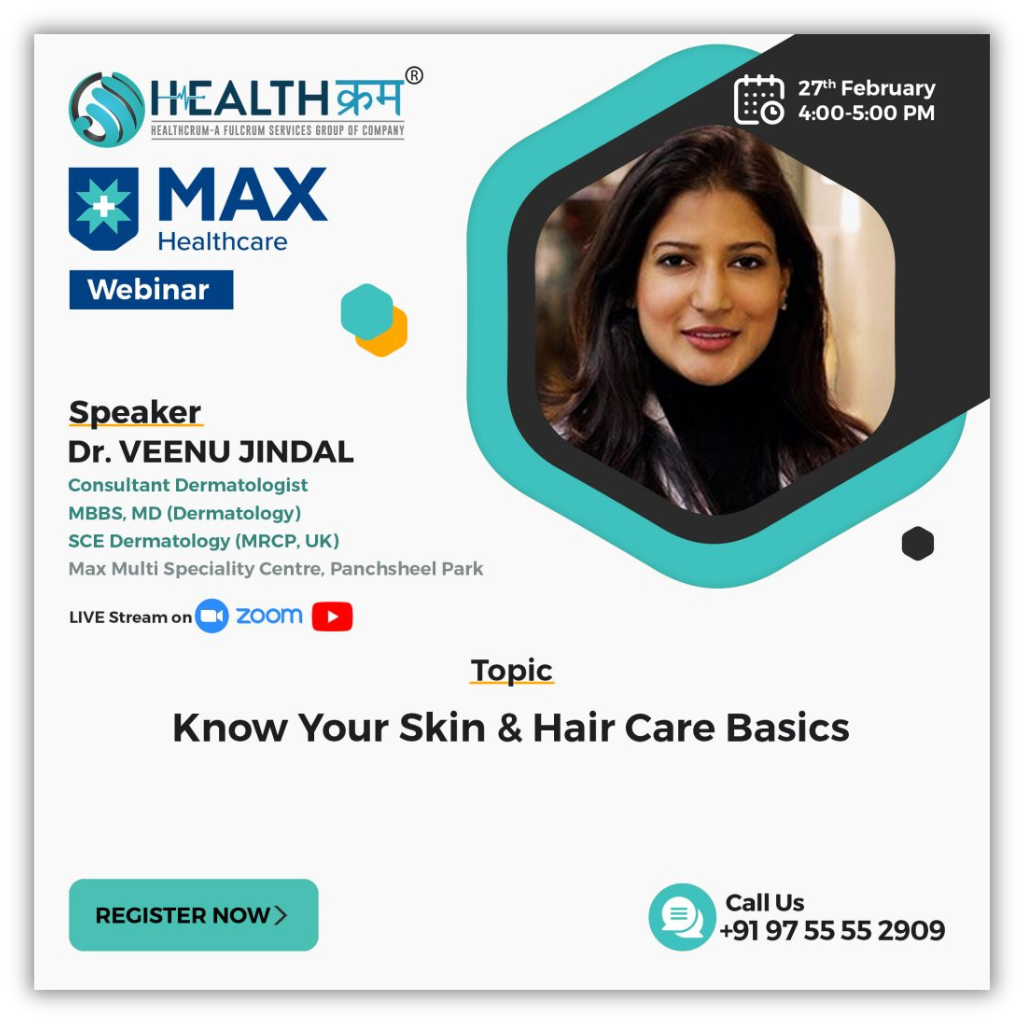
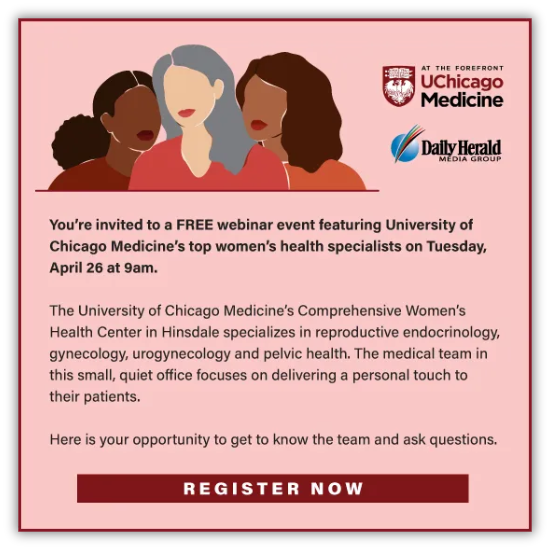
Registration-based workshops work best when the topic is narrow enough that signup intent is meaningful. A "Women's Health Webinar" should map to a next step, such as a consultation page, downloadable checklist, or practice-specific FAQ. If the event does not have a clear follow-up path, the registration list becomes another disconnected email segment.
chapter 1 - section 6
Host event creative
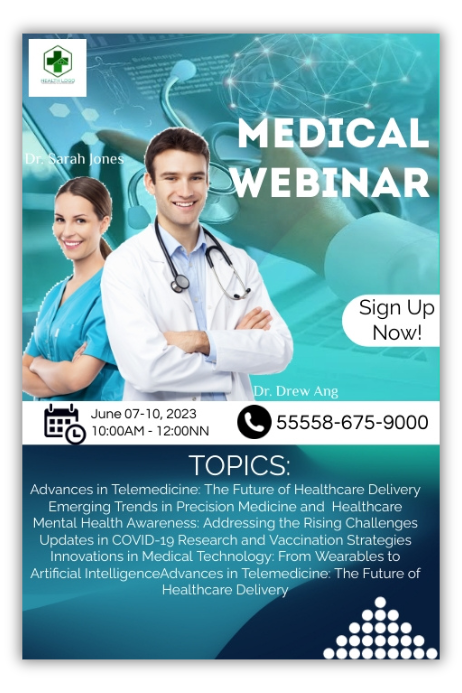
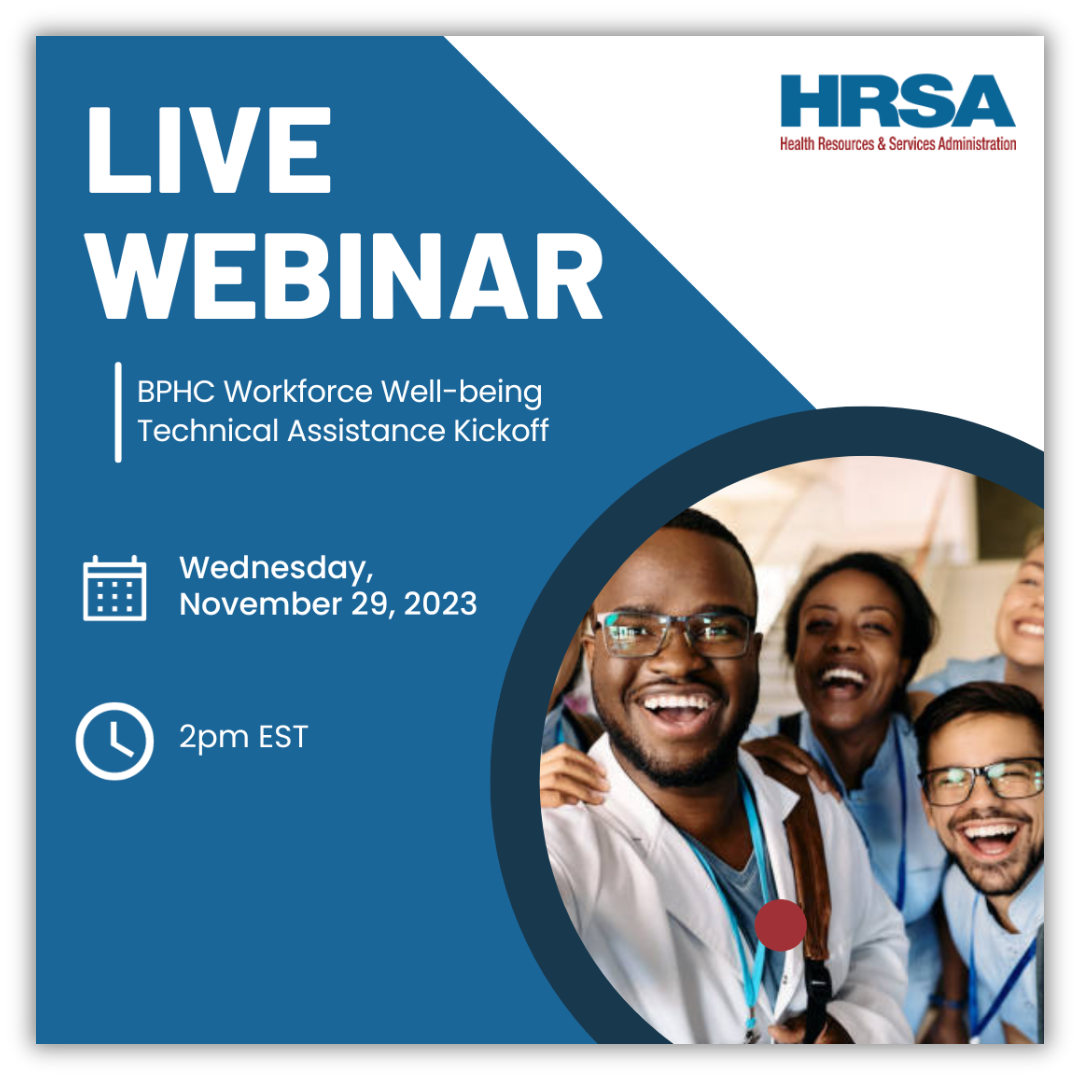
Webinar creative should name the audience and outcome in plain language. Avoid overpromising clinical results; promise clarity, preparation, or next-step education instead.

chapter 1 - section 7
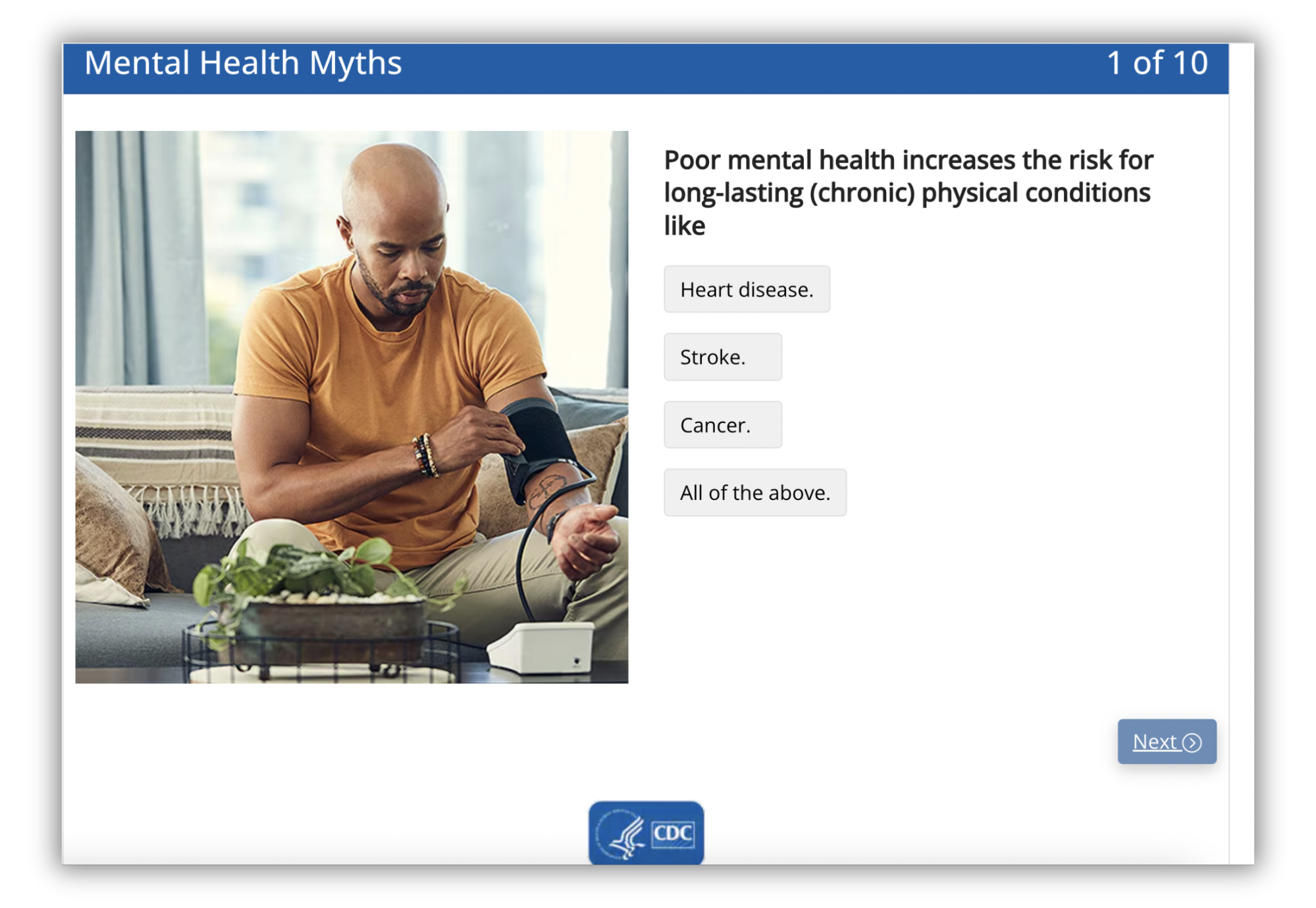
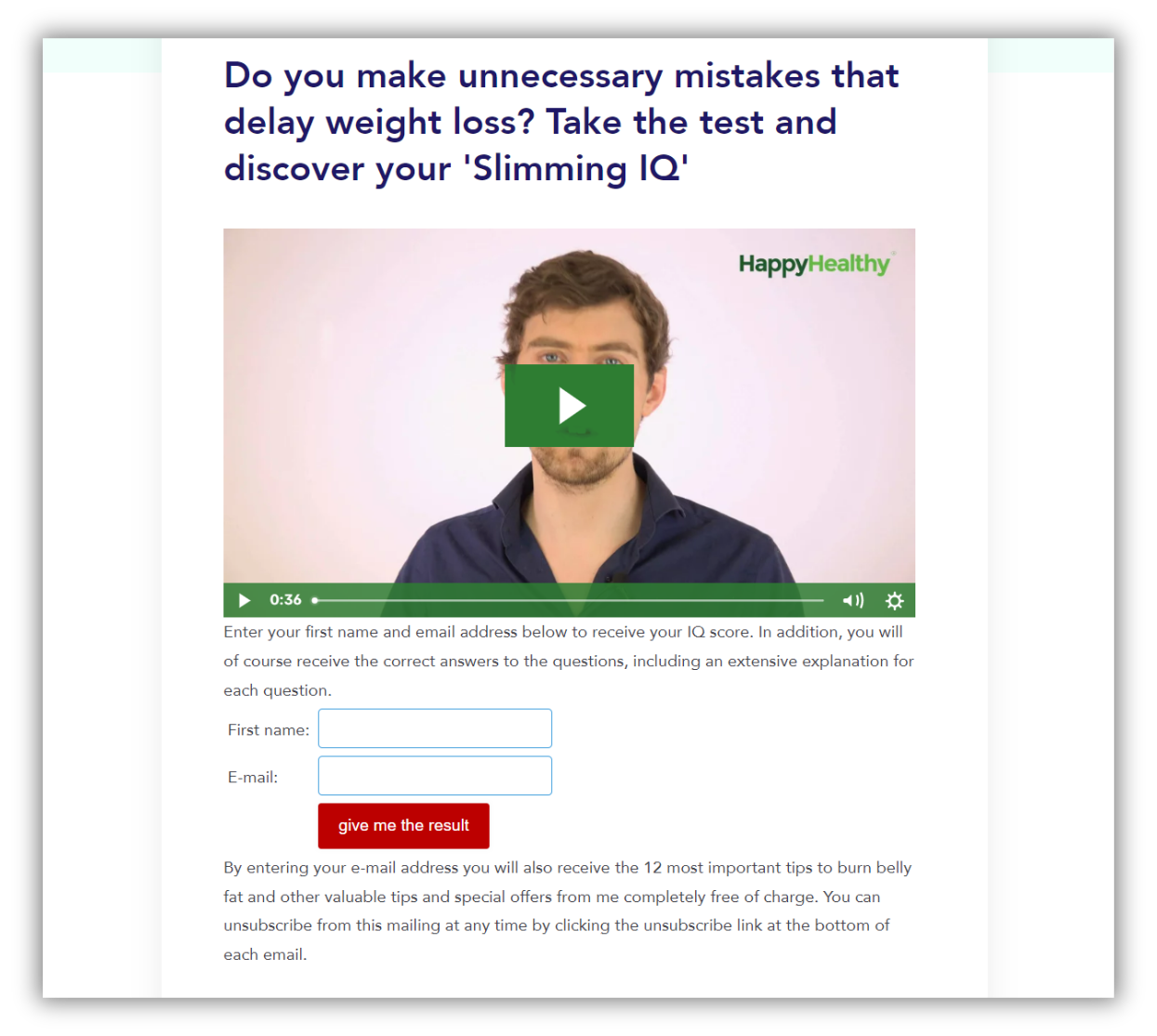
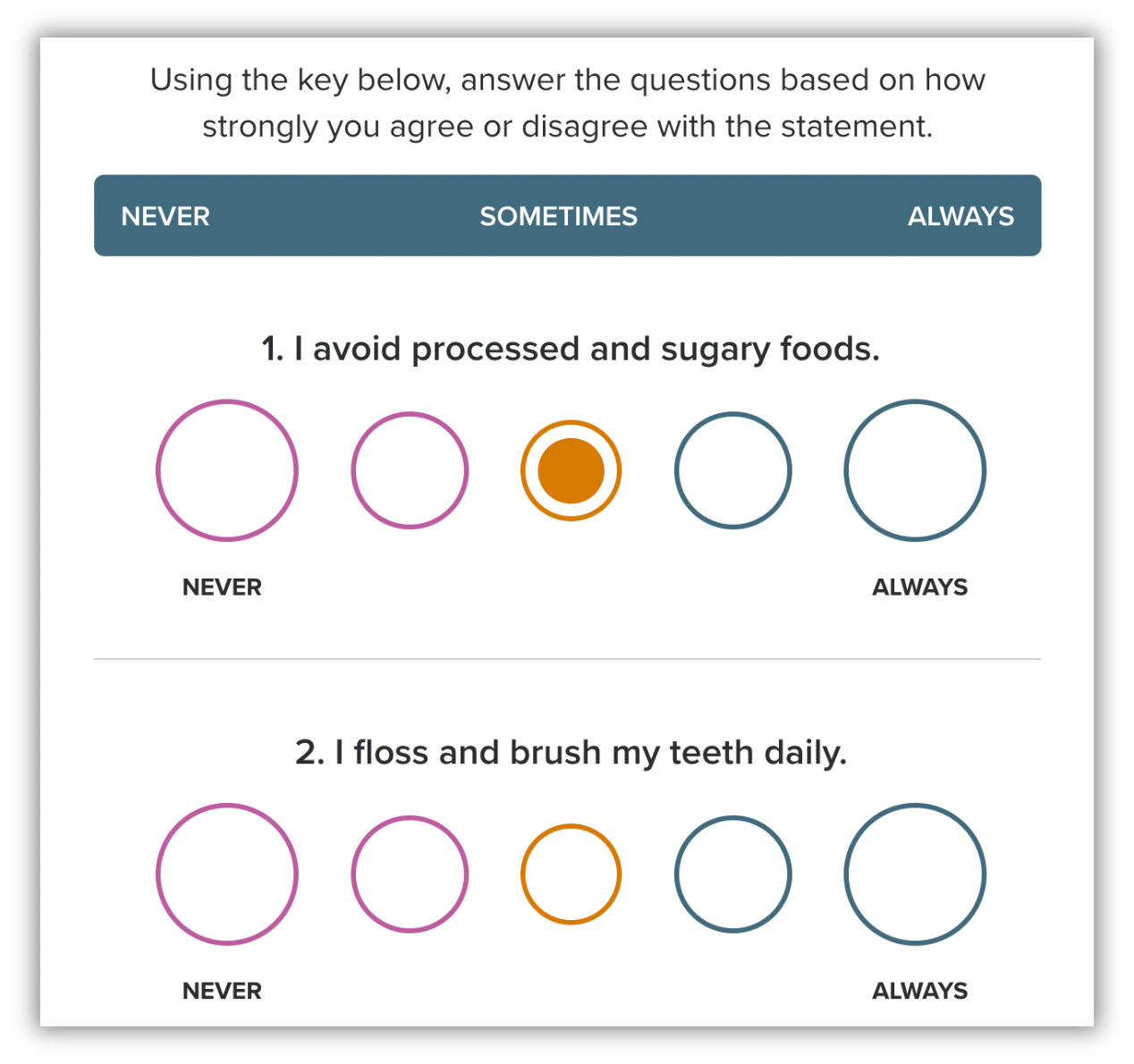
Free health quizzes
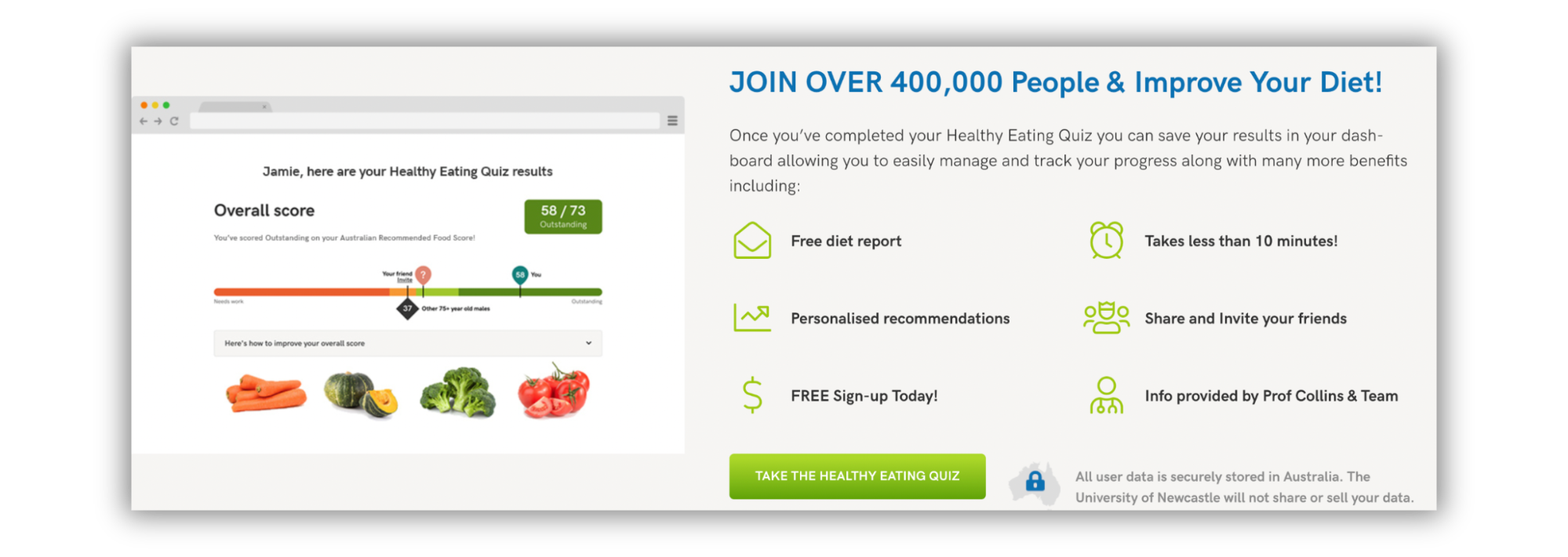
Health quizzes should be educational self-assessments, not diagnostic tools. If email registration is required to receive results, keep the result language careful and point readers toward a professional next step when the topic is clinical.

chapter 1 - section 8
Quiz privacy and follow-up
If the quiz asks sensitive questions, do not treat the answers like ordinary marketing attributes. Minimize fields, explain what will happen next, and keep retargeting audiences away from sensitive responses.
chapter 1 - section 9
Gated content
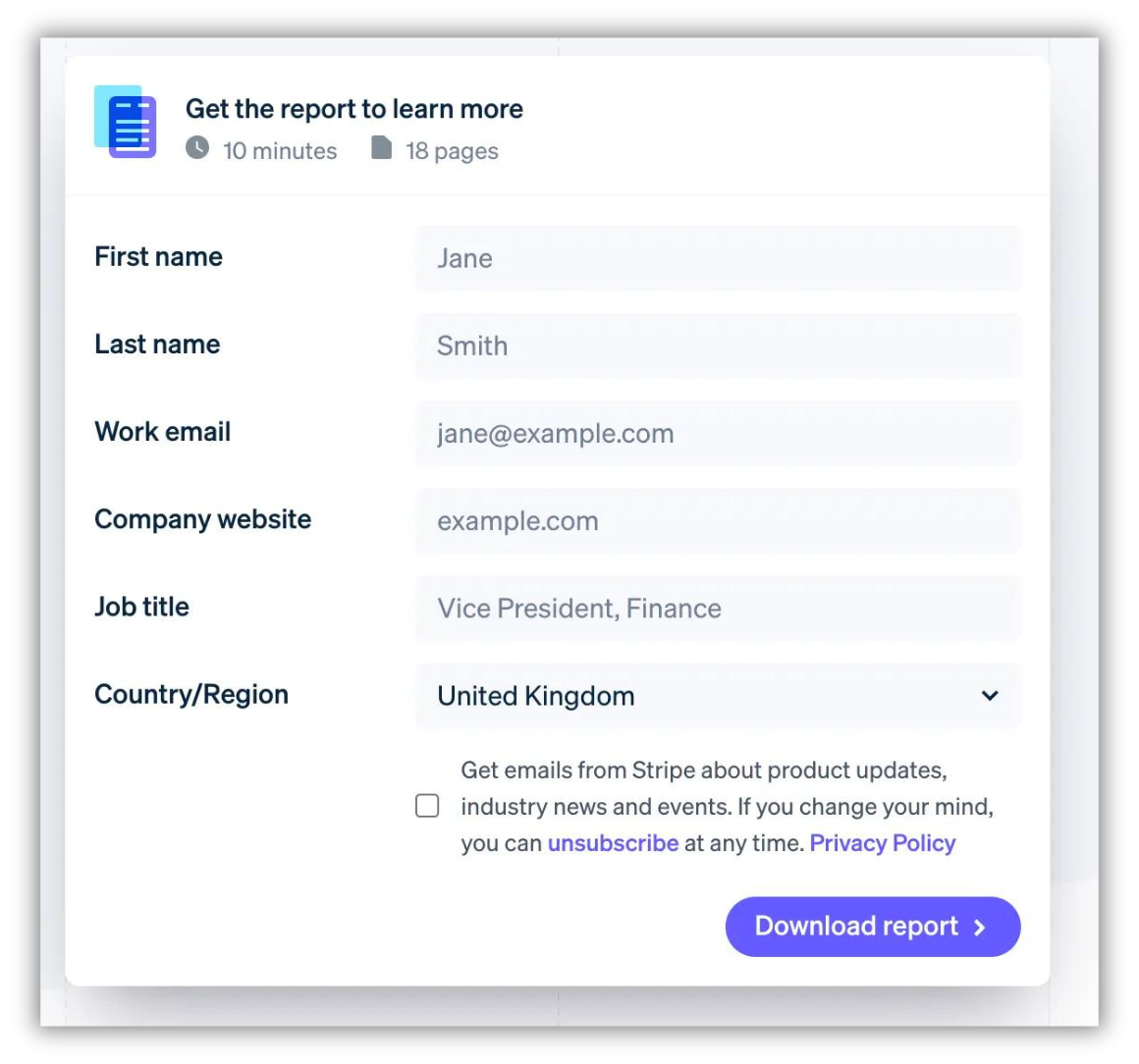
Gate templates, checklists, or deeper planning tools after the public page has already answered the core patient question. Do not gate the information someone needs to trust the practice. The public content should create clarity; the gated asset should help the reader act on that clarity.

chapter 1 - section 10
CTAs
Match the CTA to the patient's readiness. Use educational CTAs for early research, appointment CTAs for high-intent service pages, and consultation CTAs only when the offer is actually consultative. Review the conversion path through the form and confirmation page, then compare campaign costs with completed bookings using the patient acquisition cost calculator .
| CTA | Use case |
|---|---|
| Join Our Newsletter | Use this for low-risk education programs where readers expect ongoing tips, reminders, or practice updates. |
| Sign Me Up | Use this when the offer is simple and the page has already explained what the subscriber will receive. |
| Save 20% Now | Use incentives only when the offer is compliant, accurate, and appropriate for the service category. |
| Join 3,000+ Subscribers | Use social proof only when the number is current and the audience description is specific enough to be credible. |
| Send My Free Welcome Kit | Use this for patient onboarding, wellness, or service-introduction resources with a clear next step. |
| Get Monthly Care Tips | Use benefit-led language when the reader needs to understand the value before sharing an email address. |
| Get Your Free Guide | Use this for downloadable education assets after the public page has answered the core patient question. |
Join Our Newsletter
Use this for low-risk education programs where readers expect ongoing tips, reminders, or practice updates.
Sign Me Up
Use this when the offer is simple and the page has already explained what the subscriber will receive.
Save 20% Now
Use incentives only when the offer is compliant, accurate, and appropriate for the service category.
Join 3,000+ Subscribers
Use social proof only when the number is current and the audience description is specific enough to be credible.
Send My Free Welcome Kit
Use this for patient onboarding, wellness, or service-introduction resources with a clear next step.
Get Monthly Care Tips
Use benefit-led language when the reader needs to understand the value before sharing an email address.
Get Your Free Guide
Use this for downloadable education assets after the public page has answered the core patient question.
chapter 1 - section 11
CTAs that build trust
Avoid urgency unless it is real. Healthcare CTAs should reduce uncertainty, not pressure the reader. "See if this treatment is right for you" usually earns more trust than aggressive countdown language.
| CTA | Use case |
|---|---|
| Download Your Report | Use this when the report is educational or planning-oriented, not when it could be mistaken for diagnosis. |
| Schedule Your Appointment | Use this on high-intent service pages where the visitor understands the provider, service, and next step. |
| Get Your Checklist | Use this for preparation, eligibility, or planning content that helps a patient organize the next decision. |
| Schedule a Free Strategy Session | Use consultation language for B2B healthcare, practice growth, or partner conversations rather than patient care decisions. |
| Get Started | Use this only when the page immediately explains what starts next: form review, call booking, intake, or download. |
| See If This Is Right For You | Use softer language when the decision is sensitive and trust matters more than speed. |
Download Your Report
Use this when the report is educational or planning-oriented, not when it could be mistaken for diagnosis.
Schedule Your Appointment
Use this on high-intent service pages where the visitor understands the provider, service, and next step.
Get Your Checklist
Use this for preparation, eligibility, or planning content that helps a patient organize the next decision.
Schedule a Free Strategy Session
Use consultation language for B2B healthcare, practice growth, or partner conversations rather than patient care decisions.
Get Started
Use this only when the page immediately explains what starts next: form review, call booking, intake, or download.
See If This Is Right For You
Use softer language when the decision is sensitive and trust matters more than speed.
chapter 1 - section 12
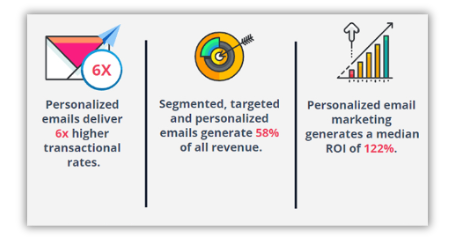
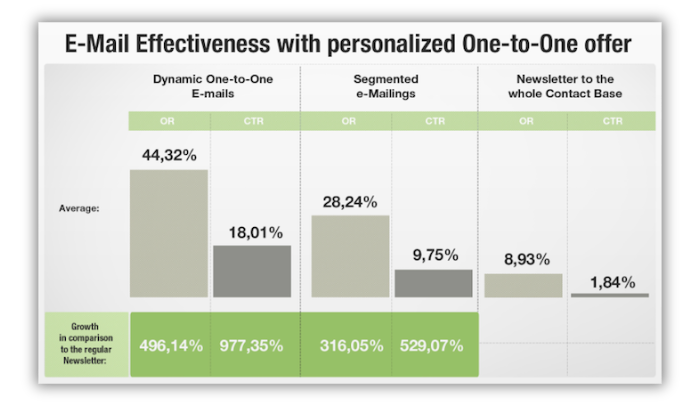
Personalize Email Content Based On Patient Demographics
Personalize healthcare email around consented preferences, service-line interest, and lifecycle moments, not sensitive assumptions. A safe segment might be "downloaded the recovery guide"; a risky segment might imply a diagnosis, medication use, or private health concern.
- Segment by consented preferences, service-line interest, and lifecycle stage.
- Keep protected health information out of marketing attributes unless counsel has approved the use case.
- Measure personalization by booked consults, qualified inquiries, and unsubscribe/spam complaint movement.
chapter 1 - section 13
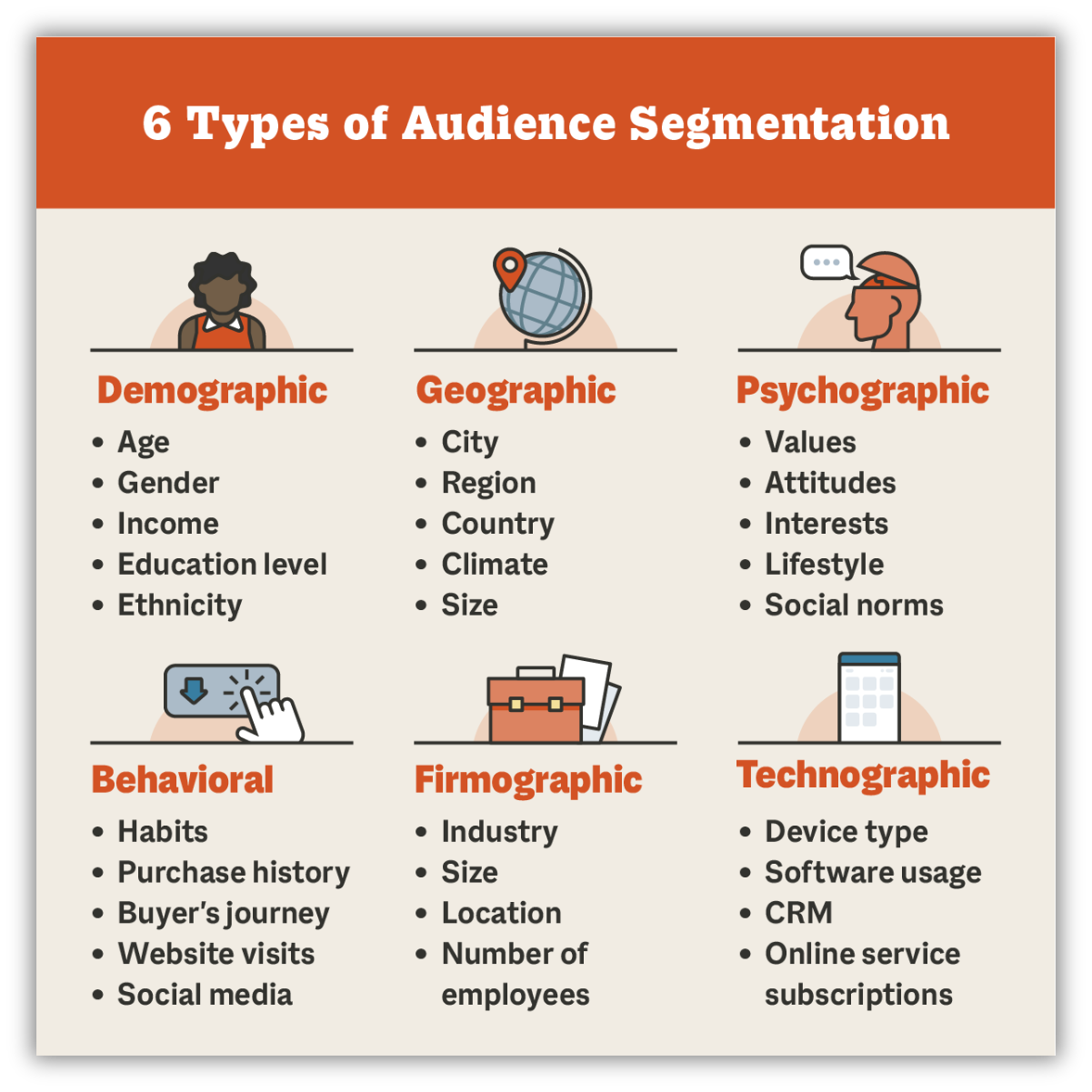
Use audience segmentation for personalized emails
Segment audiences around real service-line economics and patient needs, then use content behavior to guide the next message. A useful segment should point to a responsible action: a more relevant guide, a service-line FAQ, a consult path, or a nurture sequence with clear expectations.
The SmileSet email reactivation case study provides a related example of audience follow-up. Review the audience and campaign context before adapting the approach.
chapter 1 - section 14
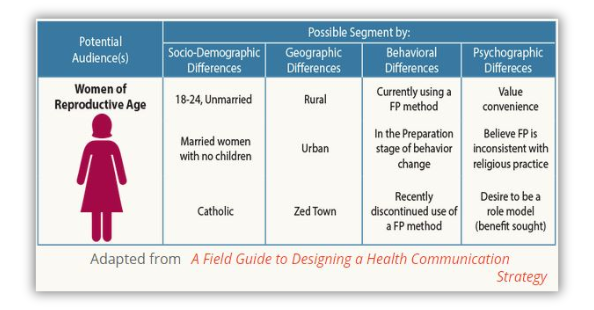
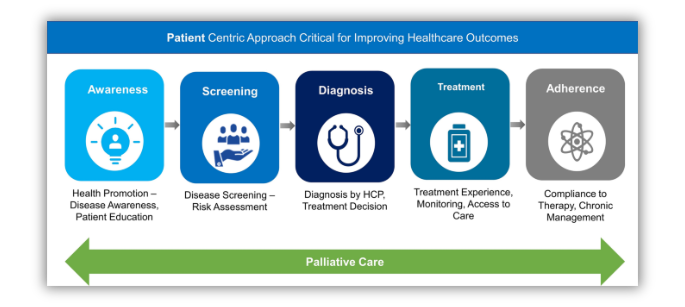
Use audience segmentation for personalized emails.
Step 1:
| Segmentation | Description |
|---|---|
| Condition Segmentation | Segment subscribers based on specific medical conditions they are interested in or affected by. |
| Local Segmentation | Divide by location to provide localized healthcare information or services. |
| Interest Segmentation | Segment by healthcare interests, such as fitness, nutrition, mental health, or preventive care. |
| Provider Interactions | Segment based on interactions with healthcare providers or specific medical specialties. |
| Treatment Phase | Divide based on where patients are in their treatment journey, such as diagnosis, treatment, or post-treatment follow-up. |
| Age Segmentation | Segment by age or life stage to tailor content relevant to different age groups or life events, such as pediatric care, geriatric care, or family planning. |
- Segmentation
- Condition Segmentation
- Description
- Segment subscribers based on specific medical conditions they are interested in or affected by.
- Segmentation
- Local Segmentation
- Description
- Divide by location to provide localized healthcare information or services.
- Segmentation
- Interest Segmentation
- Description
- Segment by healthcare interests, such as fitness, nutrition, mental health, or preventive care.
- Segmentation
- Provider Interactions
- Description
- Segment based on interactions with healthcare providers or specific medical specialties.
- Segmentation
- Treatment Phase
- Description
- Divide based on where patients are in their treatment journey, such as diagnosis, treatment, or post-treatment follow-up.
- Segmentation
- Age Segmentation
- Description
- Segment by age or life stage to tailor content relevant to different age groups or life events, such as pediatric care, geriatric care, or family planning.
chapter 1 - section 15
Send welcome emails.
Step 2:
Here’s why you should personalize email content based on the patient demographic:

chapter 1 - section 16
Send welcome emails.
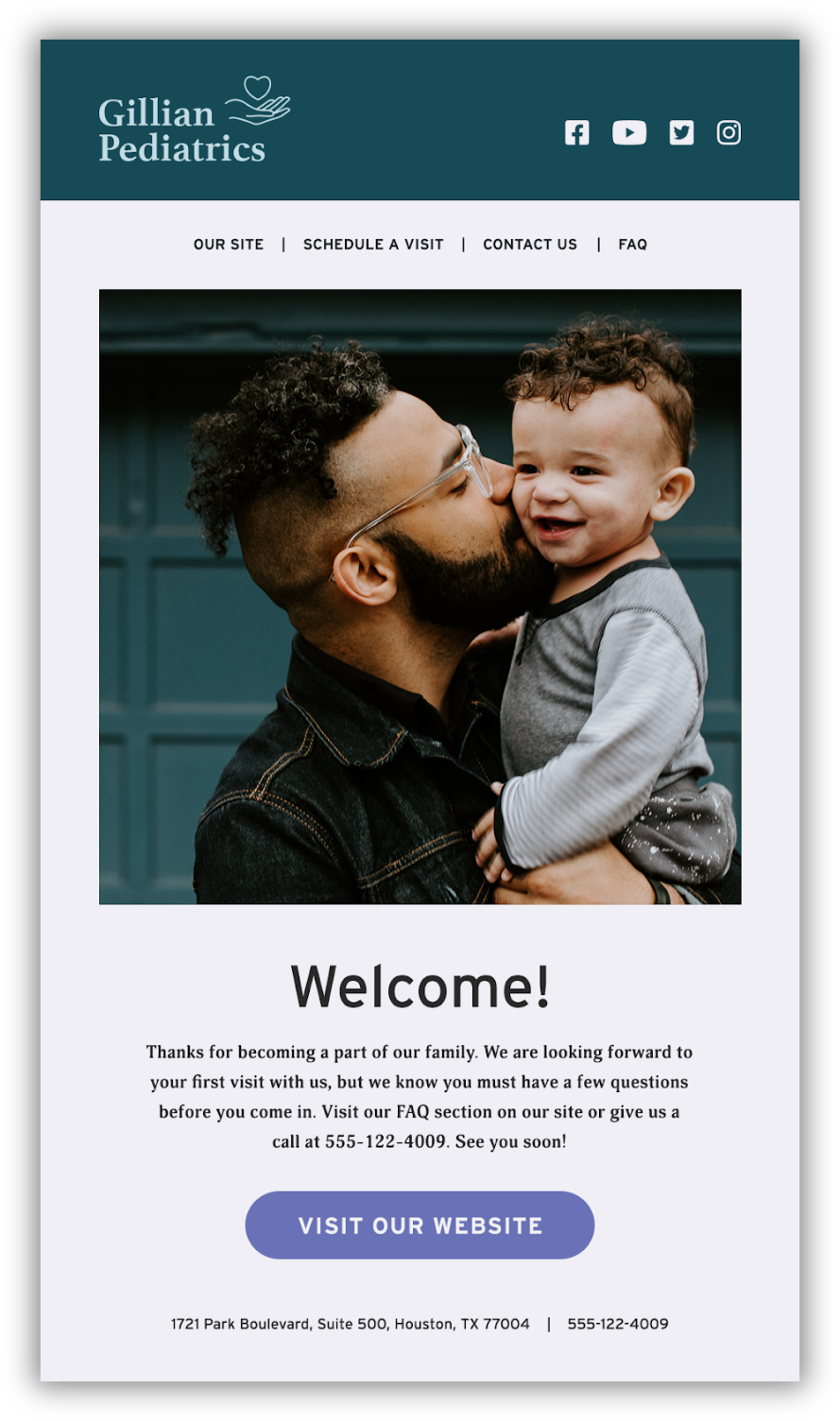
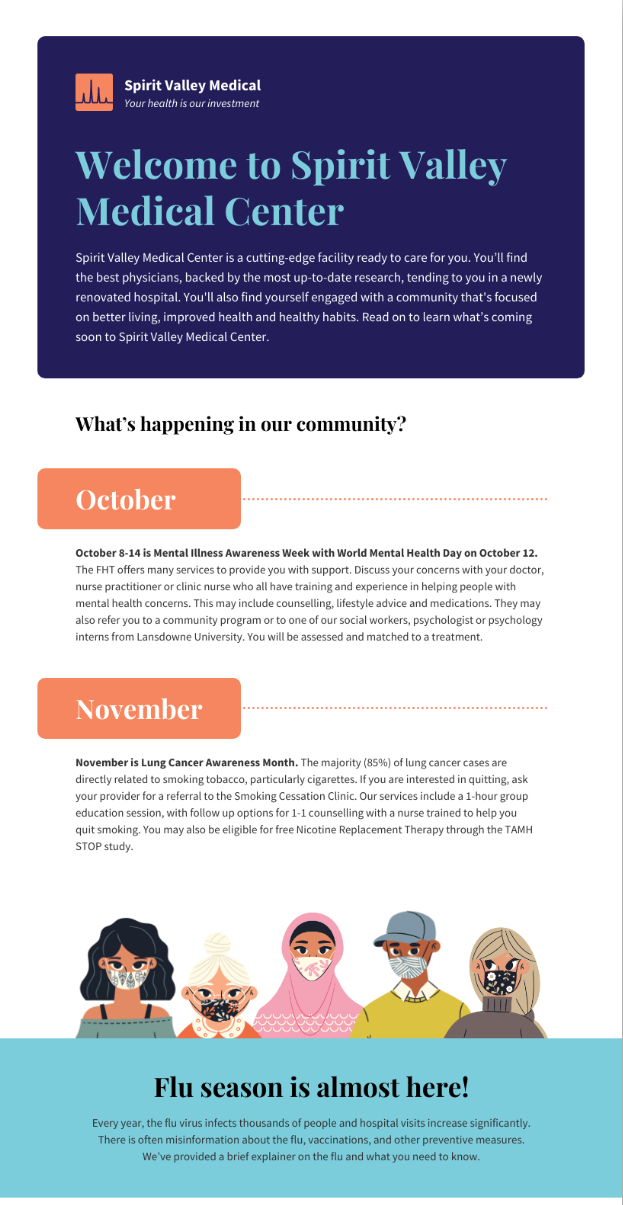
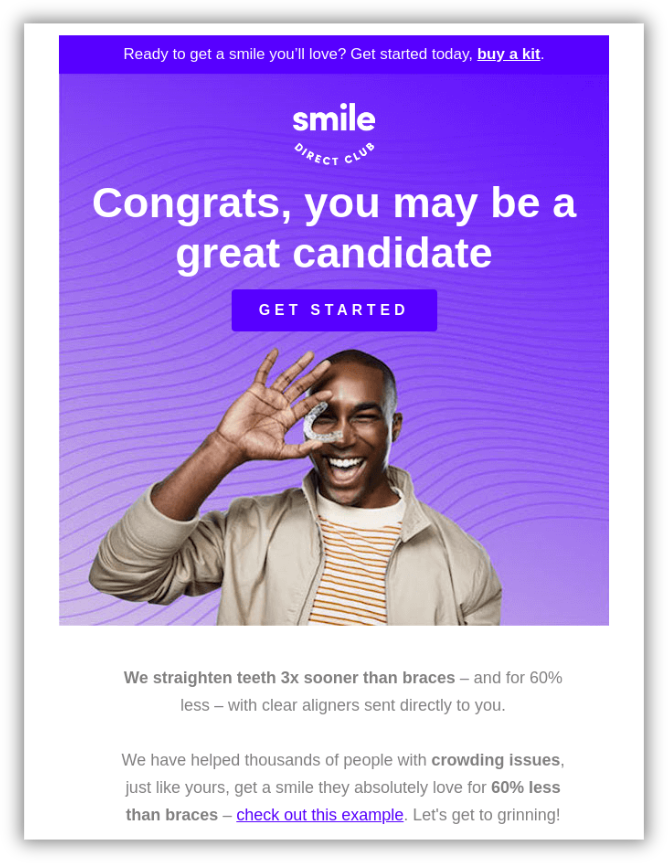
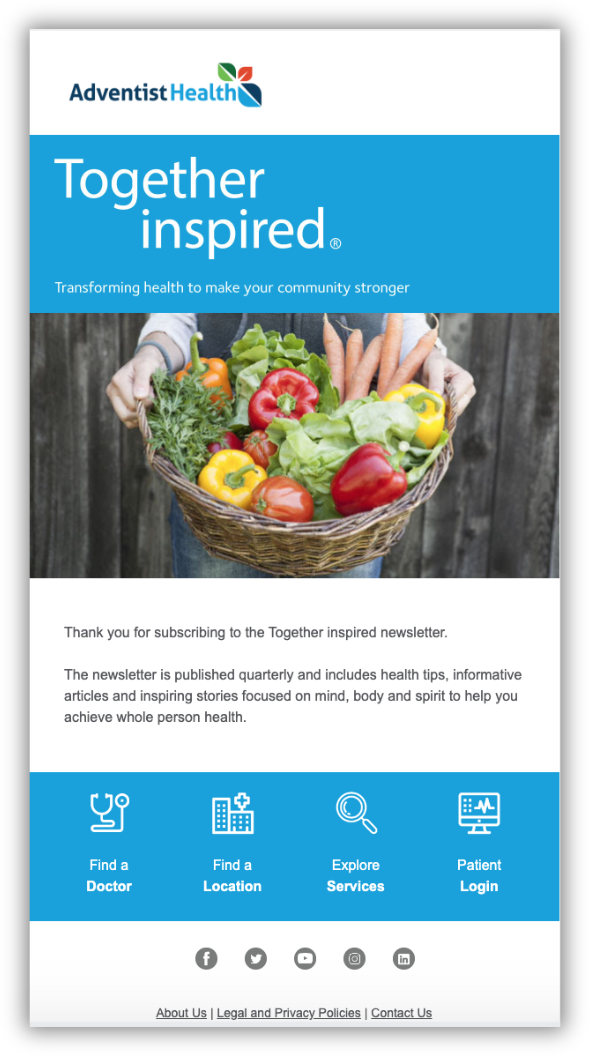
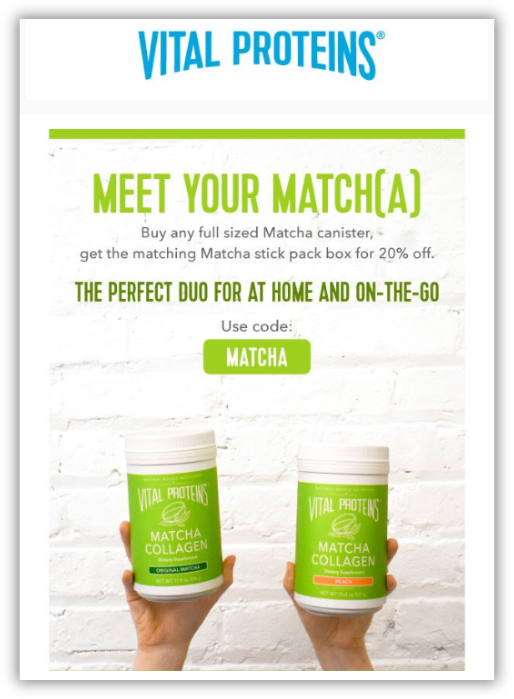
Step 2: Give new subscribers a clear next step. Adventist Health explains what its newsletter includes and offers links to services, while Smile leads with a prominent “Get started” button. Use your welcome email to set expectations and make the next action easy to find.
chapter 1 - section 17
Address specific patient needs or interests
Step 3:
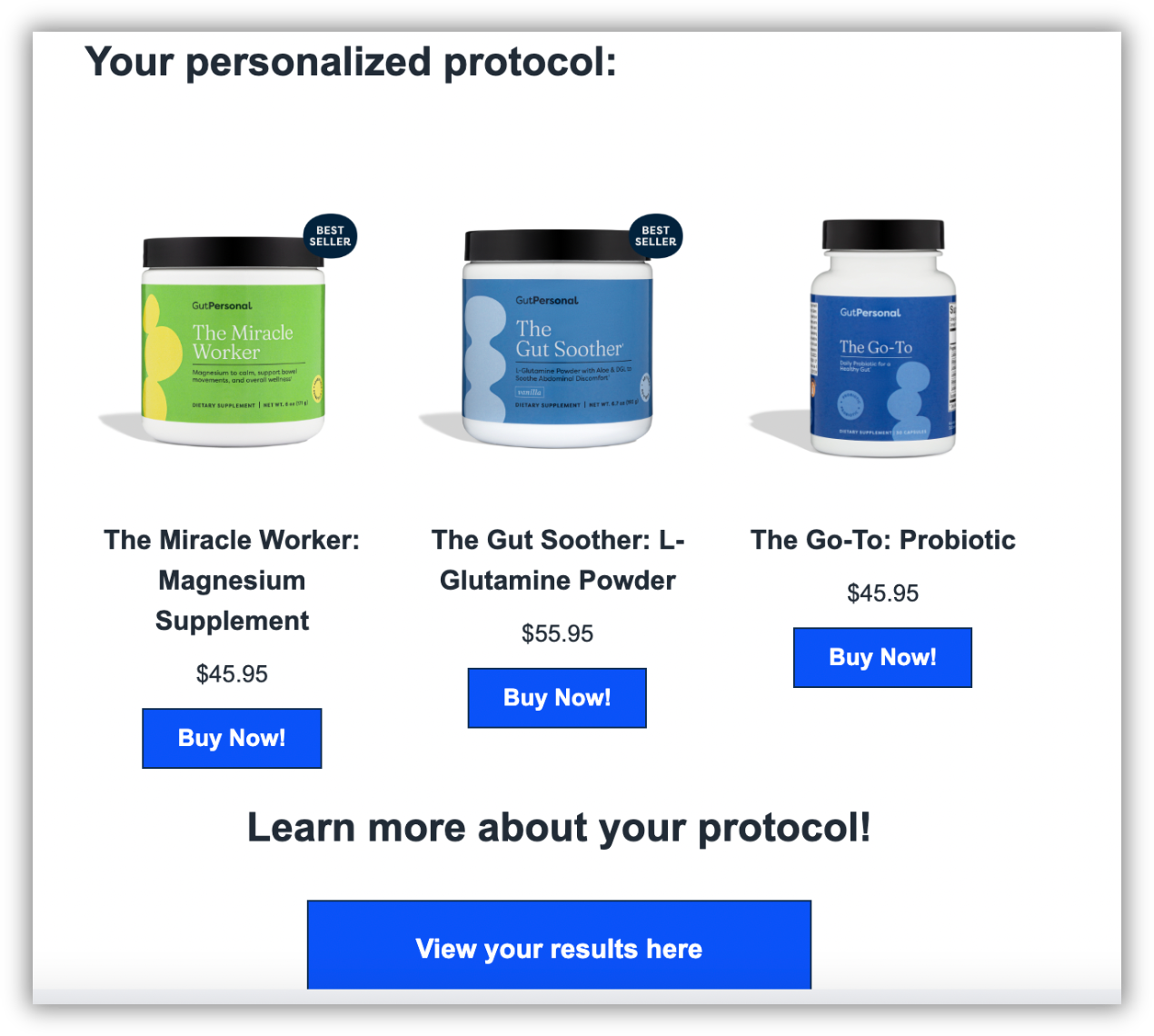
Gutpersonal shares personalized products based on a patient's exact needs and also offers discounts:

chapter 1 - section 18
Bypass Spam Filters
- Avoid spam-triggering phrases
- Design Neat HTML
- Build an organic subscriber base.
- Verify your identity to inbox providers.
chapter 1 - section 19
Set a Consistent Email Schedule to Maintain Engagement
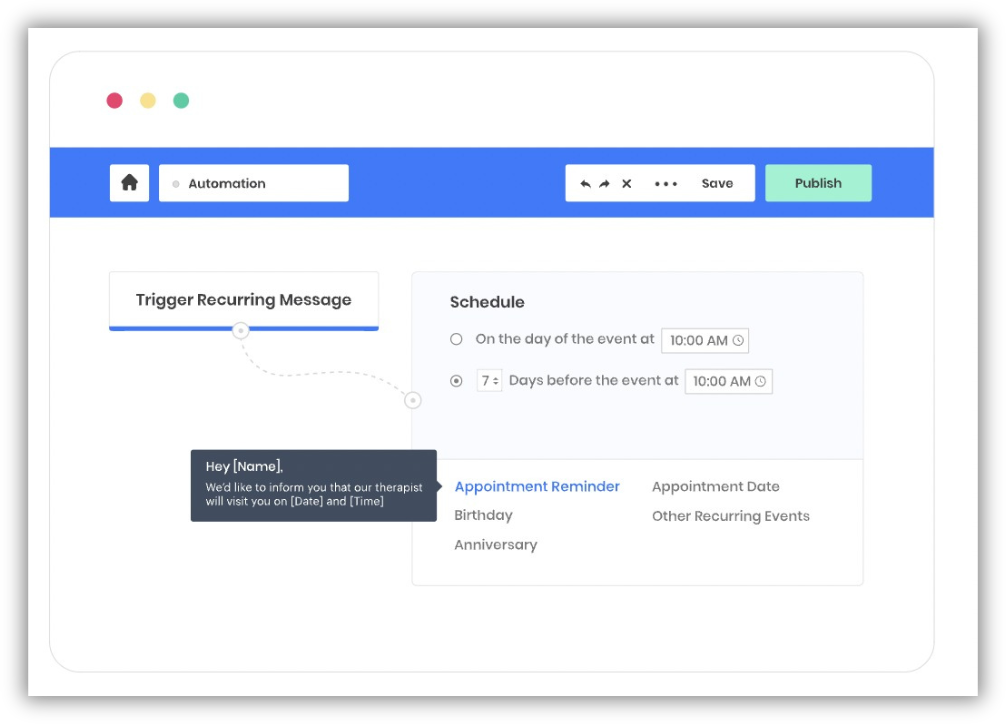
| Subject Line | Content | Send Date |
|---|---|---|
| Welcome to Our Eye Clinic | Introduction to the eye specialist practice, services offered, and mission. | Day 1 (Upon signup) |
| Importance of Eye Exams | Explanation of why regular eye exams are crucial for maintaining good eye health. | Day 3 |
- Subject Line
- Welcome to Our Eye Clinic
- Content
- Introduction to the eye specialist practice, services offered, and mission.
- Send Date
- Day 1 (Upon signup)
- Subject Line
- Importance of Eye Exams
- Content
- Explanation of why regular eye exams are crucial for maintaining good eye health.
- Send Date
- Day 3
chapter 1 - section 20
Set a Consistent Email Schedule to Maintain Engagement
| Subject Line | Content | Send Date |
|---|---|---|
| Understanding Common Eye Conditions | Information on common eye conditions such as myopia, hyperopia, and astigmatism. | Day 7 |
| Tips for Healthy Vision | Guidance on lifestyle habits and practices to promote healthy vision. | Day 14 |
| Digital Eye Strain: Prevention and Relief | Strategies to prevent and alleviate digital eye strain caused by prolonged screen time. | Day 21 |
| The Aging Eye: What to Expect | Information on age-related vision changes and how to address them. | Day 30 |
| Contact Lens Care and Maintenance | Instructions on proper care and maintenance of contact lenses to prevent eye issues. | Day 45 |
| UV Protection for Your Eyes | Importance of UV protection for eye health and tips for choosing the right sunglasses. | Day 60 |
| Children’s Eye Health: Early Detection | Information on pediatric eye exams and the importance of early detection in children. | Day 90 |
| Eye Safety Tips for Sports and Activities | Guidance on protecting the eyes during sports and recreational activities. | Day 120 |
- Subject Line
- Understanding Common Eye Conditions
- Content
- Information on common eye conditions such as myopia, hyperopia, and astigmatism.
- Send Date
- Day 7
- Subject Line
- Tips for Healthy Vision
- Content
- Guidance on lifestyle habits and practices to promote healthy vision.
- Send Date
- Day 14
- Subject Line
- Digital Eye Strain: Prevention and Relief
- Content
- Strategies to prevent and alleviate digital eye strain caused by prolonged screen time.
- Send Date
- Day 21
- Subject Line
- The Aging Eye: What to Expect
- Content
- Information on age-related vision changes and how to address them.
- Send Date
- Day 30
- Subject Line
- Contact Lens Care and Maintenance
- Content
- Instructions on proper care and maintenance of contact lenses to prevent eye issues.
- Send Date
- Day 45
- Subject Line
- UV Protection for Your Eyes
- Content
- Importance of UV protection for eye health and tips for choosing the right sunglasses.
- Send Date
- Day 60
- Subject Line
- Children’s Eye Health: Early Detection
- Content
- Information on pediatric eye exams and the importance of early detection in children.
- Send Date
- Day 90
- Subject Line
- Eye Safety Tips for Sports and Activities
- Content
- Guidance on protecting the eyes during sports and recreational activities.
- Send Date
- Day 120
chapter 1 - section 21
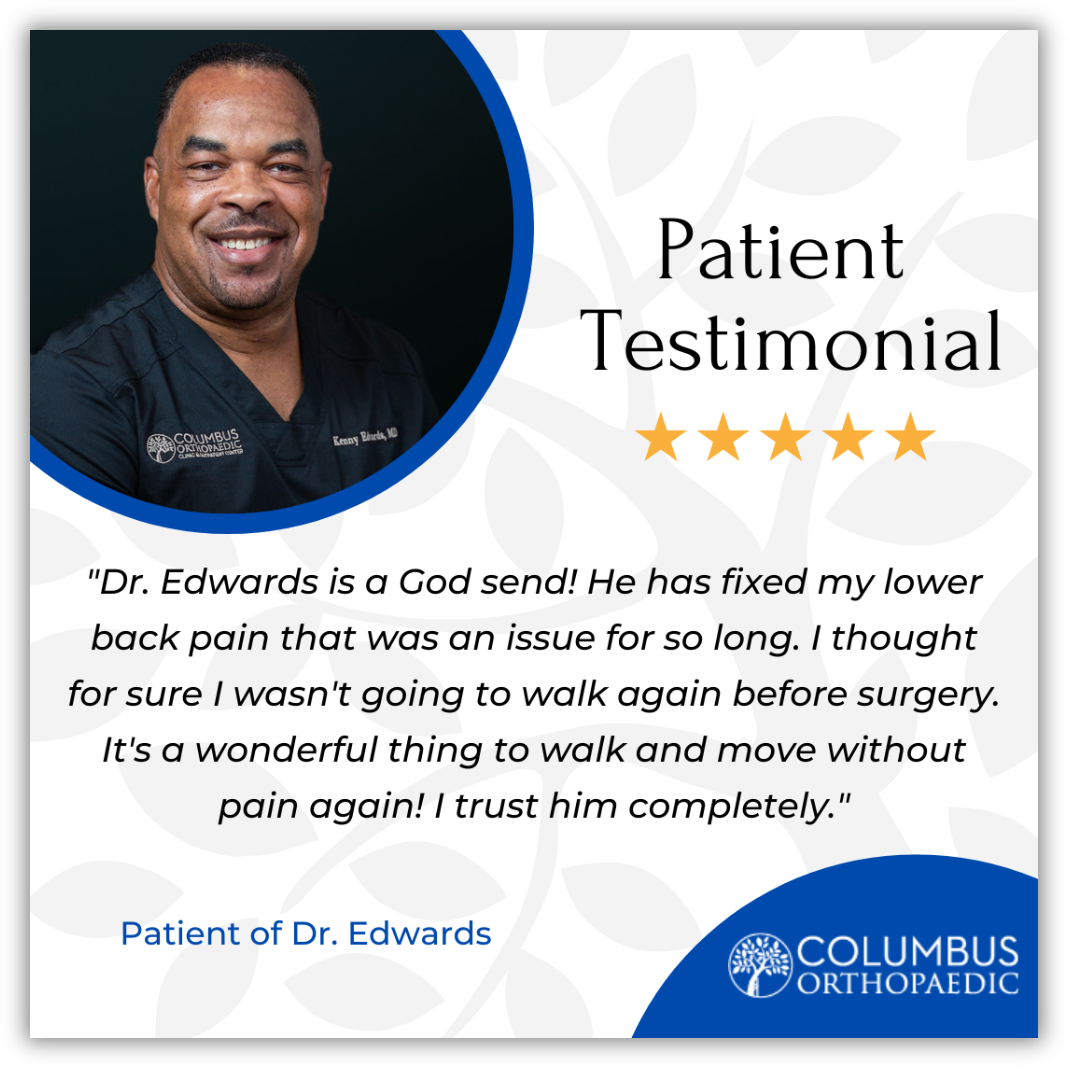
Share Authentic Patient Stories and Testimonials
chapter 1 - section 22
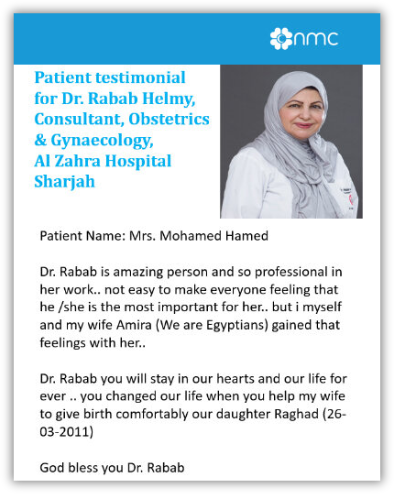
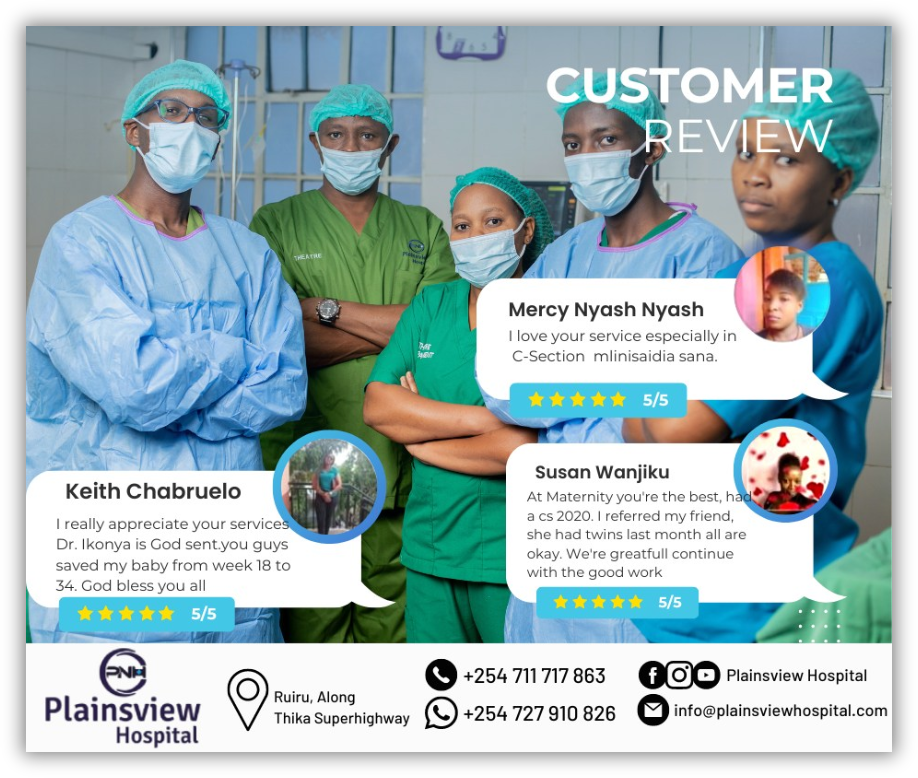
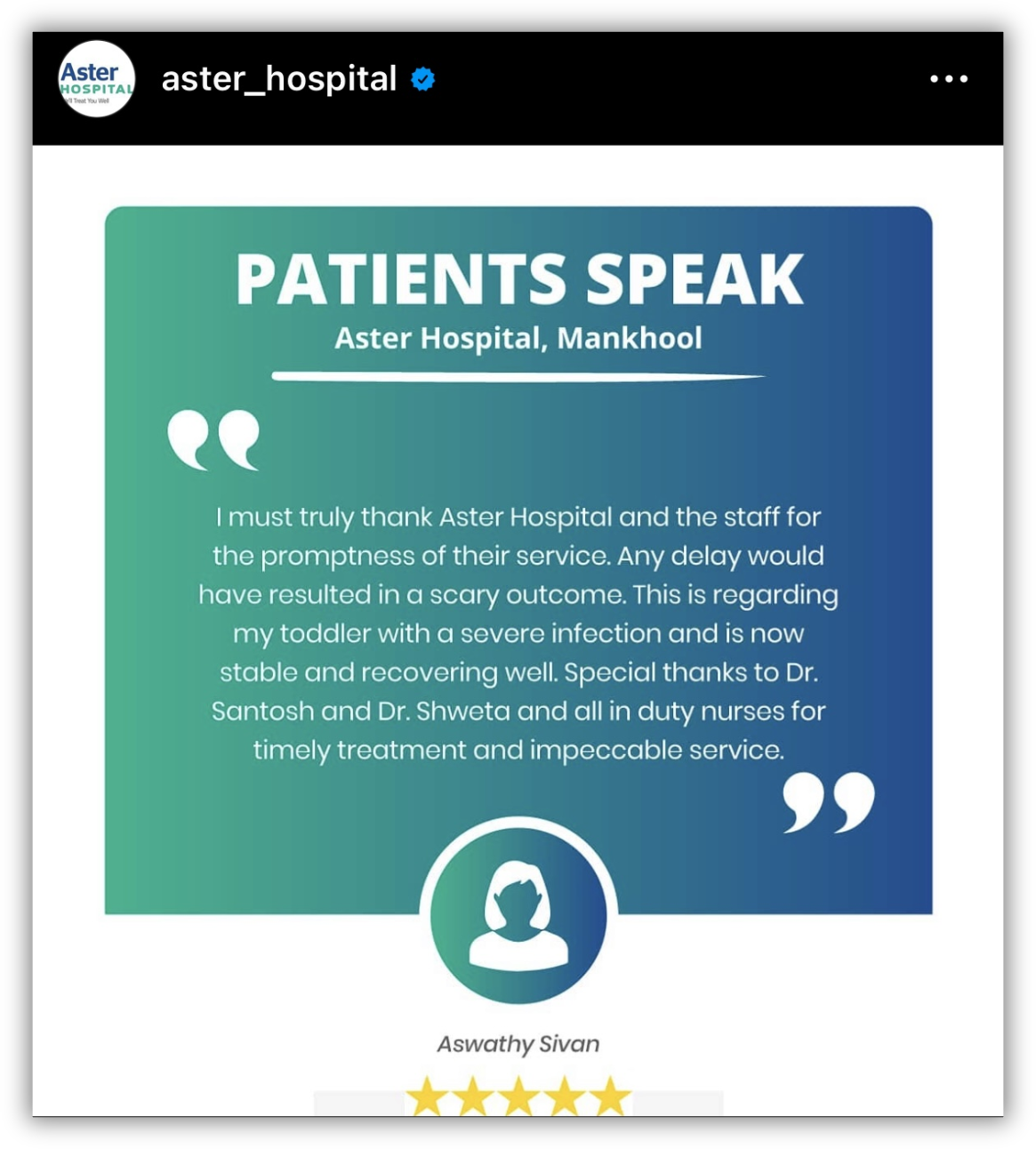
Share Authentic Patient Stories and Testimonials
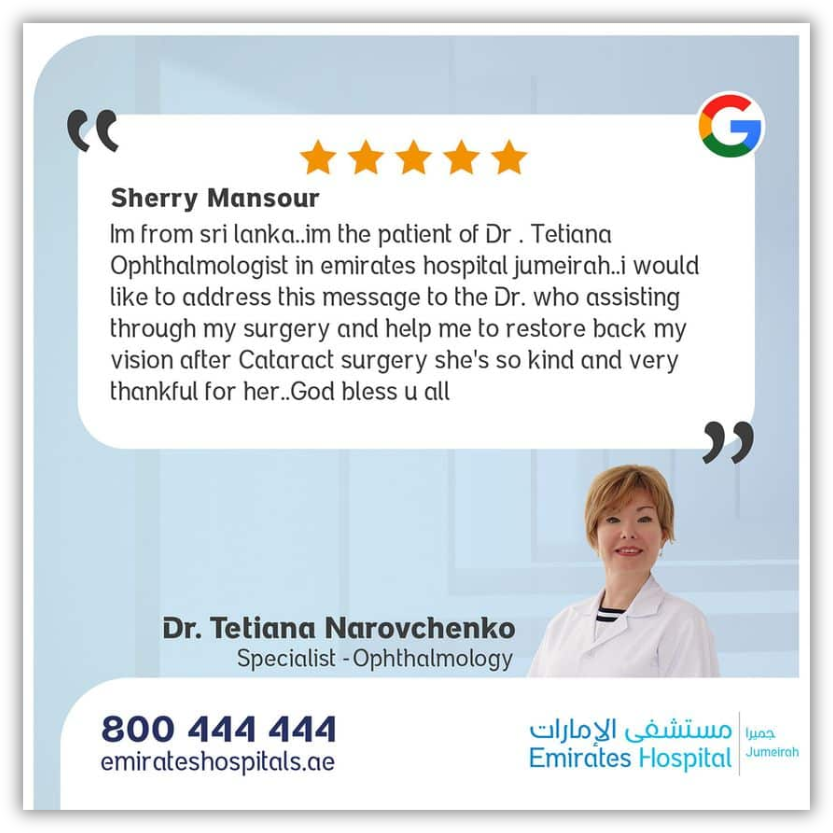
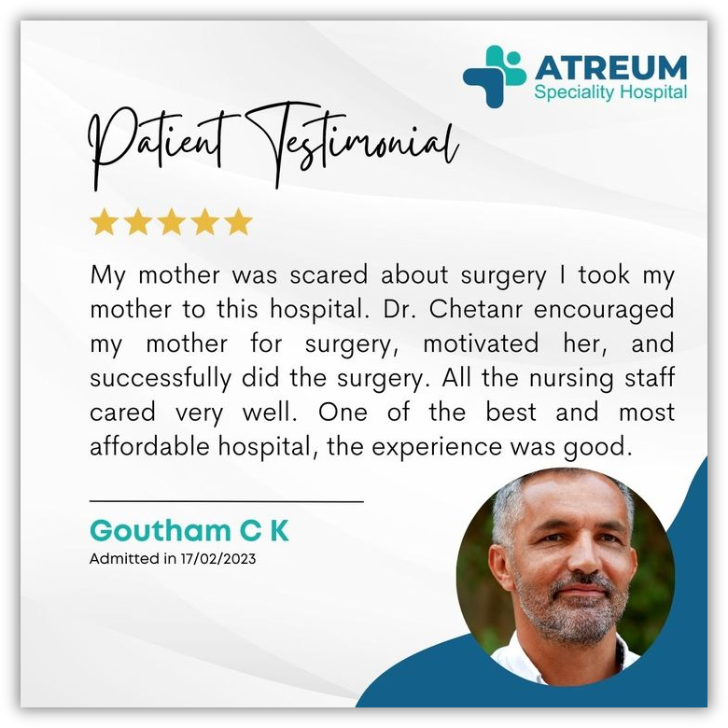
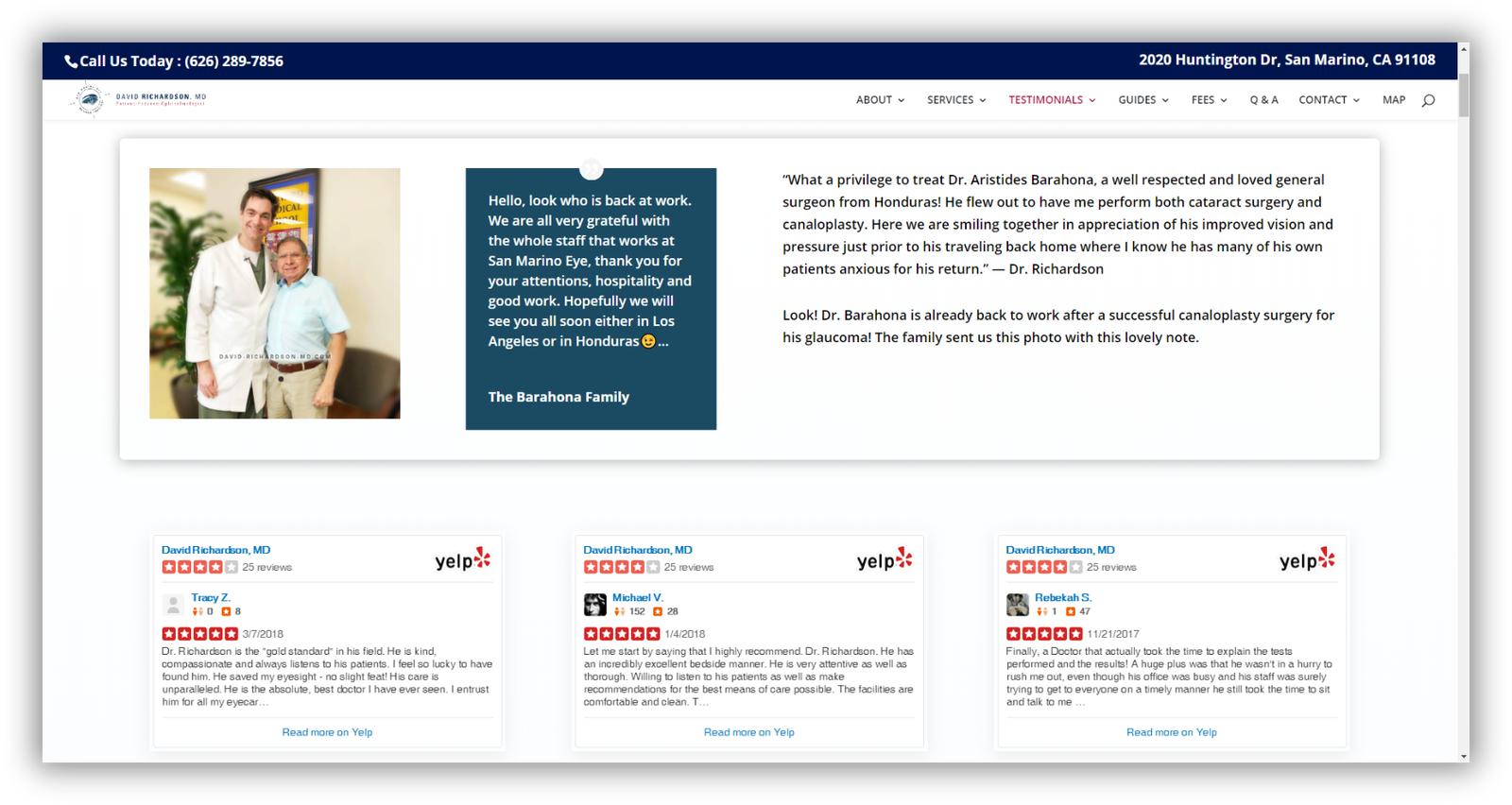
The Emirates Hospitals and Atreum examples pair a patient quote with a name, portrait and hospital branding. Keep the quote readable, identify the practice clearly, and give the reader an obvious way to find out more.
chapter 1 - section 23
Add CTAs
Email CTAs (Call-to-Actions) are prompts or buttons within an email that encourage recipients to take a specific action.
They drive engagement, encourage interaction with your content, and ultimately lead to conversions or desired outcomes.
Effective CTAs can increase click-through rates, improve user experience, and help achieve your email marketing goals.
Here are some example CTAs:
60% of consumers have faith in social media posts made by doctors.
More than 70% of Americans use social channels to research health symptoms.
Effective social media marketing helps to keep patients engaged and also educates them about public health topics.
For healthcare providers, it serves as a platform for building reputation within communities by facilitating transparent communication and engagement with diverse audiences.
chapter 2 - section 2
Understand your audience demographics and preferences
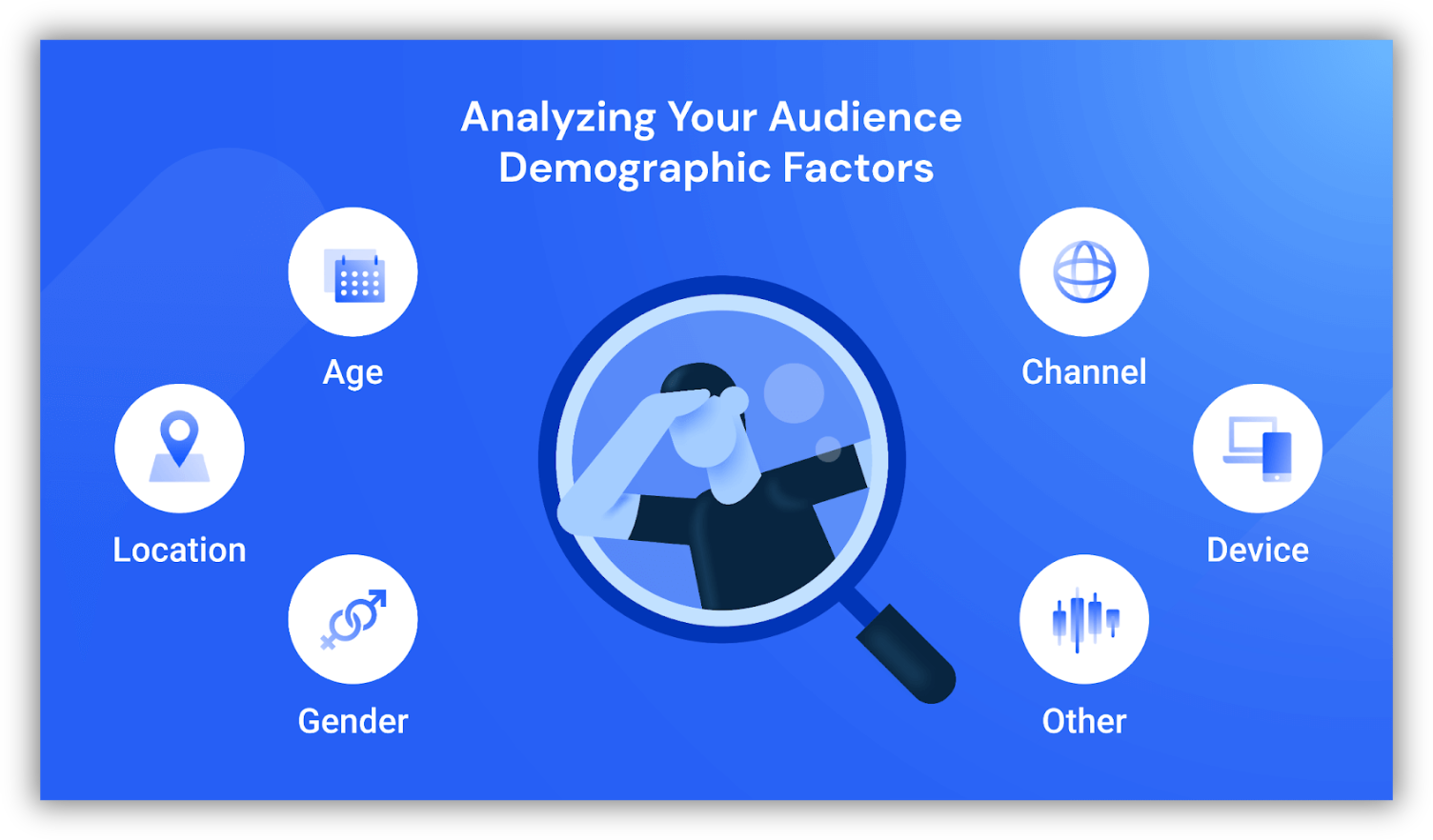
Gather information about the age, gender, location, income level, education level, and other demographic factors of your target audience. This data helps in crafting messaging and content that appeals to specific demographic segments.
chapter 2 - section 3
Understand your audience demographics and preferences
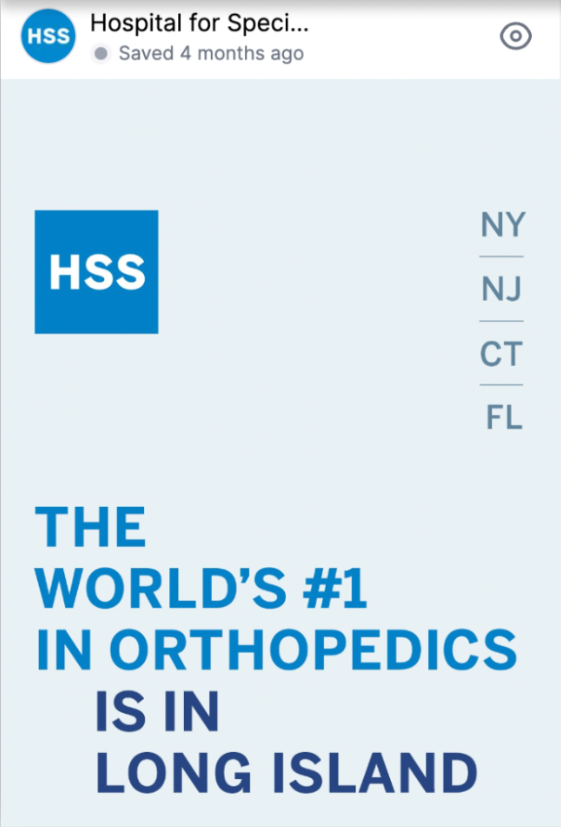
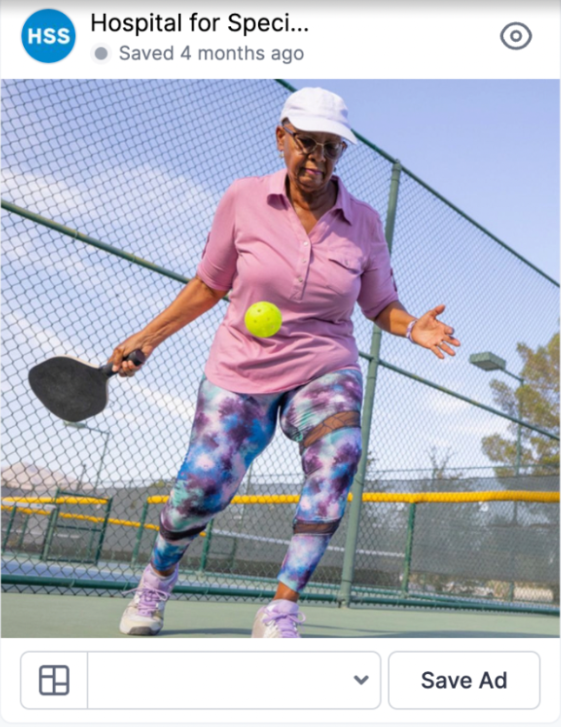
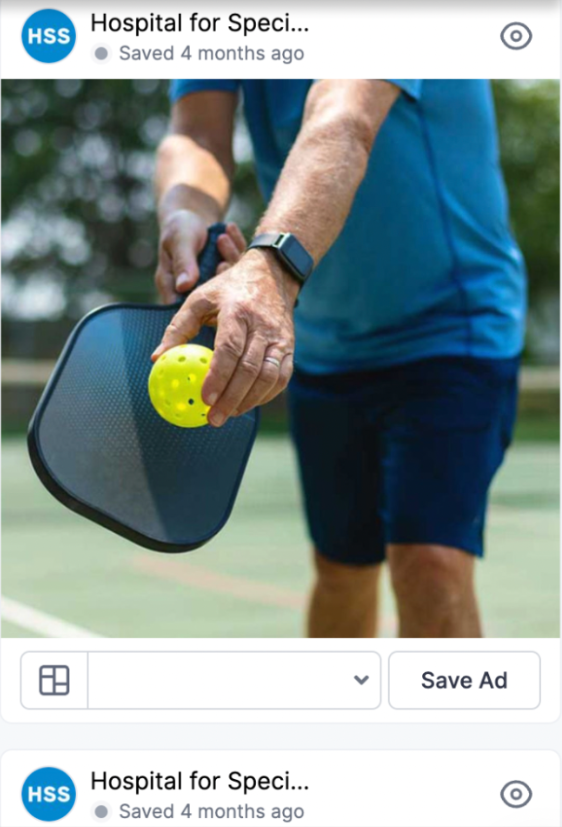
The Hospital for Special Surgery creates ad creatives especially for senior citizens to establish HSS as a leading hospital for orthopedics, rheumatology and rehabilitation.
The examples use a clear hospital name, a single visual focus and short messages. When planning your own creative, choose one audience and one service for each ad, then make that connection clear in the image and headline.

chapter 2 - section 4
Book Direct Appointments Via Facebook
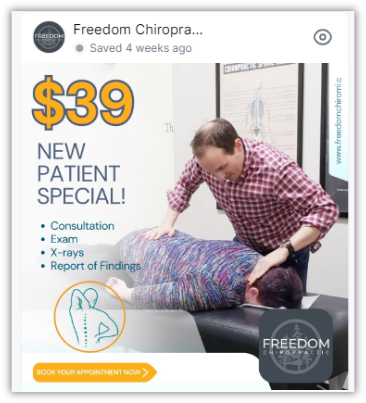
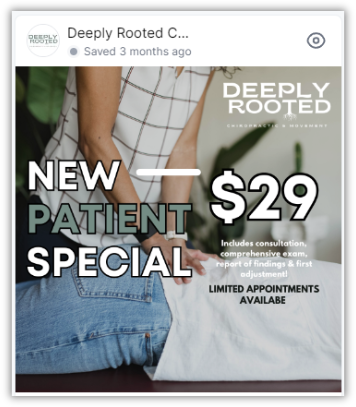
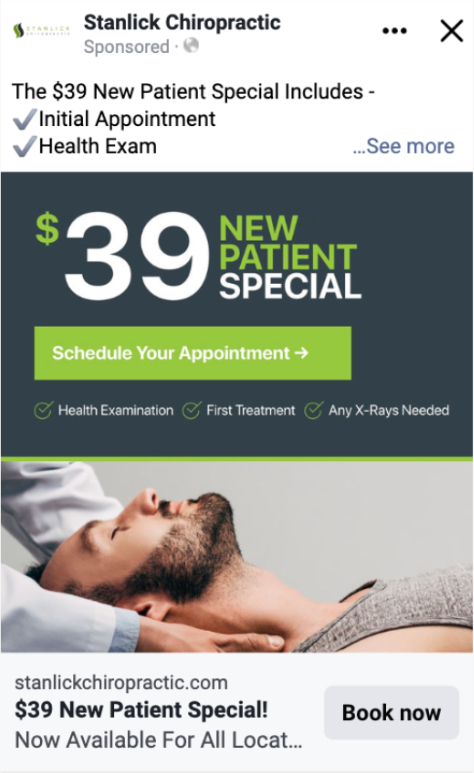
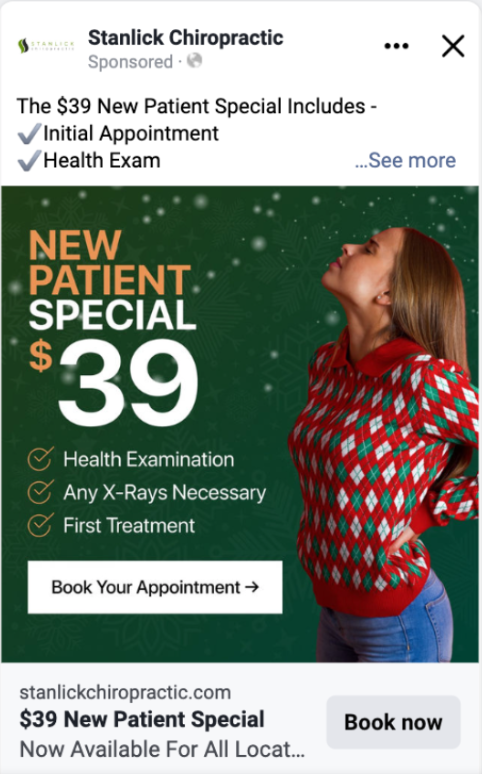
Run Facebook ads to book direct appointments via Facebook.
Give people enough information to decide whether to take the next step: the service, the practice location and what the appointment offer includes. Keep those details consistent from the ad to the booking page, and make the booking action easy to find.
chapter 2 - section 5
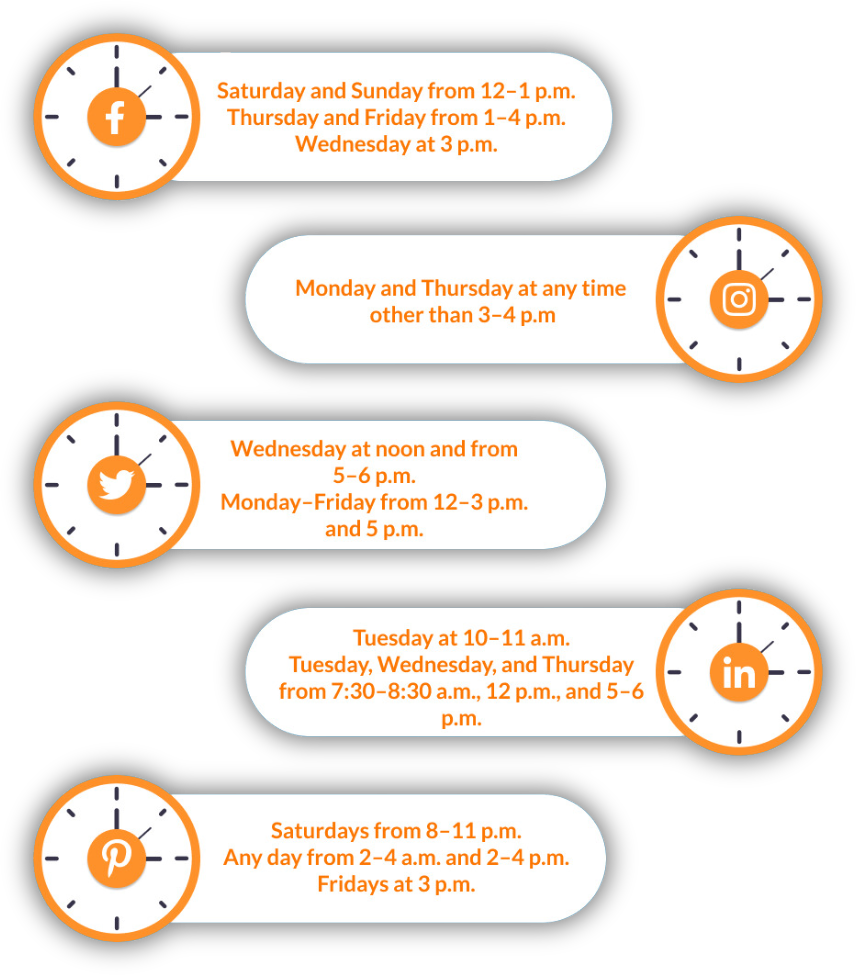
Maintain a consistent posting schedule with diverse content
By adhering to a regular posting schedule, healthcare organizations can keep their followers informed and interested while also maximizing their reach and visibility.
The Best Times to Post on Social Media
chapter 2 - section 6
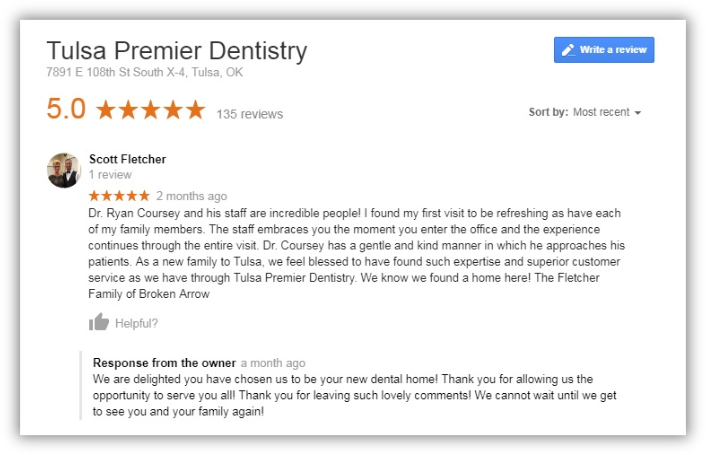
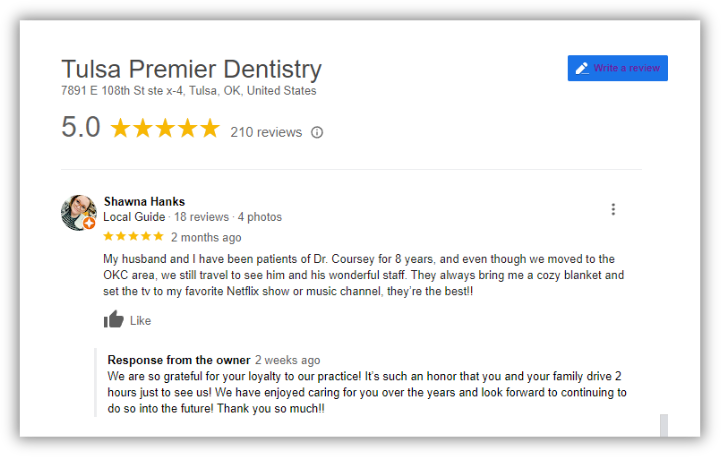
Engage with your audience by responding promptly
Utilize social media management tools with automation features to streamline your response process. Set up automated responses for common inquiries or frequently asked questions to provide immediate assistance to your audience.
chapter 2 - section 7
Engage with your audience by responding promptly
Positive review responses template examples
- “Thank you for your kind words! We're delighted to hear that you felt comfortable and well-cared for. Your positive experience is our priority, and we look forward to serving you again in the future.”
- “Thank you for making us your go-to for healthcare needs! We're pleased to hear that you appreciated our prompt service and welcoming atmosphere. Your trust means the world to us.”
- “Thank you for your positive feedback! We're thrilled to hear that you had a great experience with our team. We strive for friendliness and efficiency, and it's wonderful to know we achieved that during your visit.”
- “We're delighted to hear about your positive experience with our communication! Keeping our patients informed is a top priority. If there's anything else you need, please don't hesitate to reach out.”
- “Thank you for recommending us! We take pride in our clean and modern facility, and we're pleased that our attention to detail in patient care is evident to you. We appreciate your positive feedback.”
- “Thank you very much! We believe in the importance of active listening, and we're glad you felt heard and understood. Your positive experience is important to us.”
chapter 2 - section 8
Engage with your audience by responding promptly
Negative review responses template examples
- Thank you for bringing this to our attention, and we sincerely apologize for the extended wait time you experienced. We are actively reviewing our processes to ensure more efficient scheduling and minimize wait times in the future. We appreciate your feedback and the opportunity to improve.
- We apologize for any discomfort you experienced during your visit. Providing a comfortable environment is one of our priority, and we take this feedback seriously. We are investigating this matter further to ensure that our facilities meet the highest standards. Thank you for bringing this to our attention, we appreciate the opportunity to improve.
- We apologize for any feeling of being rushed during your appointment, and we regret that your concerns were not fully addressed. Patient care is our utmost priority, and we take this feedback seriously. We would appreciate the opportunity to discuss your concerns in more detail and ensure that all your questions are answered. Please contact us directly so that we can address this matter promptly. Thank you for bringing this to our attention, we value the opportunity to improve.
- We apologize for the impression our facilities left. Your comfort is important to us, and we appreciate your feedback. We are actively exploring options for facility improvements to provide a more modern and comfortable setting for our patients. Thank you for your honest input.
chapter 2 - section 9
Engage with your audience by responding promptly
Mixed review responses template examples
- Thank you for sharing your experience with us. We appreciate your feedback and would love to learn more about how we can enhance your future visits. Feel free to reach out if there are specific aspects you'd like us to address.
- We appreciate your honest feedback. If you have any specific details about what went well or areas where we can improve, we would be grateful to hear more. Your input helps us strive for excellence.
- Thank you for your feedback. We're glad to hear about the positive interactions with our staff, and we understand that wait times can be frustrating. We're actively working to improve our efficiency.
- We appreciate your feedback and are pleased to hear about the cleanliness of our facility. We acknowledge the importance of effective communication and will review our processes to ensure improvements.
- Thank you for sharing your thoughts. We strive to provide consistent care, and your feedback is valuable. If there are specific areas where you believe we can elevate our services, please let us know.
- We appreciate your feedback about the examination. We understand that wait times can be a concern and are actively working to improve our scheduling processes.
chapter 03
Ranking Your Healthcare Website on Page #1 With Medical SEO
SEO is an excellent strategy to acquire a new patient base for your healthcare business.
Now, let’s take a look at the healthcare SEO tactics you can use to increase your organic traffic growth and conversions.
chapter 3 - section 1
Improve Website Usability and Design
It takes less than 50 milliseconds for a visitor to decide if they like a website.
And more than 90% of users will leave your website if it has low-quality design.
How can you improve website usability?
| Item | Checklist |
|---|---|
| 1 | Minimize loading time to three seconds or less. |
| 2 | Segment key information with bullet points. |
| 3 | Optimize your site images. |
| 4 | Include persuasive and personalized headlines. |
| 5 | Increase text size for better legibility. |
| 6 | Reduce the number of steps needed to perform an action. |
| 7 | Ensure clear and simple navigation structure. |
| 8 | Aim for fewer clicks to achieve user goals. |
- Minimize loading time to three seconds or less.
- Segment key information with bullet points.
- Optimize your site images.
- Include persuasive and personalized headlines.
- Increase text size for better legibility.
- Reduce the number of steps needed to perform an action.
- Ensure clear and simple navigation structure.
- Aim for fewer clicks to achieve user goals.
chapter 3 - section 2
Improve Website Usability and Design
| Item | Checklist |
|---|---|
| 1 | Make all links and buttons easily identifiable. |
| 2 | Utilize color contrast to draw attention. |
| 3 | Incorporate negative space for emphasis. |
| 4 | Add alt text to all images. |
| 5 | Ensure proper color contrast for readability. |
| 6 | Use appropriate HTML header tags. |
| 7 | Include label tags for form inputs. |
| 8 | Check for grammar and spelling mistakes. |
| 9 | Provide contact information. |
| 10 | Include testimonials. |
| 11 | Create an About page. |
| 12 | Showcase expertise and awards. |
- Make all links and buttons easily identifiable.
- Utilize color contrast to draw attention.
- Incorporate negative space for emphasis.
- Add alt text to all images.
- Ensure proper color contrast for readability.
- Use appropriate HTML header tags.
- Include label tags for form inputs.
- Check for grammar and spelling mistakes.
- Provide contact information.
- Include testimonials.
- Create an About page.
- Showcase expertise and awards.
chapter 3 - section 3
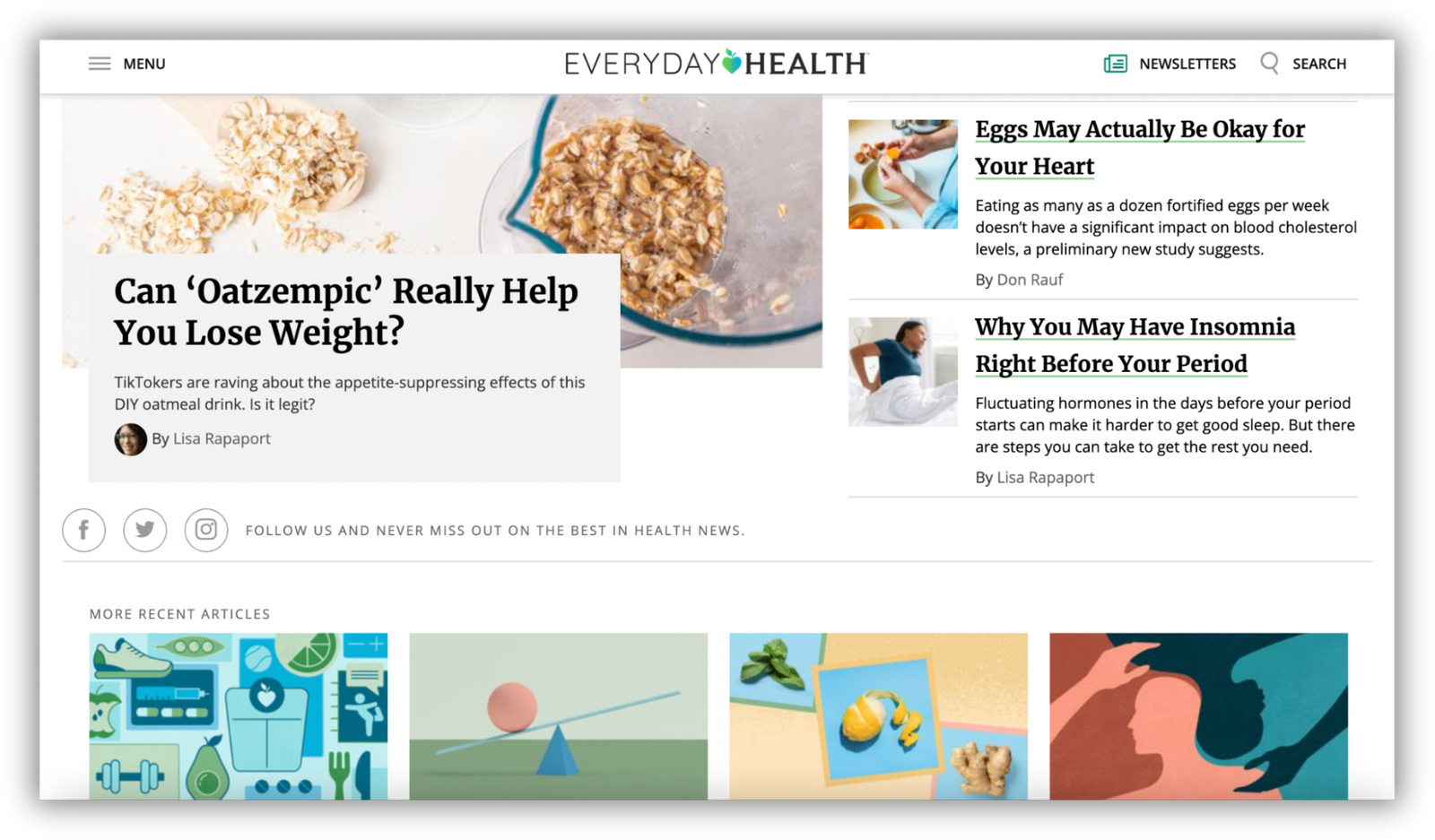
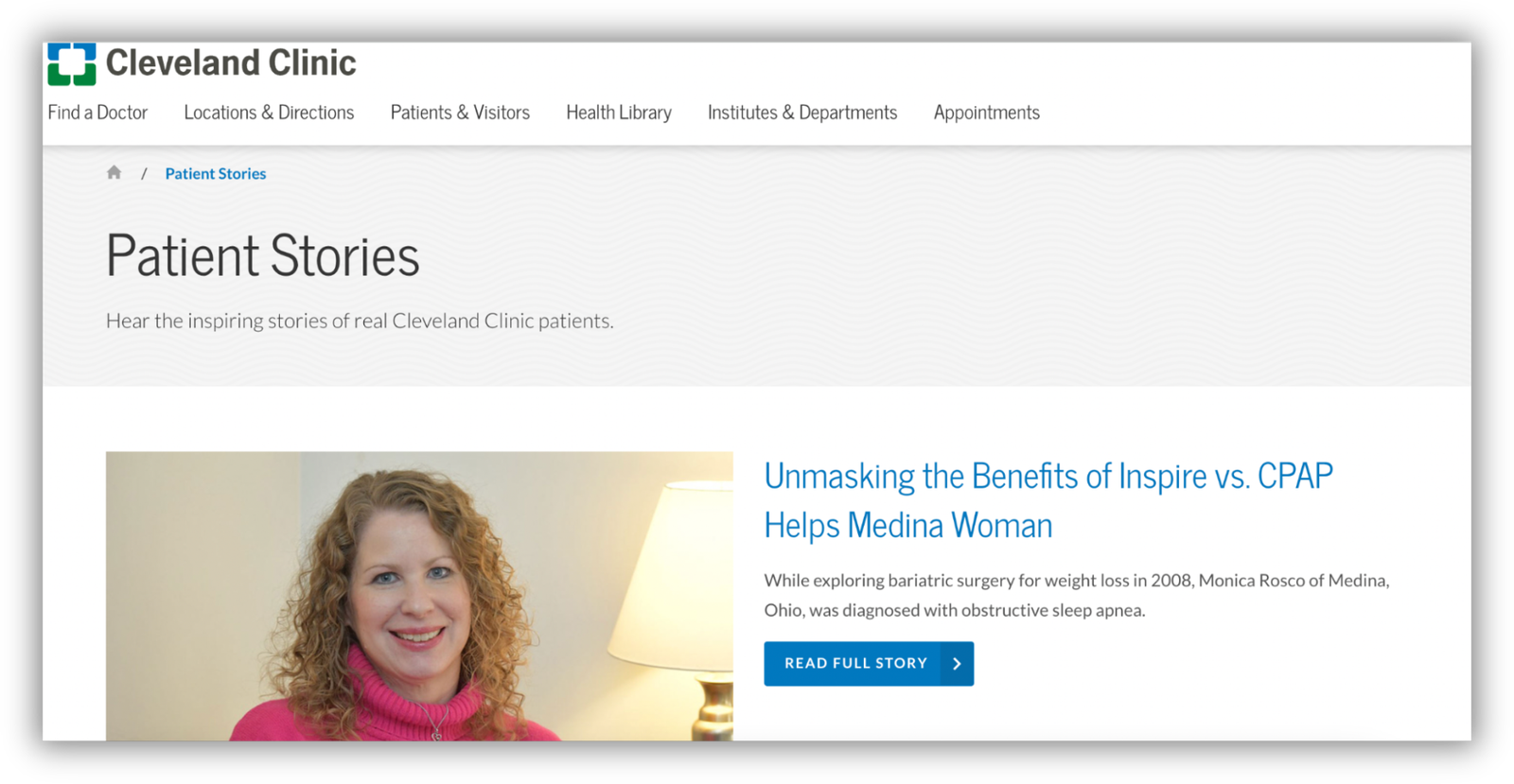
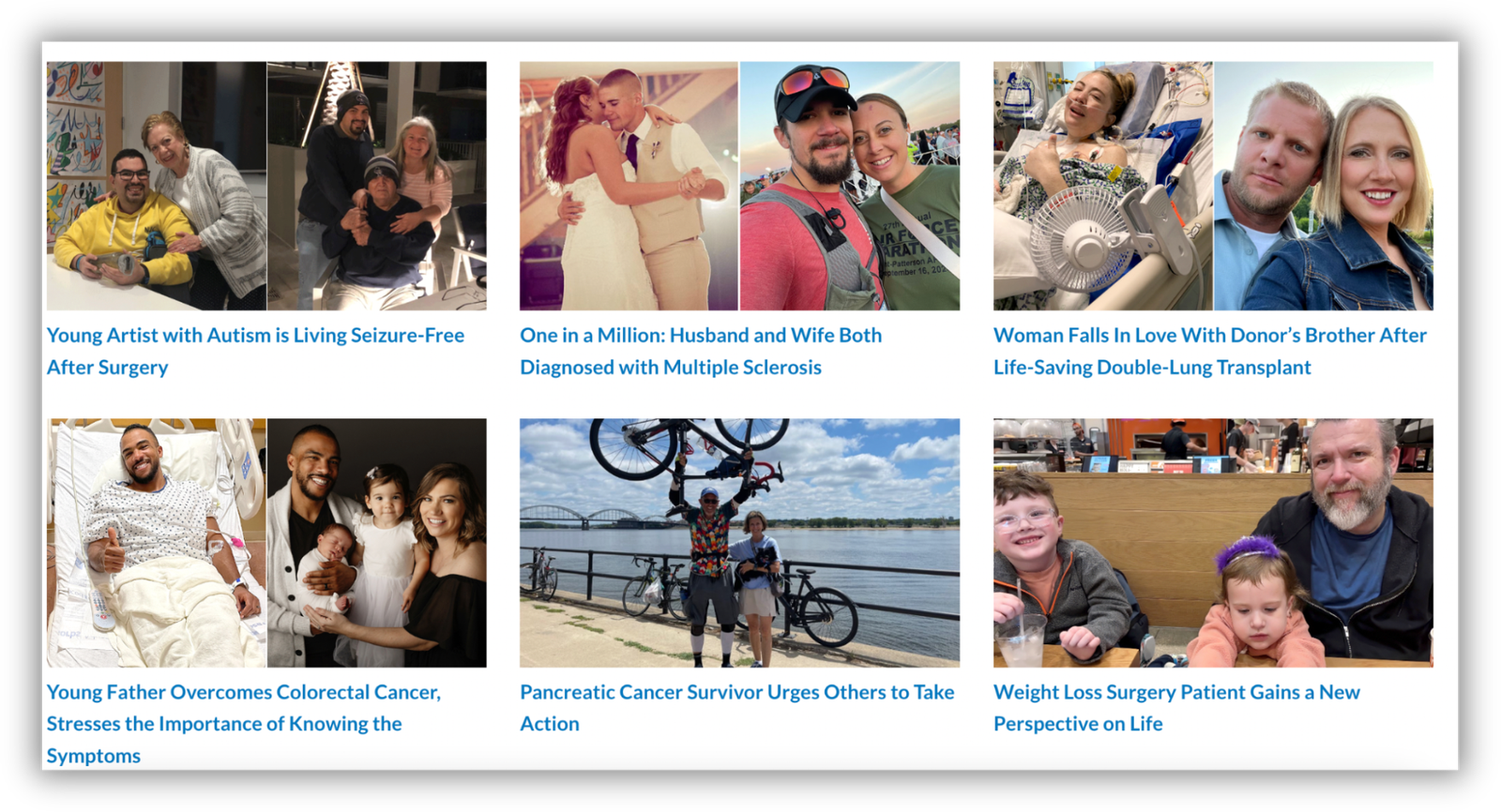
Produce High-Quality Medical Content
chapter 3 - section 4
Produce High-Quality Medical Content
chapter 3 - section 5
Target Relevant Healthcare Keywords to Create Content
- Analyze your current organic competitors and see the keywords they are targeting.
- You can easily find them using tools like SEMrush or SERankings.
- Think about the questions that your patient’s might ask and prepare a list of keywords centered around them.
- Use long-tail and intent-specific keywords to boost relevance and defeat high competition.
- Use tools like SEMrush, SERankings, Google Adwords Keyword Planner, Ahrefs, WordStream, UberSuggest, and Answer the Public to find good healthcare and medical marketing keywords.
- Take help from Google's "People Also Ask" feature.
chapter 3 - section 6
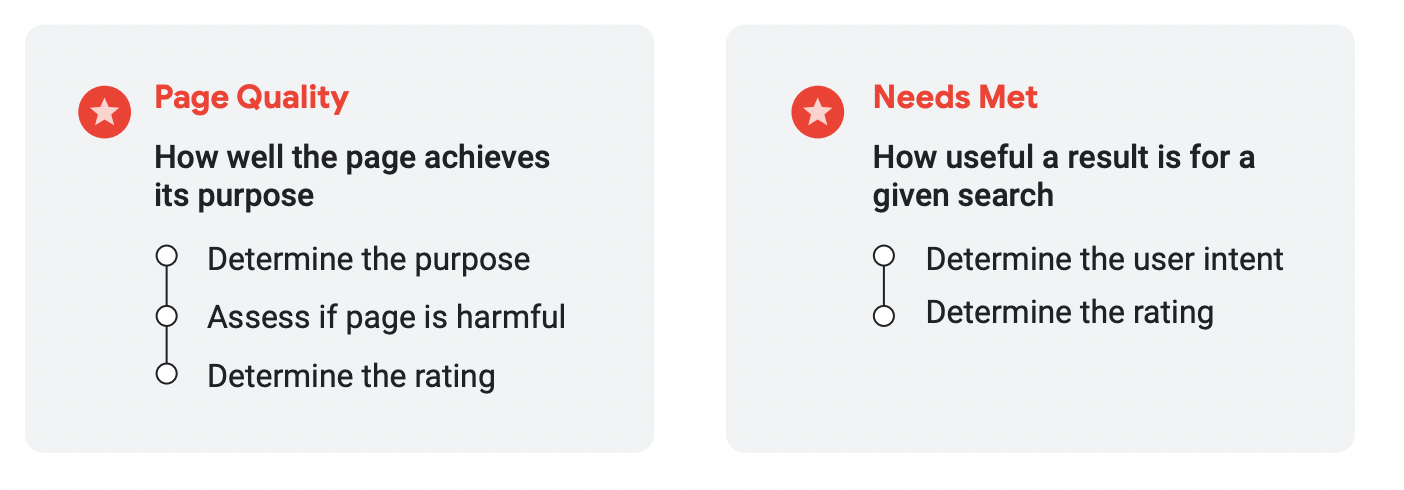
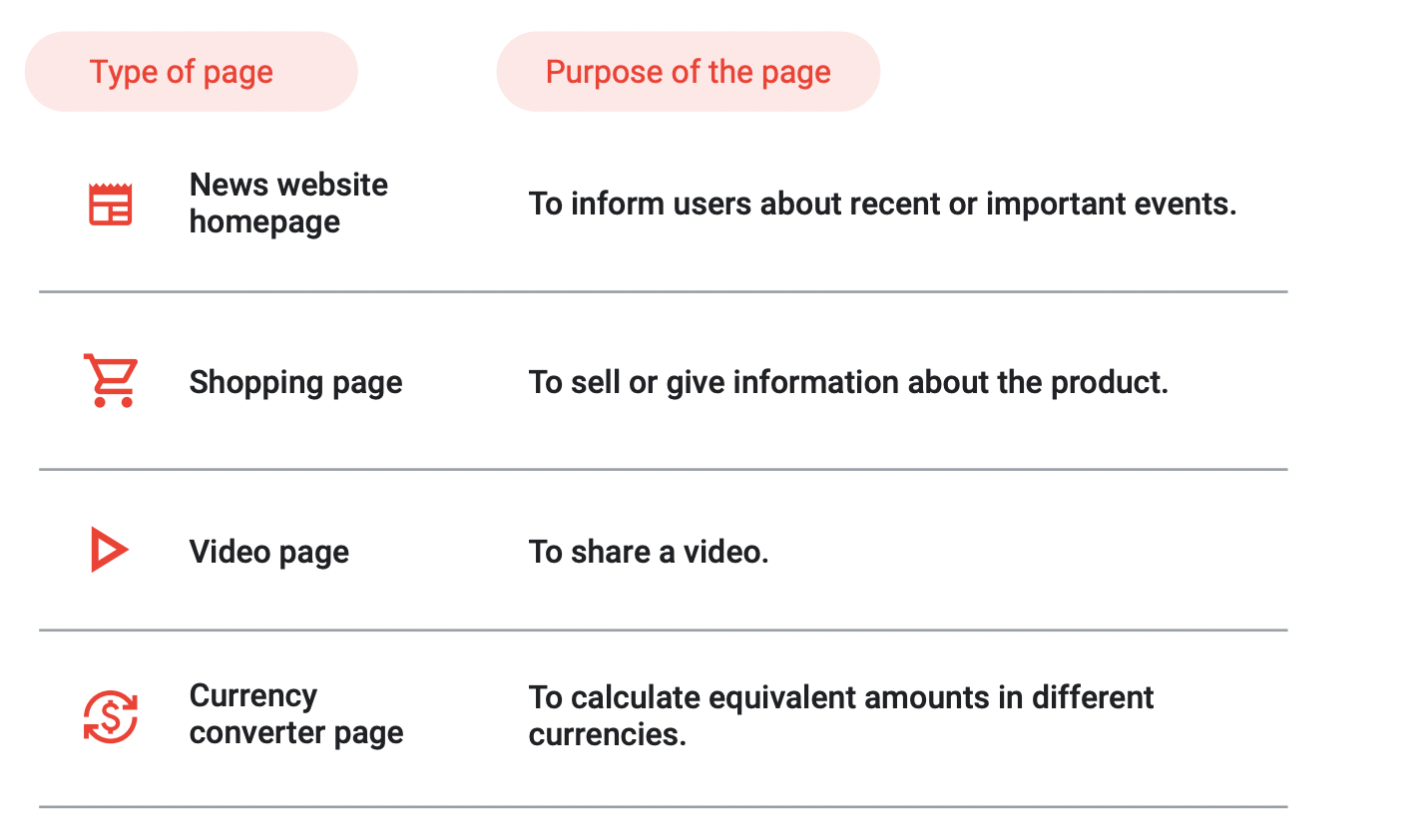
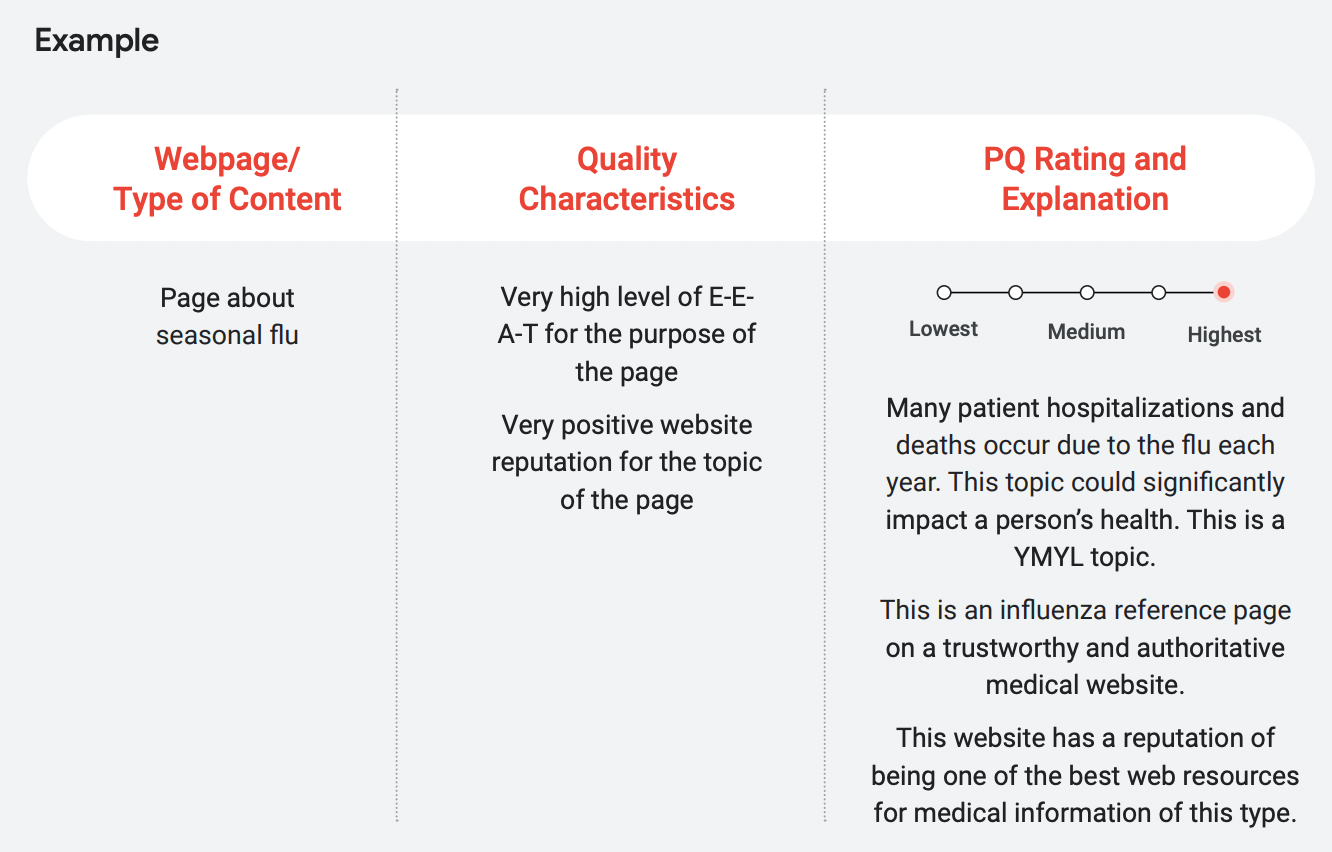
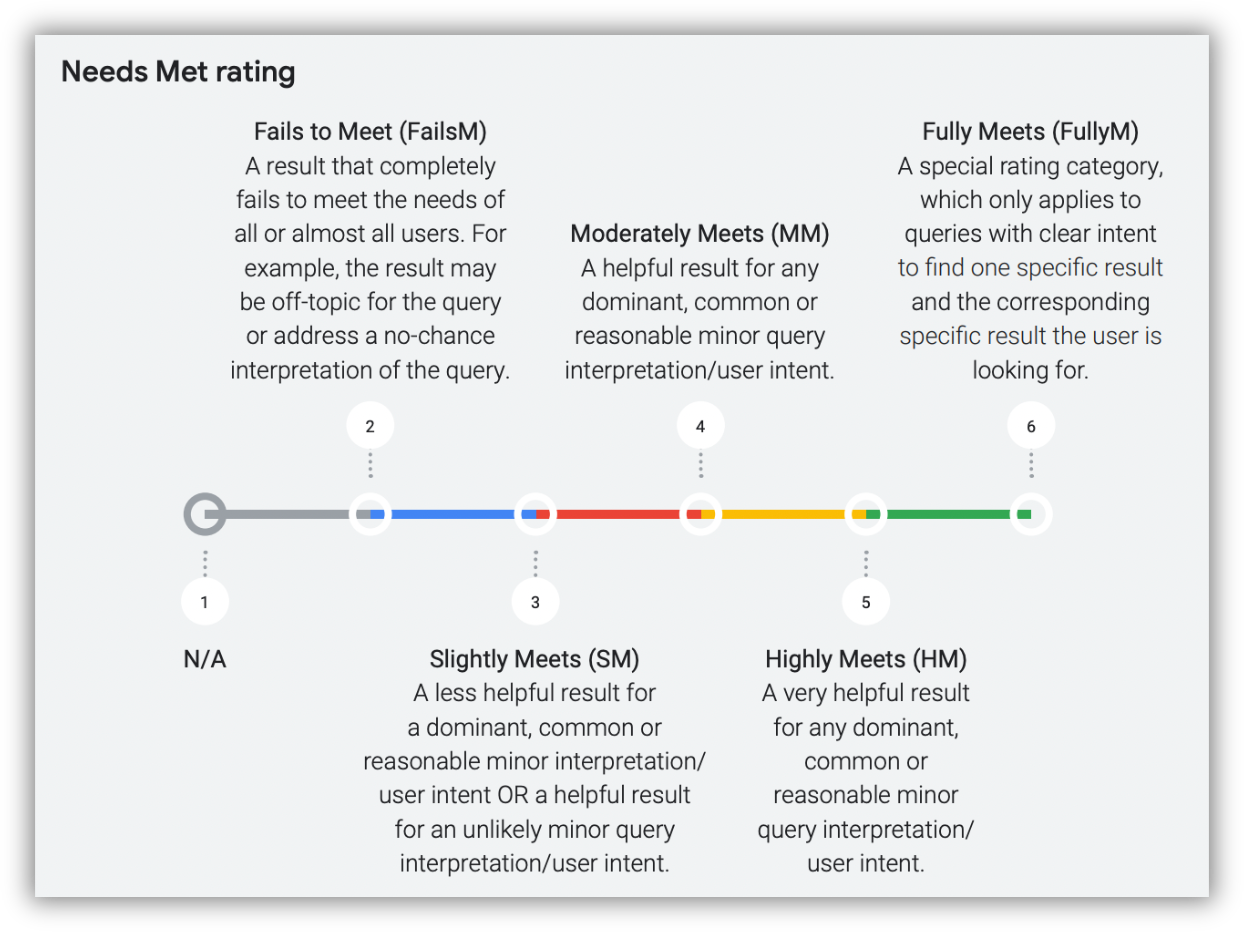
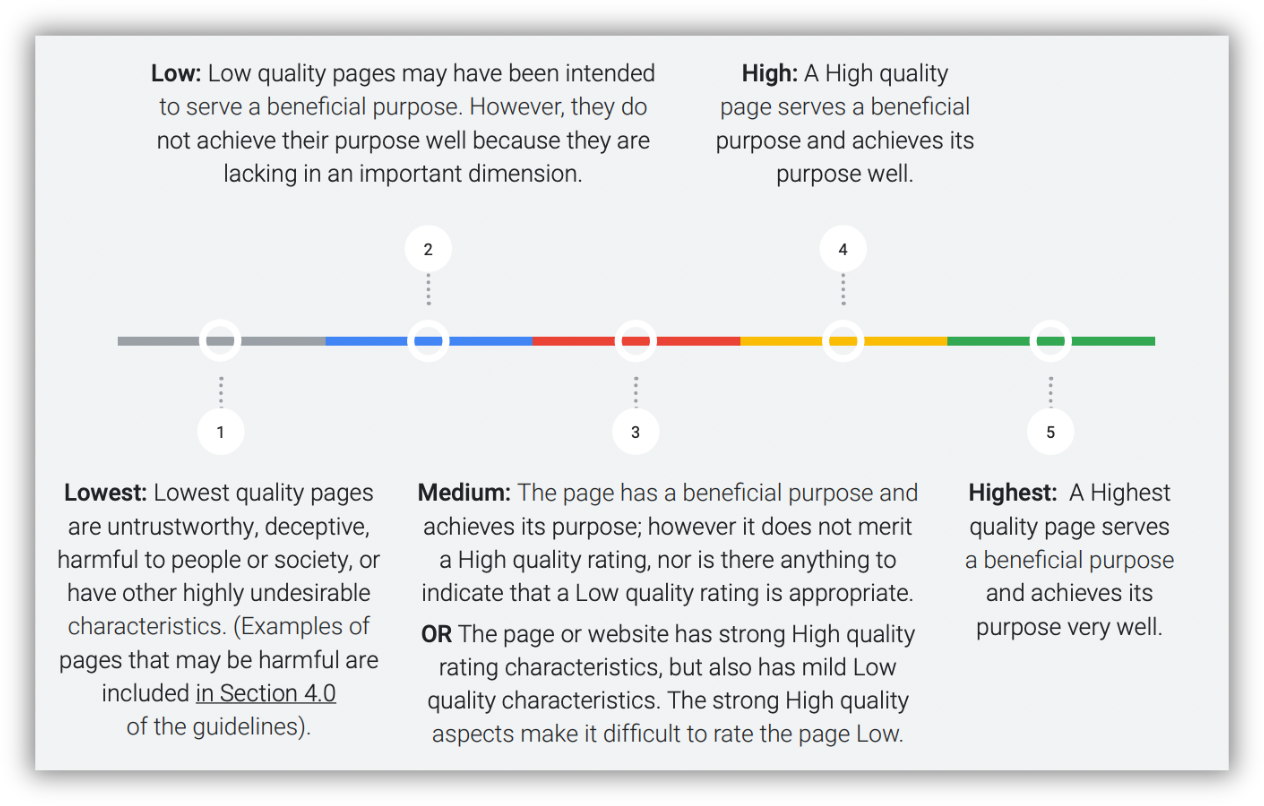
Optimize Your Website For High EEAT Score
Google's E-E-A-T (Experience, Expertise, Authoritativeness, Trustworthiness) guidelines are crucial for website ranking.
Trust is the most important aspect of E-E-A-T, ensuring accuracy, honesty, safety, and reliability.
Incorporating E-E-A-T into your site can improve search rankings and attract more visitors.
Create accurate and relevant content, fact-checked and cited with reputable sources.
Be transparent about successes and failures, and lead by example.
chapter 3 - section 7
Optimize Your Website For High EEAT Score
chapter 3 - section 8
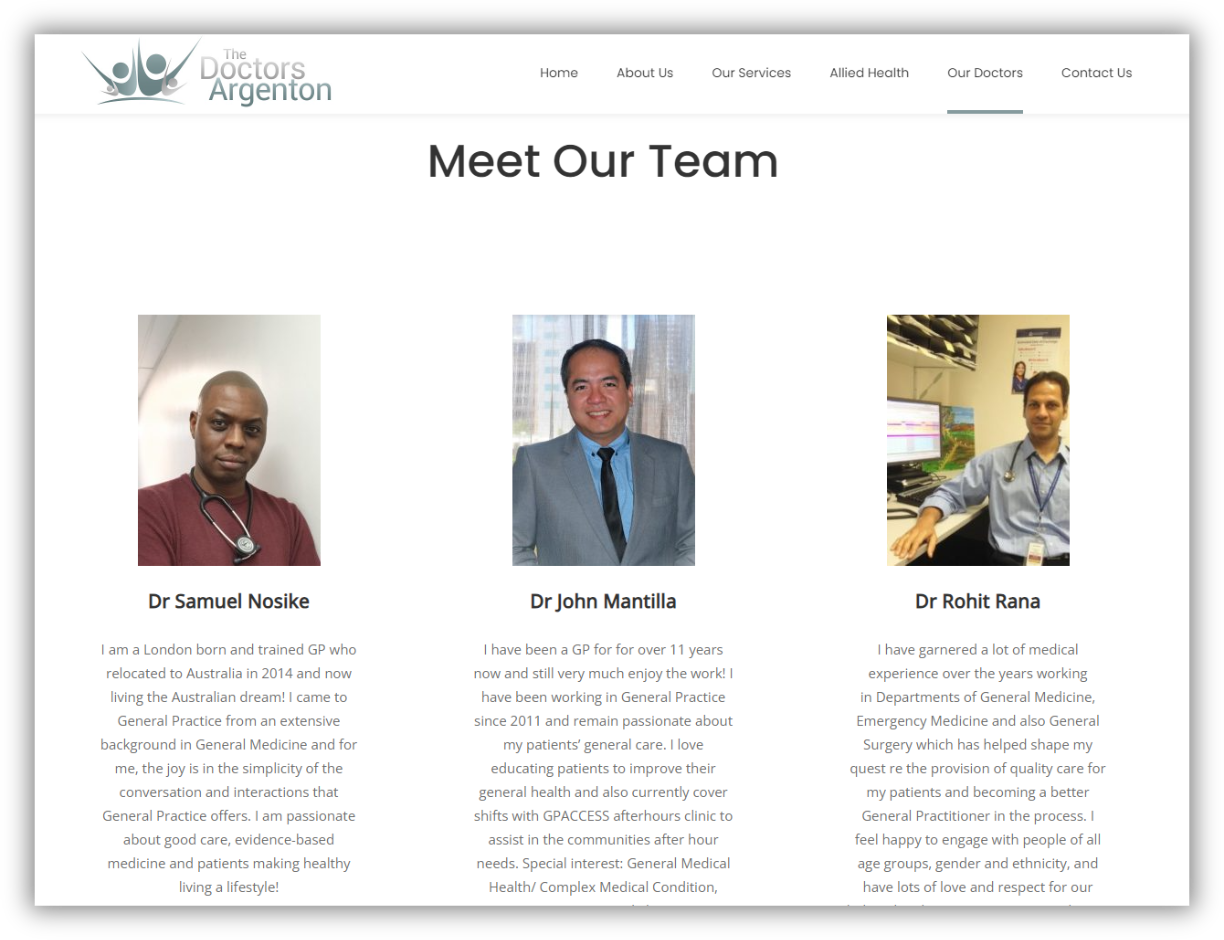
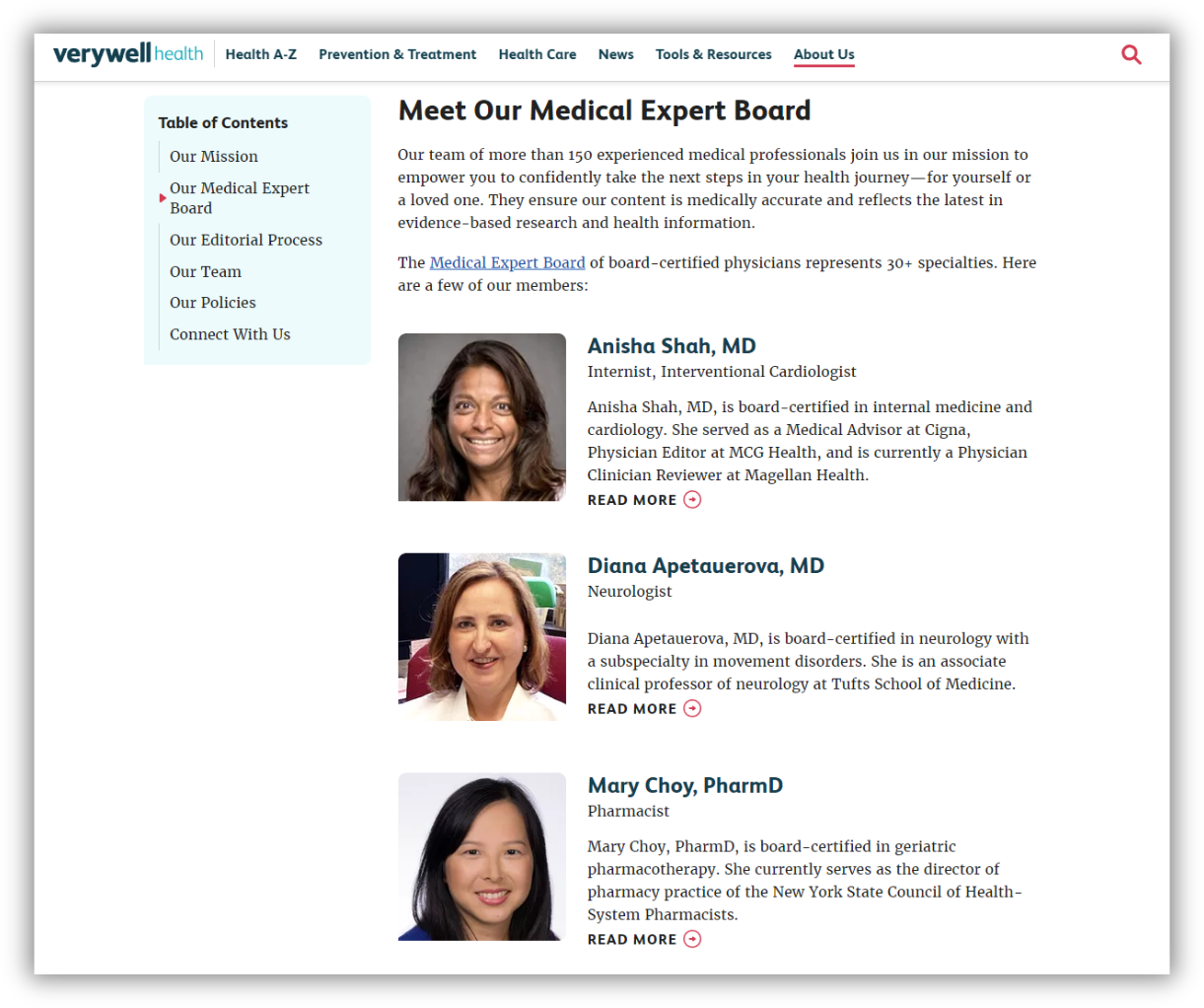
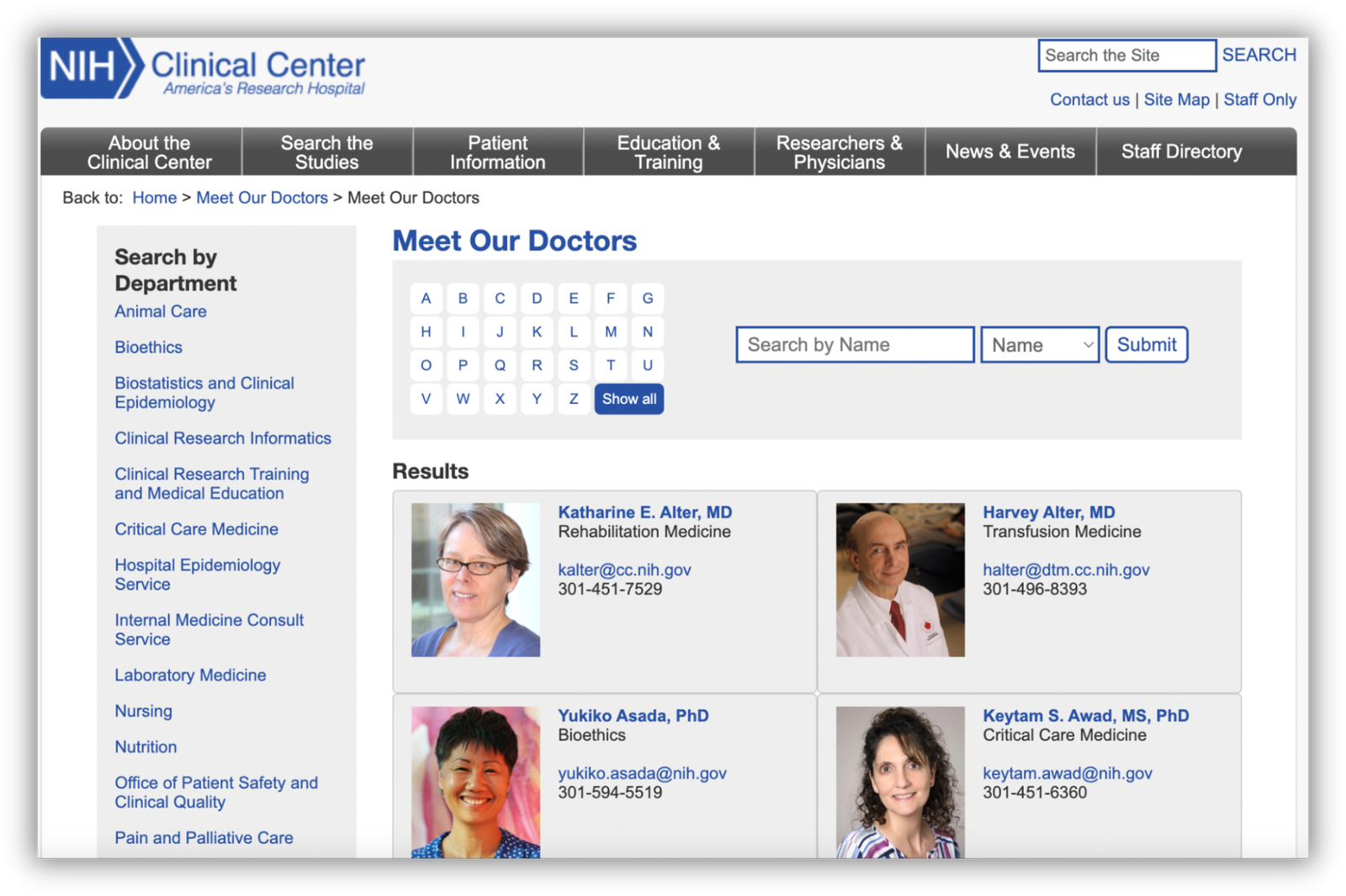
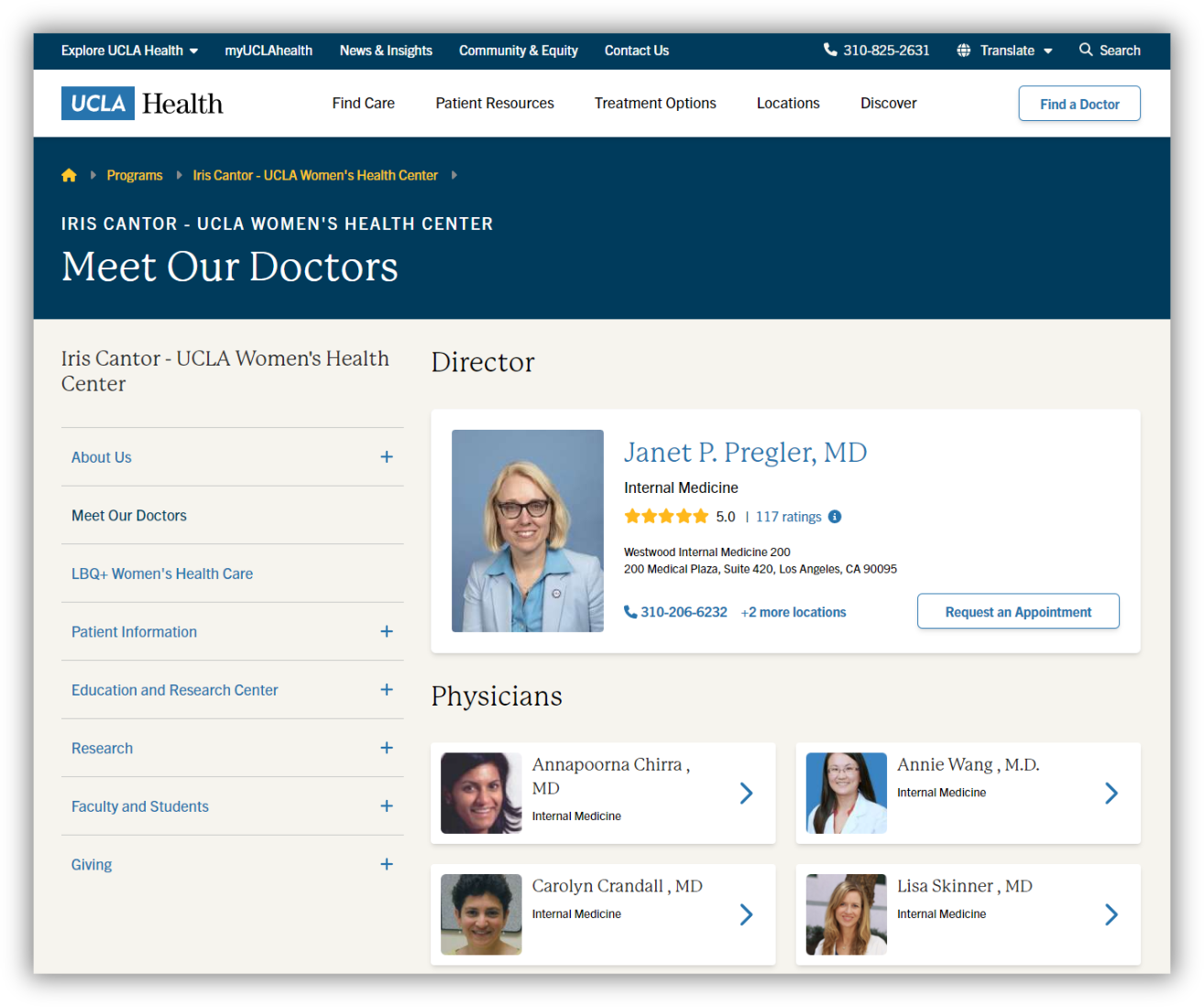
Use Images of Patients and Staff To Increase Trust
Showcase your medical team to personalize your website and build trust with visitors.
chapter 3 - section 9
Use Images of Patients and Staff To Increase Trust
chapter 3 - section 10
Use Images of Patients and Staff To Increase Trust
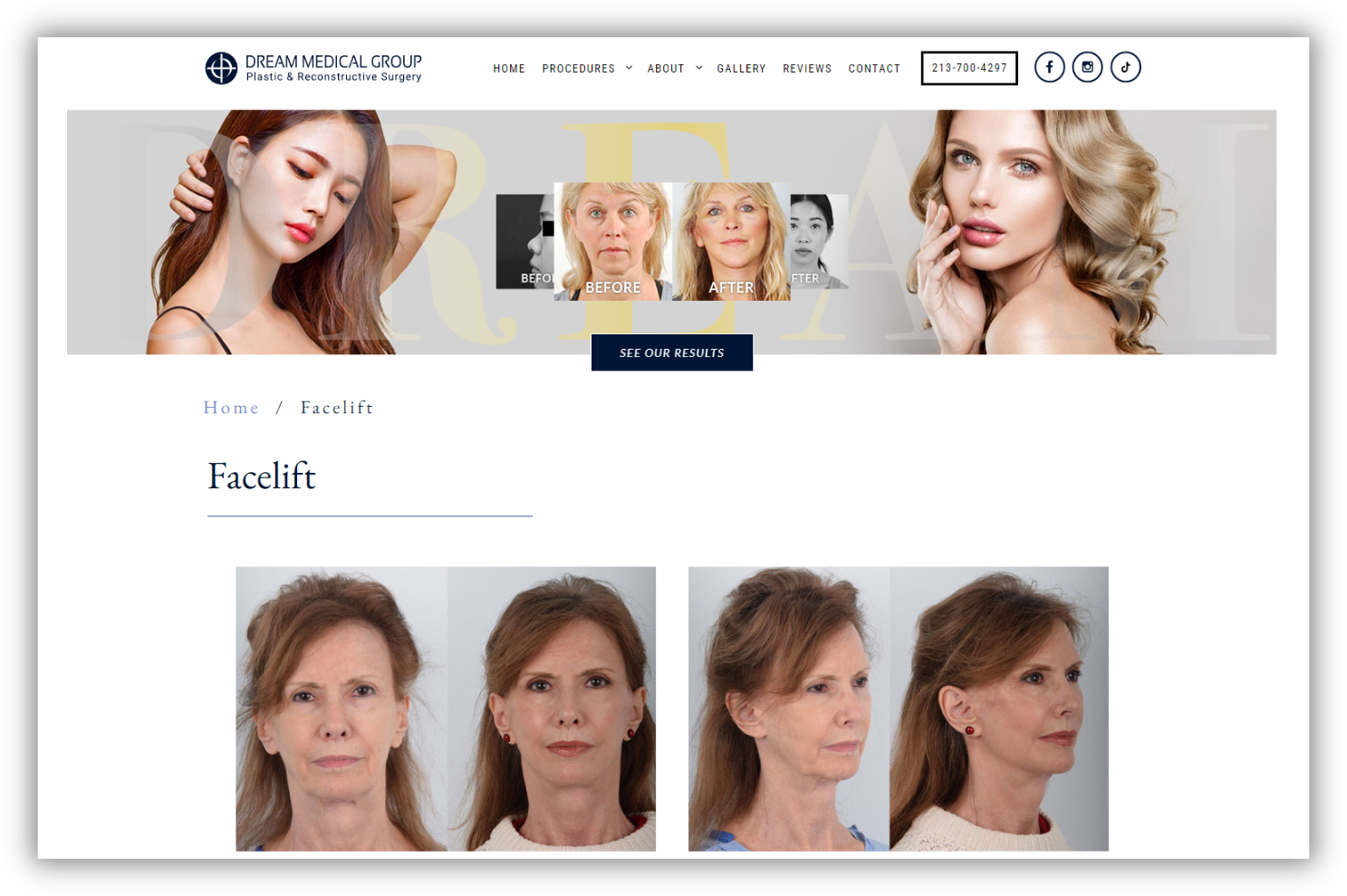
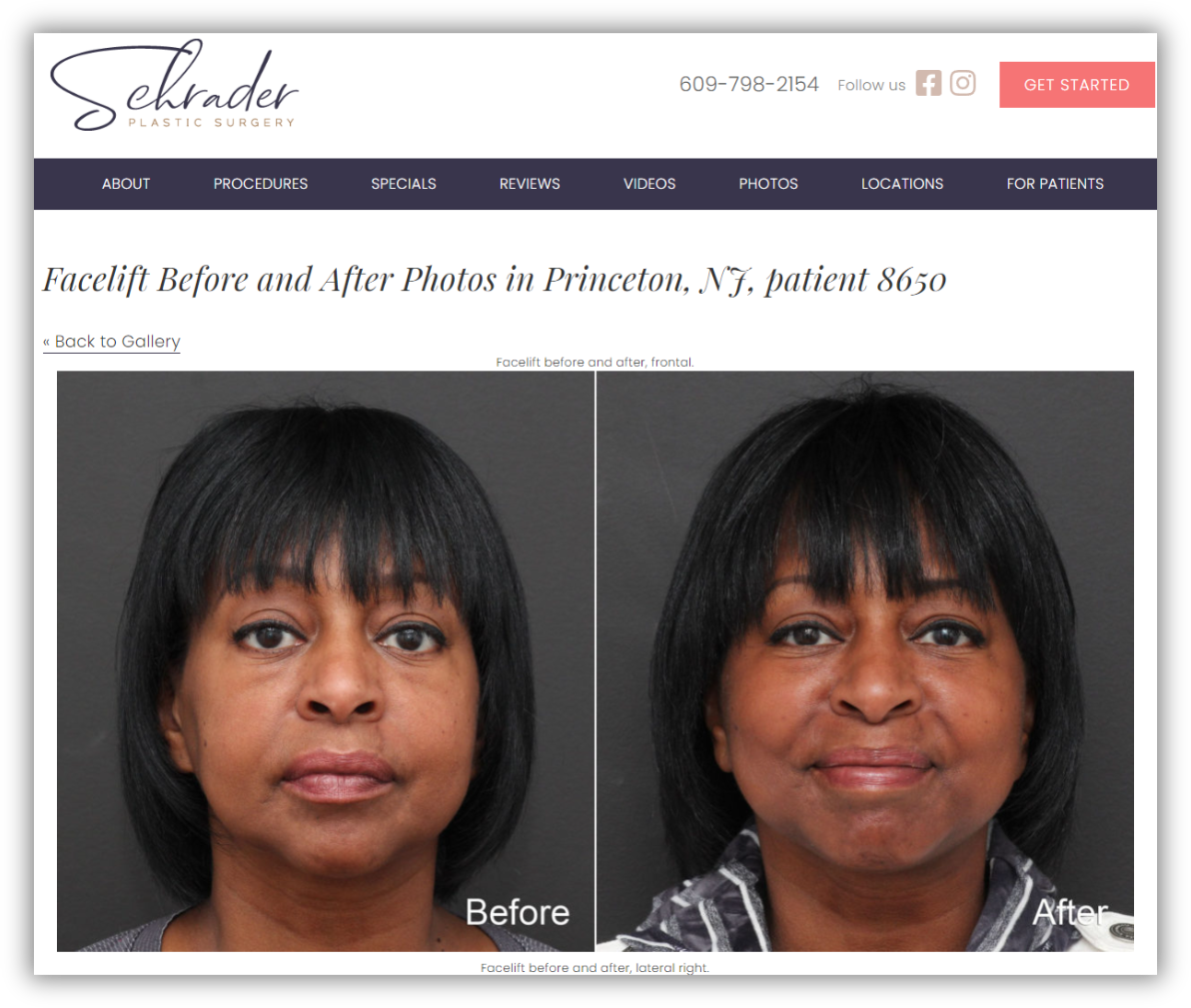
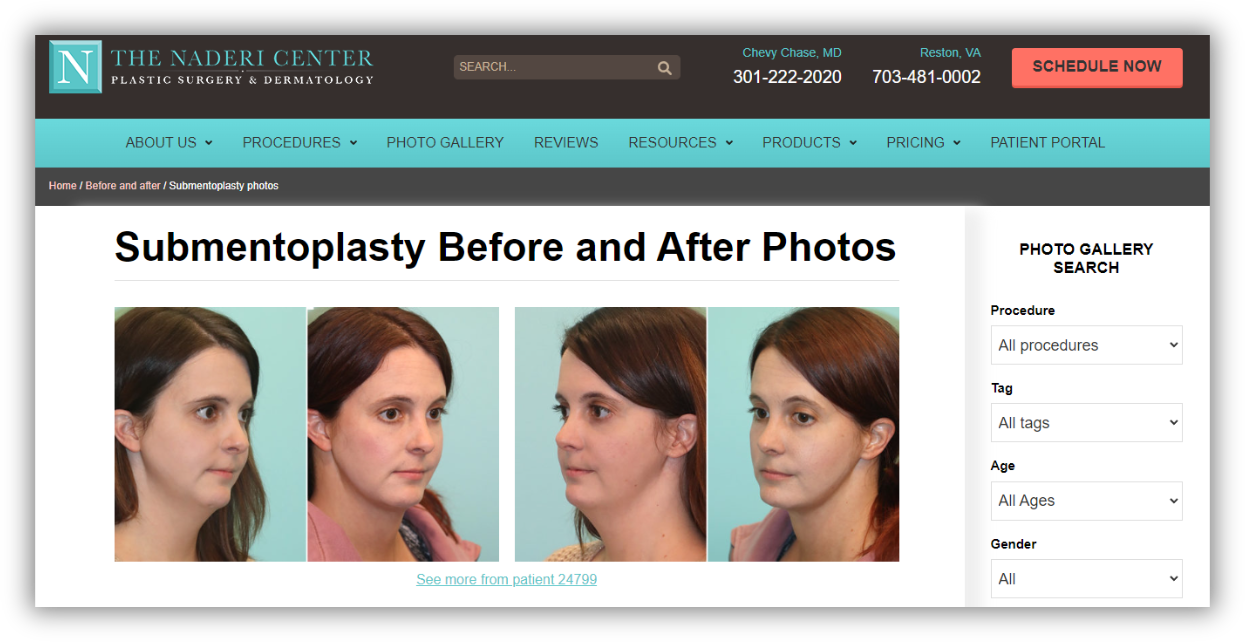
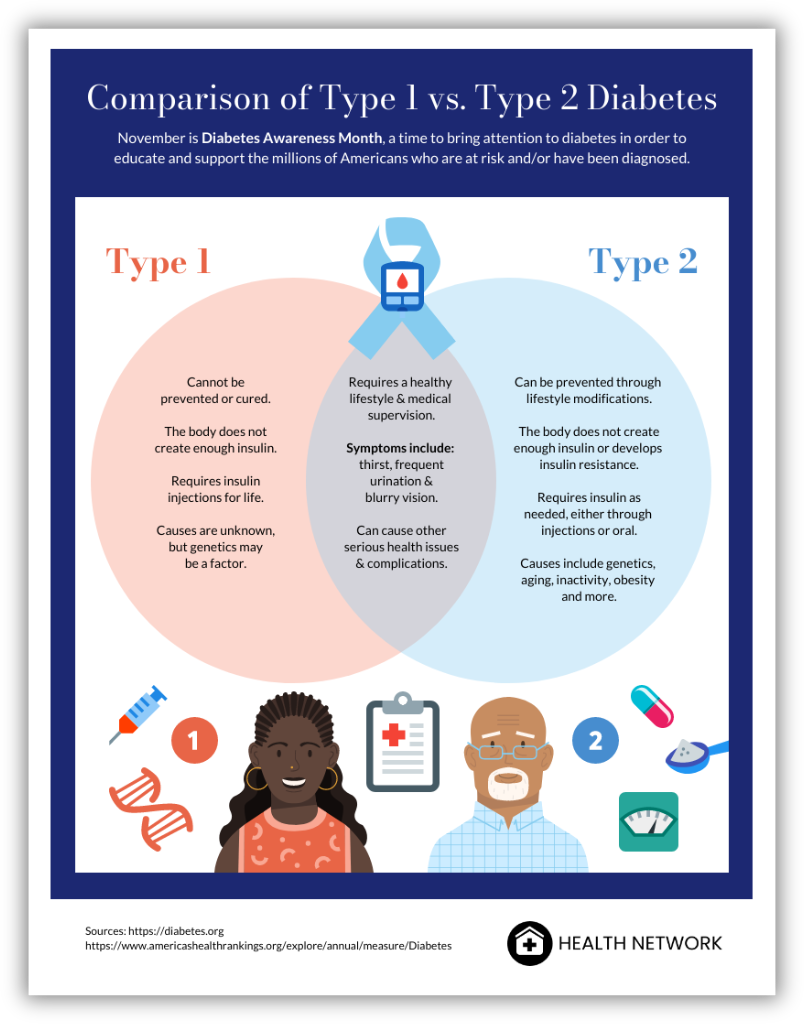
Share visual representations of patient outcomes to demonstrate the effectiveness of your services.
chapter 3 - section 11
Use Images of Patients and Staff To Increase Trust
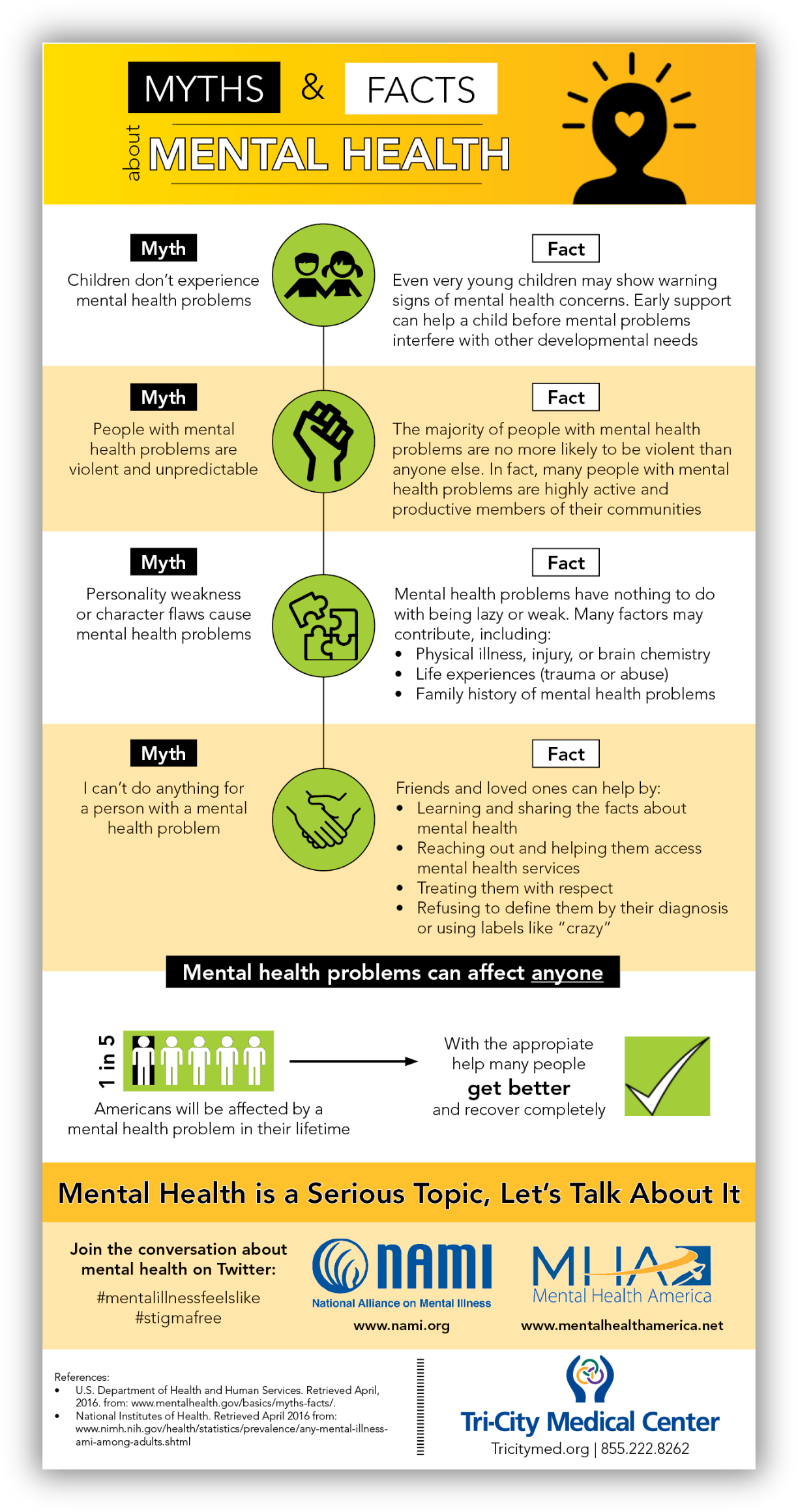
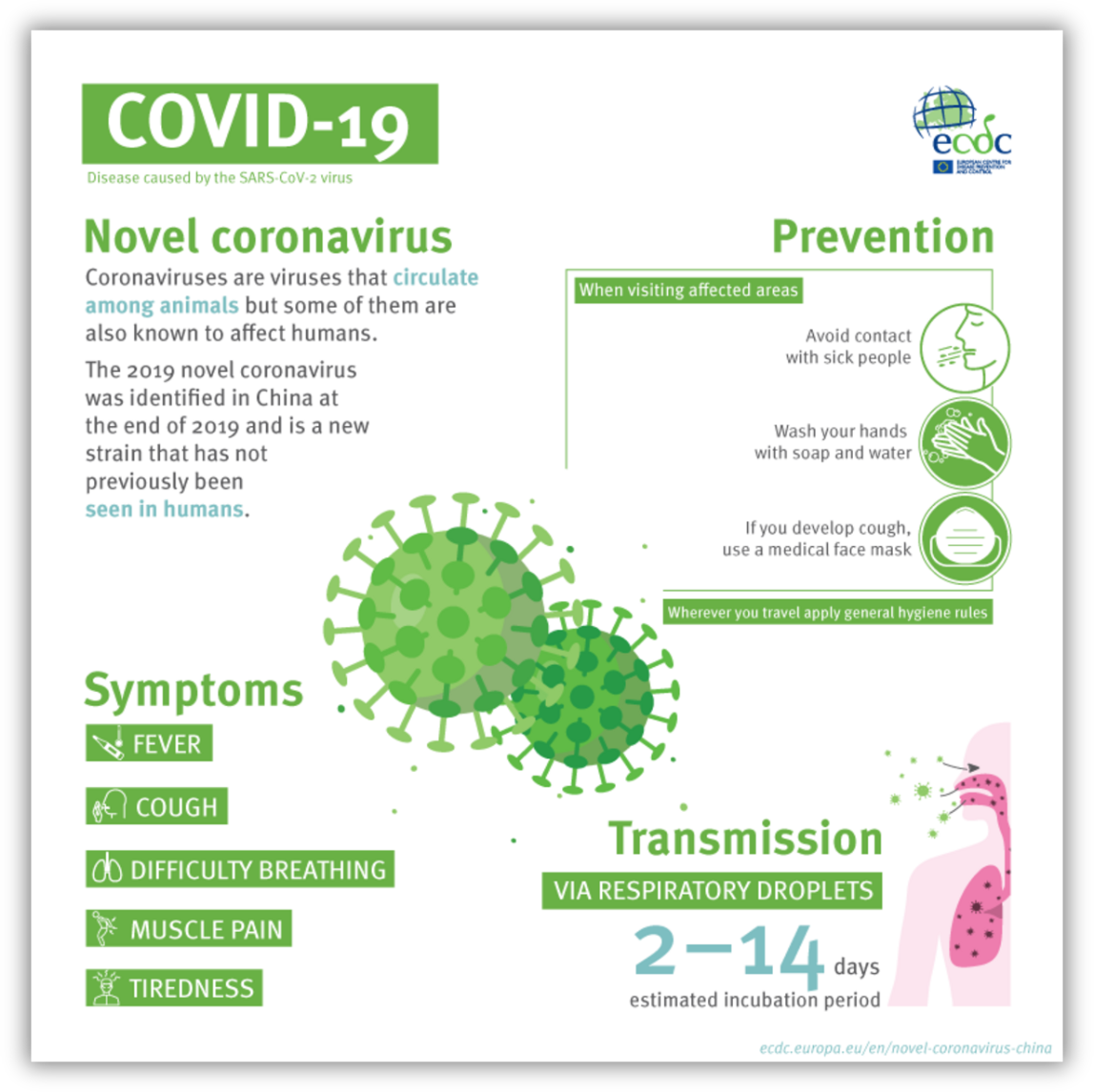
Create visually appealing infographics to present complex medical information in a simplified format.
chapter 3 - section 12
Use Images of Patients and Staff To Increase Trust
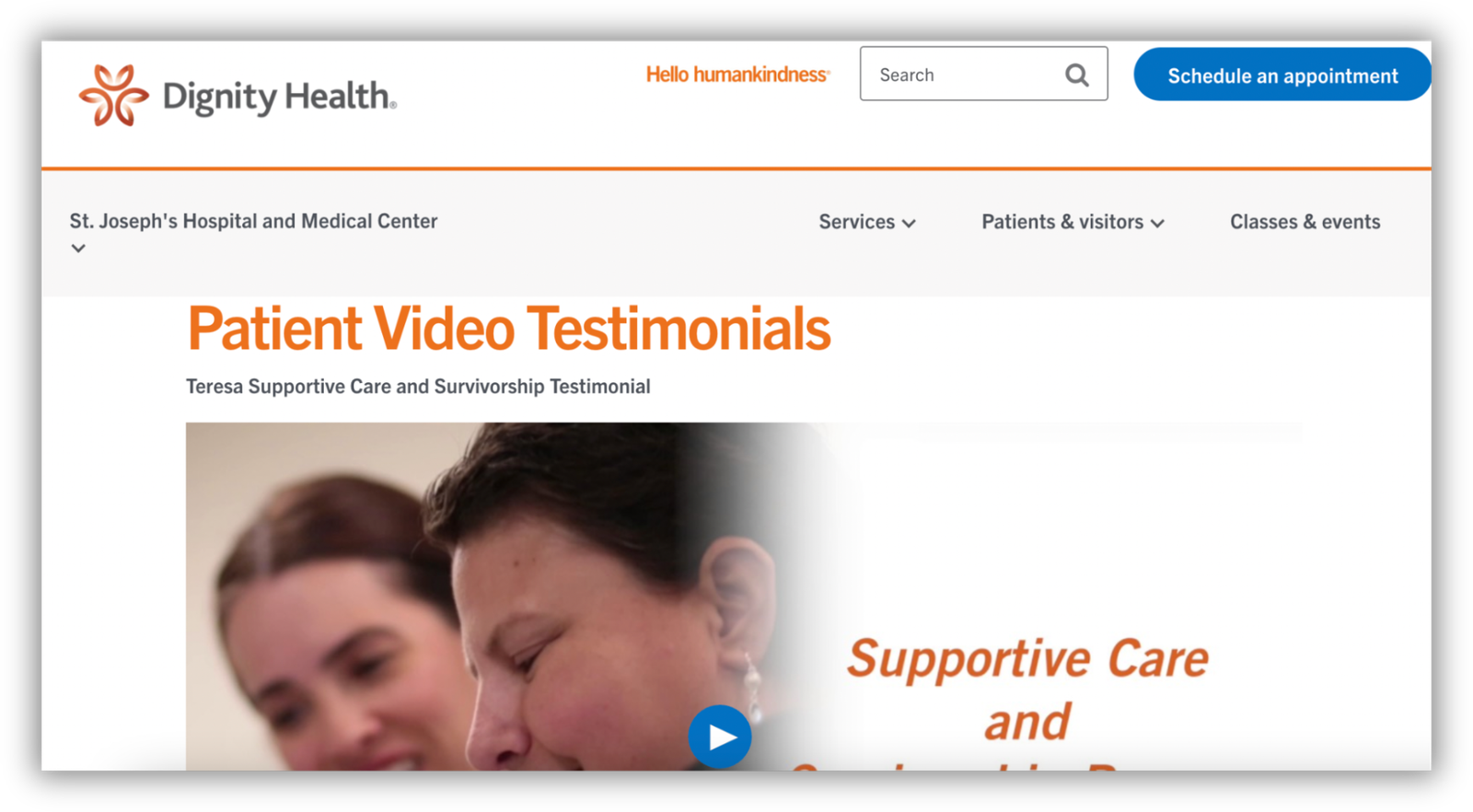
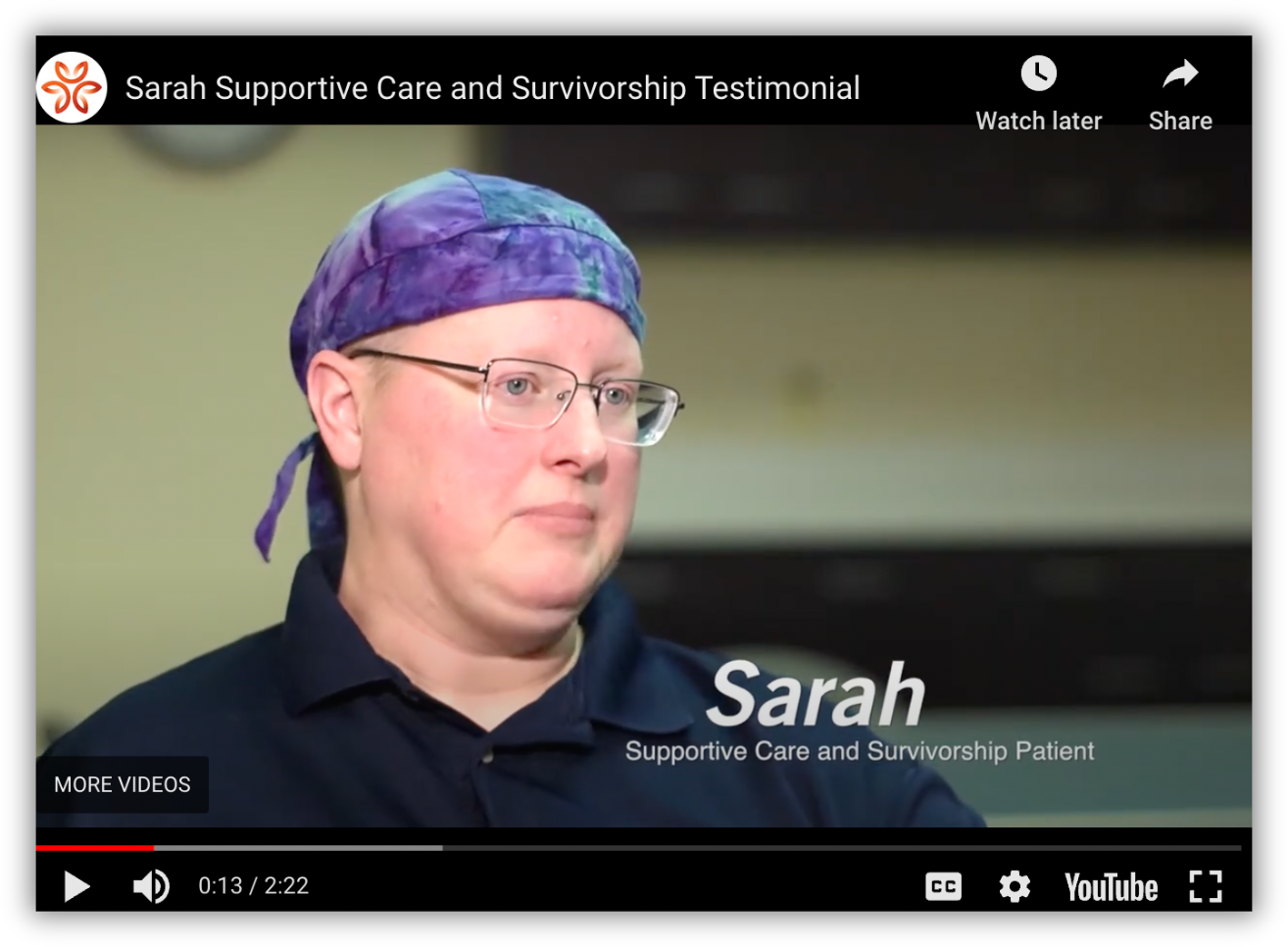
Feature video testimonials from satisfied patients to establish credibility and inspire confidence in your services.

chapter 3 - section 13
Acquire High-Authority Backlinks
chapter 3 - section 14
Checklist To Make Your Website YMYL Compliant
| Item | Checklist |
|---|---|
| 1 | Ensure that your content is medically-reviewed, well-researched, and up-to-date. |
| 2 | Provide valuable information that is helpful to users and meets their needs. |
| 3 | Avoid misleading or deceptive content that could harm users. |
| 4 | Clearly attribute content to specific authors who have expertise in the subject matter. |
| 5 | Include author bios and credentials to establish authority and trustworthiness. |
| 6 | Demonstrate the expertise of your authors through relevant experience and qualifications. |
| 7 | Provide accurate and easy-to-find contact information for users who may have questions or concerns. |
| 8 | Avoid deceptive practices such as keyword stuffing or cloaking. |
| 9 | Review and update outdated content as needed to maintain its value to users. |
| 10 | Monitor your website for any issues or discrepancies that could affect its trustworthiness. |
- Ensure that your content is medically-reviewed, well-researched, and up-to-date.
- Provide valuable information that is helpful to users and meets their needs.
- Avoid misleading or deceptive content that could harm users.
- Clearly attribute content to specific authors who have expertise in the subject matter.
- Include author bios and credentials to establish authority and trustworthiness.
- Demonstrate the expertise of your authors through relevant experience and qualifications.
- Provide accurate and easy-to-find contact information for users who may have questions or concerns.
- Avoid deceptive practices such as keyword stuffing or cloaking.
- Review and update outdated content as needed to maintain its value to users.
- Monitor your website for any issues or discrepancies that could affect its trustworthiness.
chapter 3 - section 15
Let's Craft Your Healthcare Brand Journey Together
Elevate, Innovate, Captivate!
Supercharge Your Healthcare Marketing with Brenton Way - The Premier Full-Scale Digital Marketing Agency for Medical Practices
Brenton Way is a top-rated marketing firm for healthcare businesses. Our comprehensive healthcare marketing services include influencer partnerships, PR strategies, social media management, branding, paid campaign management, and creative content development.


Source standard for this playbook
Brenton Way prioritizes primary regulatory, platform, and search documentation for healthcare marketing claims, then uses reputable research and Brenton Way case proof for market context.
Healthcare Marketing Playbook FAQs
What makes healthcare marketing different from general digital marketing?
Healthcare marketing has to balance patient acquisition with privacy, clinical accuracy, platform policy, reputation, access, and trust. The right system reviews claims, forms, tracking, audience activation, and patient journeys before scaling spend.
Does this playbook replace legal or medical review?
No. This Brenton Way playbook is marketing strategy guidance, not legal, medical, clinical, coding, or reimbursement advice. Healthcare teams should review campaigns with qualified counsel, compliance, and clinical reviewers before launch.
How should healthcare brands use email segmentation?
Use segmentation to improve relevance without exposing or misusing protected health information. Build consented preference segments, separate operational and promotional messages, and review HIPAA, FTC, and platform requirements before activating patient data.
Can healthcare brands use pop-ups and quizzes safely?
Yes, when the offer is educational, the language avoids diagnosis or treatment promises, and the form does not collect unnecessary sensitive details. Symptom, medication, condition, or procedure-intent questions need a stricter privacy and compliance review before they become marketing signals.
What should be reviewed before launching a healthcare lead magnet?
Review the claim language, source support, form fields, consent copy, analytics tags, CRM fields, email follow-up, and retargeting audiences. The goal is to collect useful demand signals without turning private health context into ordinary marketing data.
How does Brenton Way prove healthcare marketing expertise?
Brenton Way supports the playbook with healthcare and wellness case studies, service-line experience, calculators, search resources, and a source standard that favors primary regulatory, platform, and research citations over unsupported marketing claims.
Sources and related Brenton Way resources
Healthcare marketing advice should be easy to check. These links support the playbook with primary guidance, related services, planning tools, and Brenton Way healthcare proof.
Healthcare growth pages
Services behind the playbook
Take it with you
Get the complete playbook PDF
Keep the complete 50-page playbook for reference, including email marketing, social media campaigns, medical SEO, and every campaign checklist.
Complete PDF
Inside the complete PDF
Boosting Patient Engagement with Email Marketing
- Collecting email addresses
- Personalizing email content
- Bypassing spam filters
- Setting a consistent email schedule
- Sharing stories and testimonials
Improving Brand Loyalty With Social Media Campaigns
- Establishing objectives
- Understanding audience
- Booking direct appointments
- Maintaining a consistent posting schedule
- Engaging with audience
Ranking Your Healthcare Website on Page #1 With Medical SEO
- Improving website usability and design
- Producing high-quality medical content
- Targeting relevant healthcare keywords
- Optimizing website for high EEAT score
- Building trust with images of patients and staff
- Acquiring high-authority backlinks
- Checklist to make website YMYL compliant
02 chapter 02
Improving Brand Loyalty With Social Media Campaigns