2026 edition
Beauty Marketing Playbook
A practical growth guide for beauty, skincare, cosmetics, haircare, and personal care brands that need stronger acquisition, retention, SEO, email, and paid media systems.

- 30 online sections
- Email, SEO, PPC
- Beauty growth systems
A quick look inside
From growing your audience to helping shoppers choose a product. Jump to the topic you need, or read through the full playbook.
chapter 01
Beauty brand email marketing
Brenton Way figures
37%
of US consumers cite an appealing fragrance as the most important factor when shopping for bodycare products.
15%
of online beauty shoppers in the UK say that play zones to try new products independently would encourage them to shop in-store, rising to 22% among Gen Z.
chapter 1 - section 1
Expand your email list
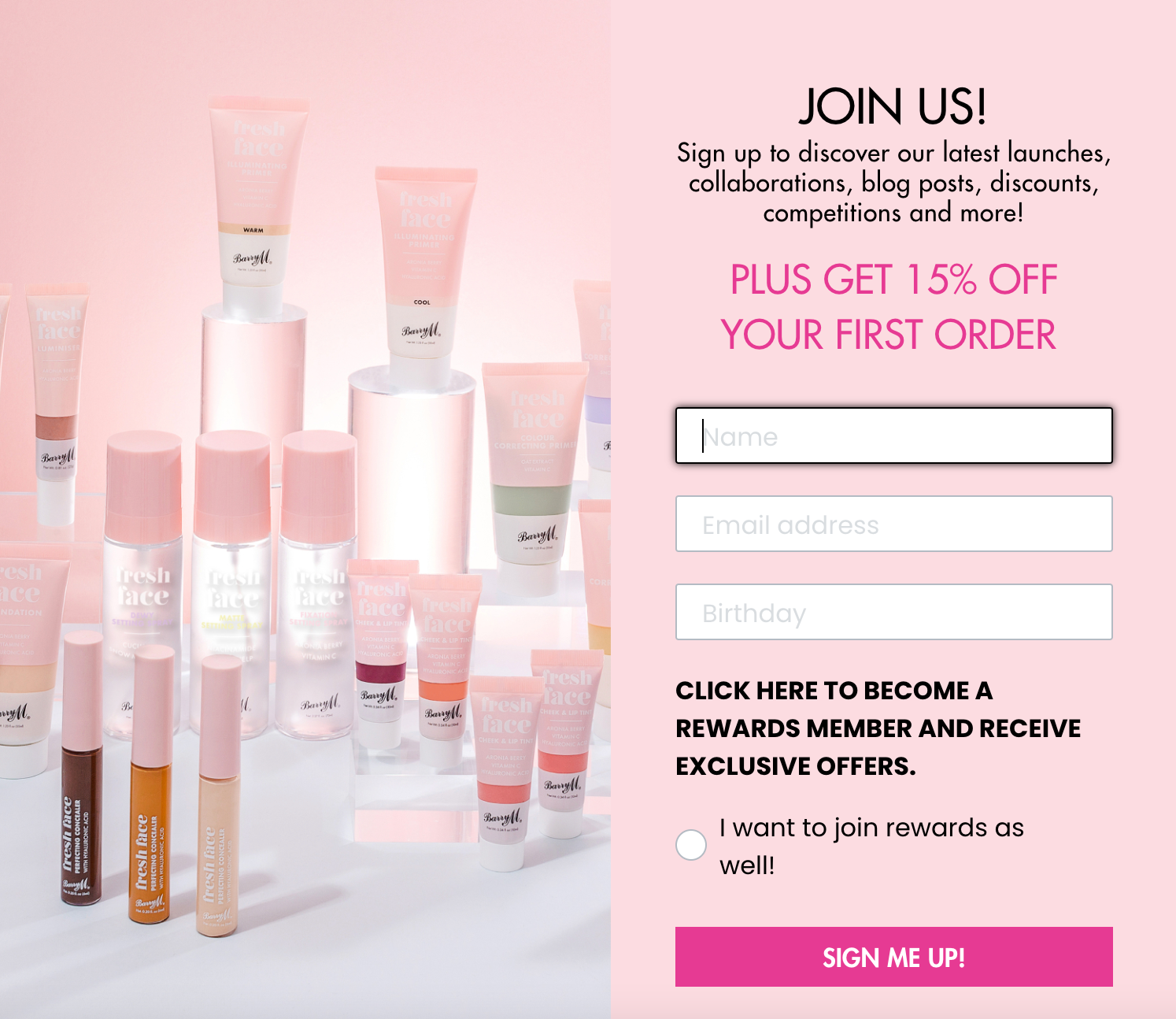
For beauty and skincare marketing teams , the signup offer should explain what a subscriber will receive and what happens next. Keep the offer specific to the products and audience.
The Concrete Minerals example offers a first-order discount. Review the cost of that incentive alongside the orders it generates, using your own margins rather than subscriber count alone.
chapter 1 - section 2
Offer exclusive deals
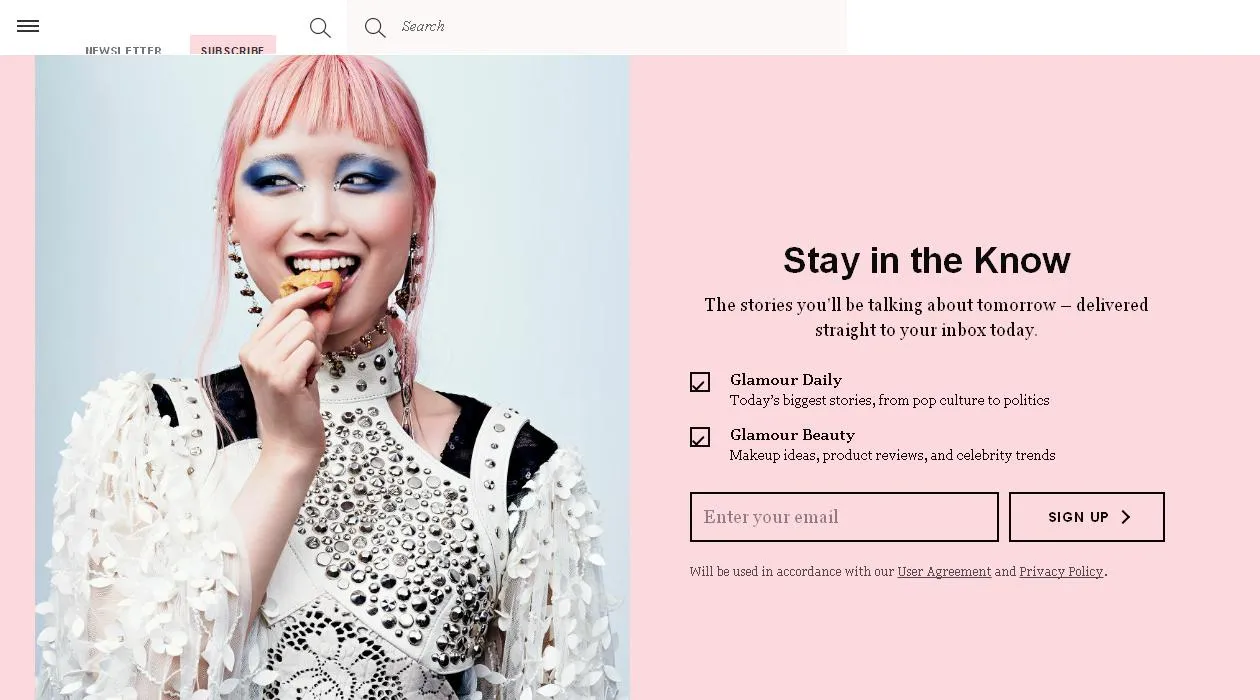
Explain what makes the newsletter worth subscribing to: early access, product advice, or an offer that is genuinely reserved for subscribers.
Before choosing a discount, use the beauty marketing ROI calculator to compare campaign cost, order value, and gross margin.

chapter 1 - section 3
Share stories, samples and shopping-day offers
Give subscribers a useful reason to hear from you: application guidance, product comparisons, creator demonstrations or an opportunity to try a relevant sample.
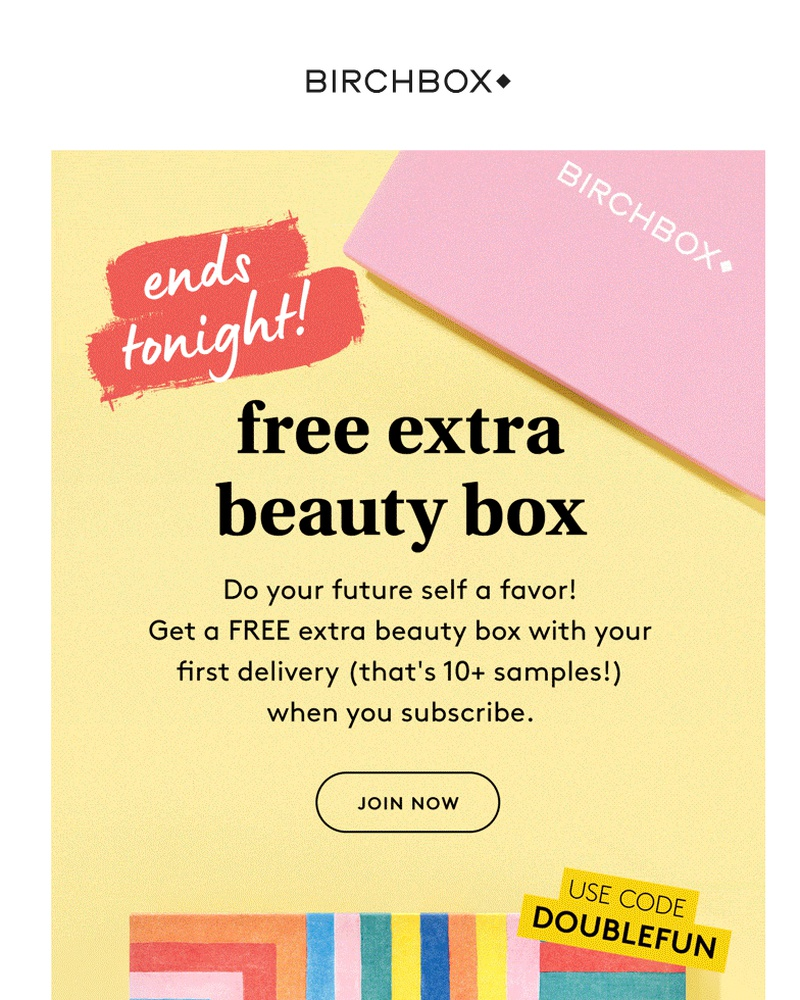
The original Birchbox example shows a beauty-box offer. Use it to consider what a customer needs to try before buying, then plan the messages that follow delivery. The image illustrates the offer; it does not establish how many subscribers or purchases it generated.
chapter 1 - section 4
Share deals on festivals and shopping days
Offer exclusive discounts or promotions tailored specifically for festivals and shopping holidays.
Segment your email list into smaller groups to improve the results of your beauty email marketing campaigns.

chapter 1 - section 5
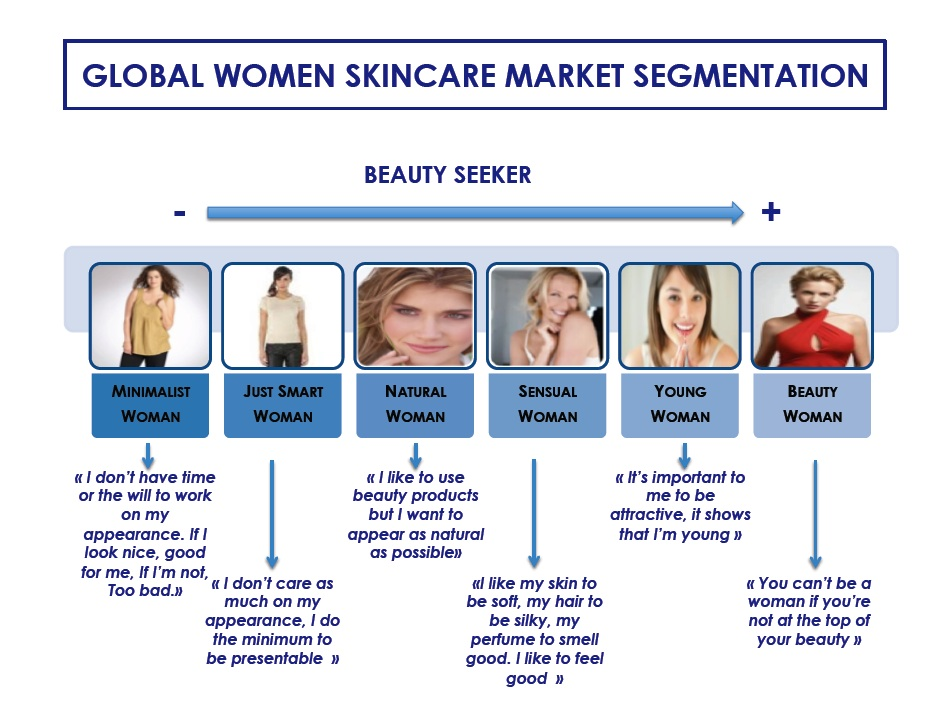
New subscriber and demographic segmentation
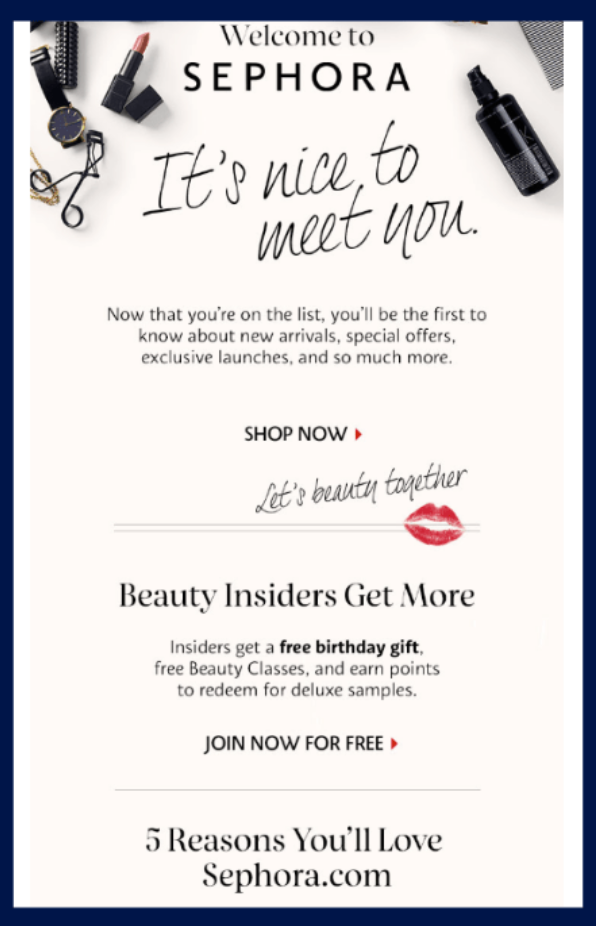
Segmenting new subscribers allows beauty brands to provide a personalized and engaging experience from the moment they join the email list, nurturing them into loyal customers over time.
Demographic segmentation allows you to tailor your cosmetics marketing emails to different groups based on their unique characteristics and preferences.
chapter 1 - section 6
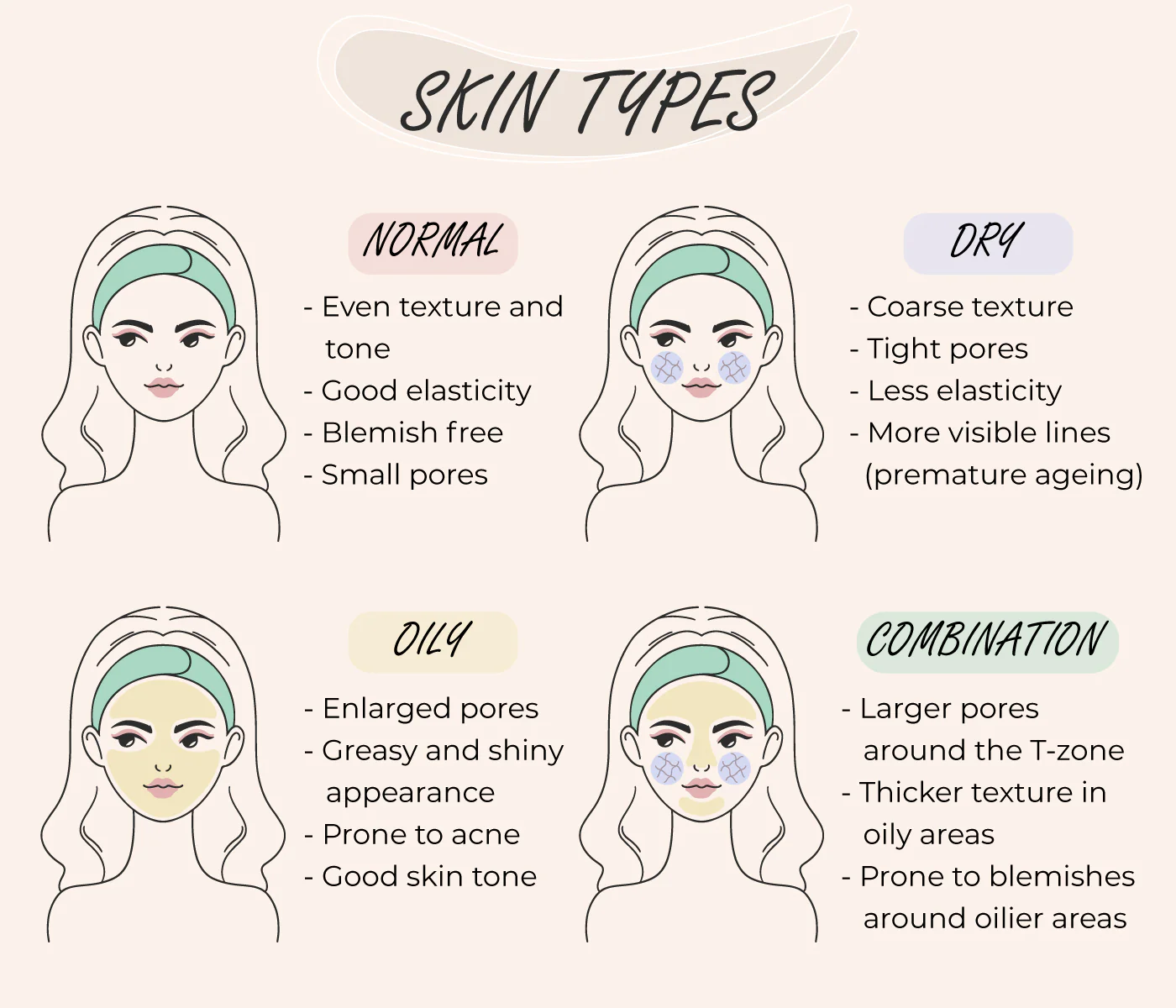
Segmentation based on skin type
Segmenting based on skin types allows you to provide tailored recommendations, skincare tips, and product suggestions for each buyer segment.
chapter 1 - section 7
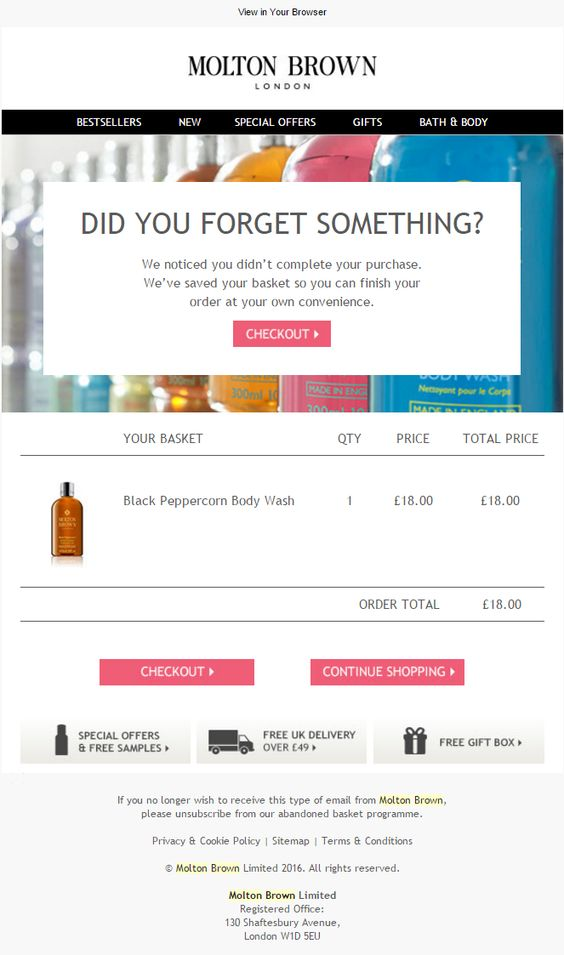
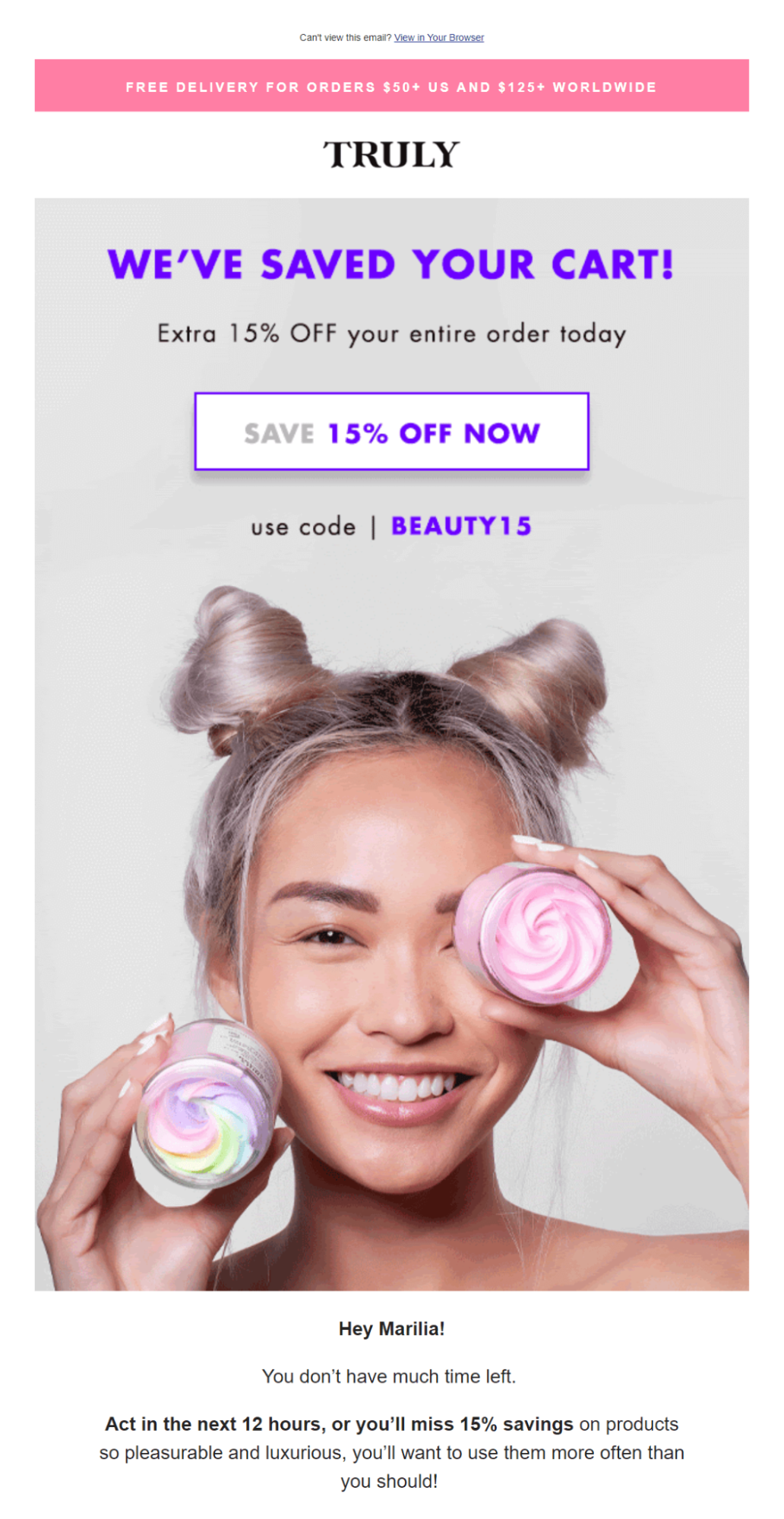
Cart abandoners and purchase-history segments
Send personalized emails to subscribers who have abandoned their shopping carts without completing a purchase.
chapter 1 - section 8
Segmentation based on purchase history
Use purchase history to make the next message useful: help the customer use what they bought, answer a likely question, or suggest a relevant next product.
The review request and replenishment examples show different follow-up goals. Choose timing from the product and customer history rather than sending every buyer the same sequence.
chapter 1 - section 9
Design clear product emails
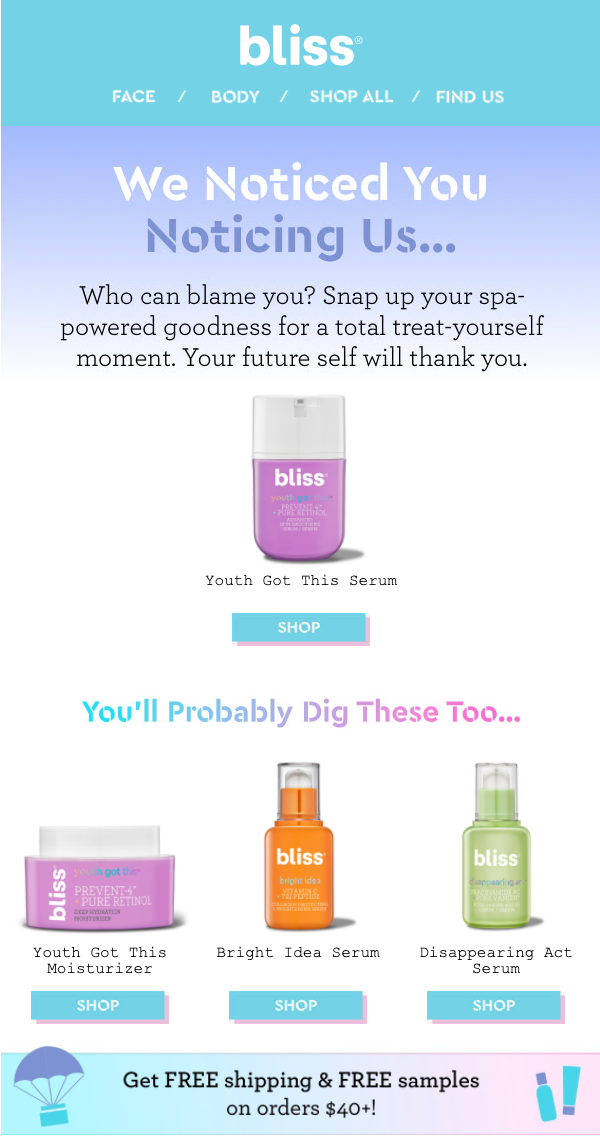
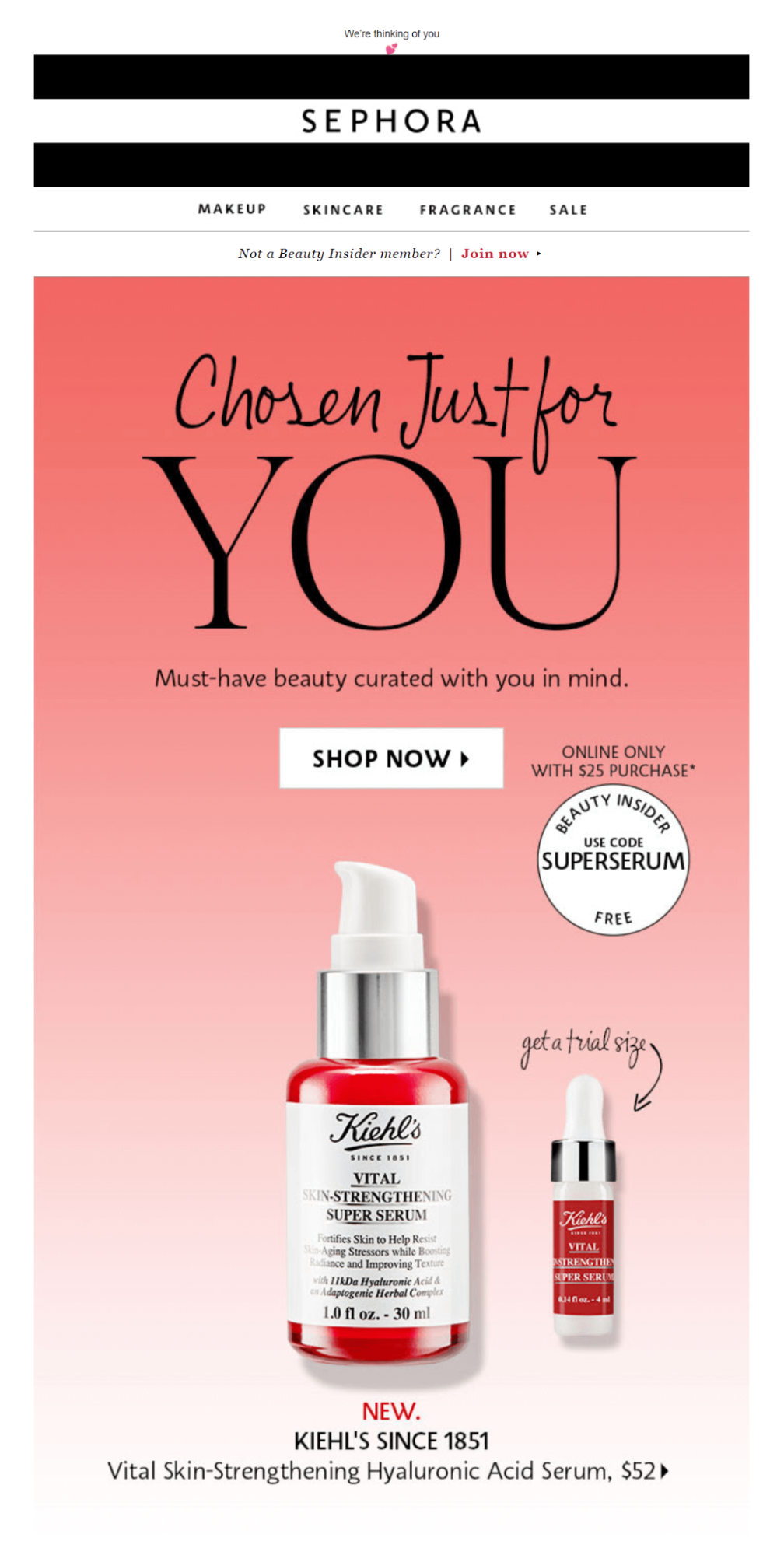
Give each email one clear purpose. Put the product or offer first, make the main action easy to find, and check the layout on a phone.
Use our creative studio to plan the product images, copy, and email layouts a campaign needs. Keep those assets consistent with the landing page that follows the click.
chapter 1 - section 10
Use CTAs and product recommendations that match intent
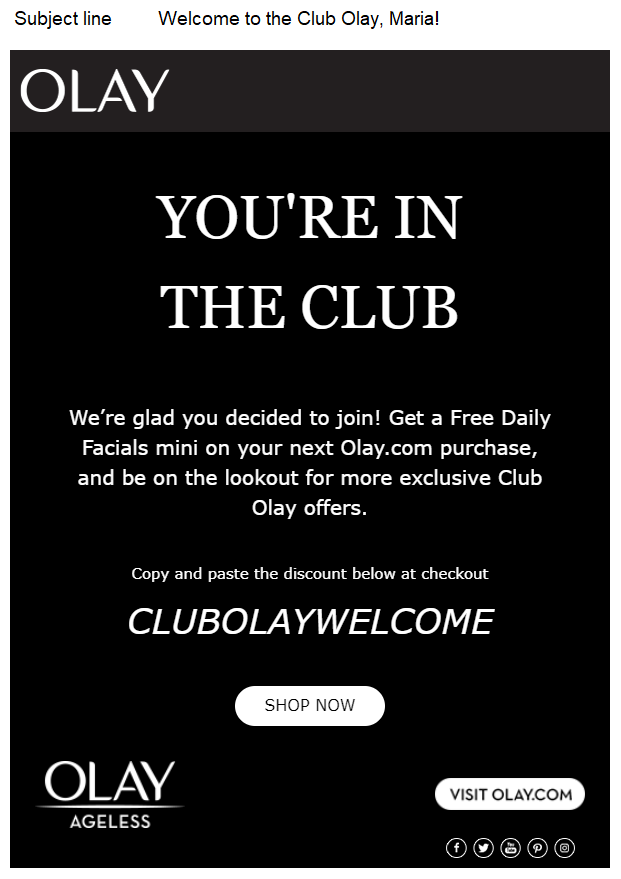
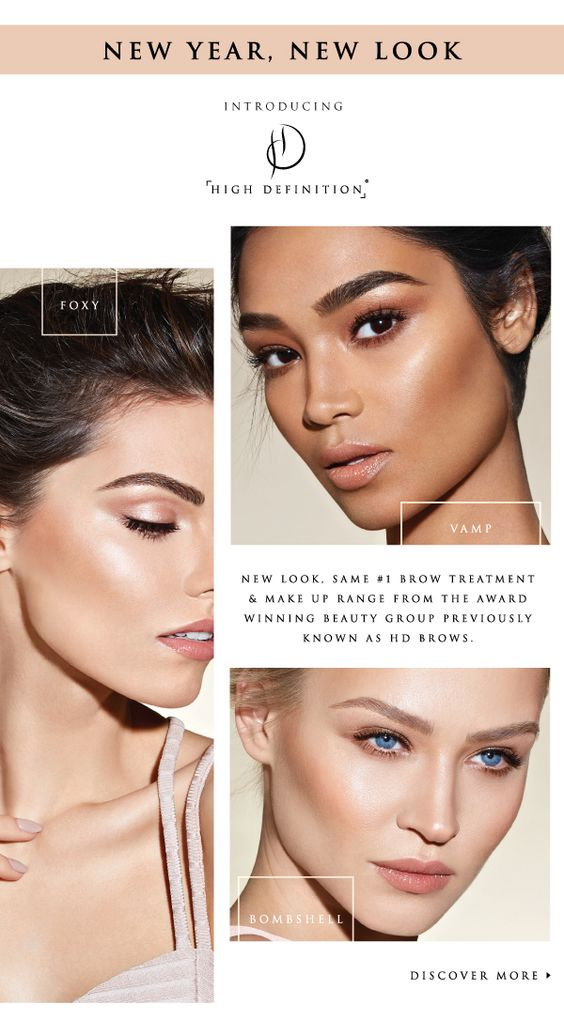
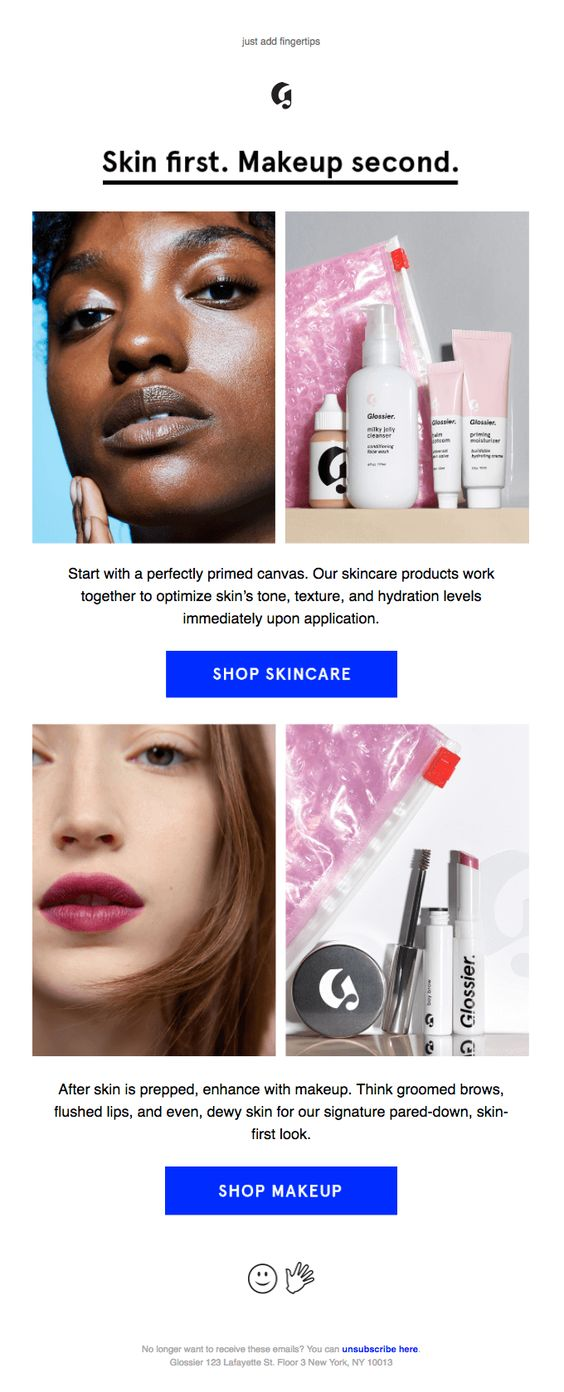
Use clear call-to-action buttons that prompt readers to explore new products or tutorials, and personalise product recommendations around individual skincare concerns or makeup preferences.
Treat the CTA as part of the product education, not just a button at the end of the email. A shopper comparing skincare routines may need "learn more" or "build your routine," while a returning customer may be ready for "complete your set" or "buy again."
Recommendation blocks should connect to what the subscriber has already shown you: product category, skin concern, shade interest, routine stage, cart behavior, or prior purchases.
chapter 1 - section 11
Make emails easy to use on mobile
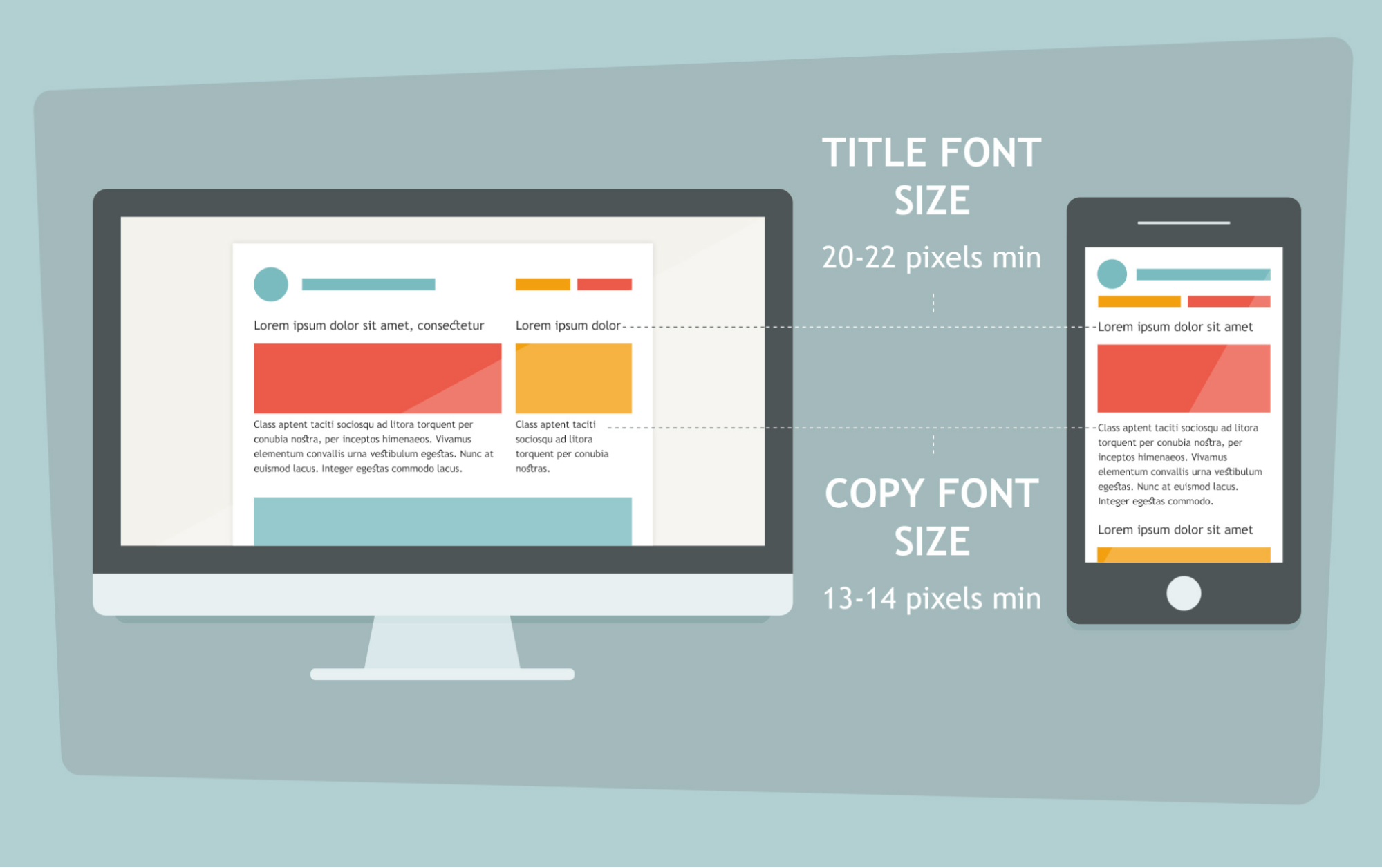
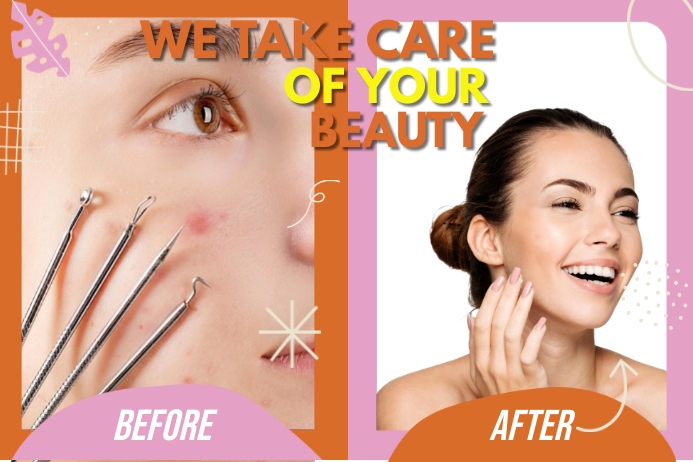
Check that product images, customer quotes, and buttons remain legible on a phone. Show the product in use and make the next step clear.
chapter 1 - section 12
Plan your automated email sequence
Define what starts each email, who should receive it, and what should stop the sequence. A customer who has already purchased should not keep receiving the same cart reminder.
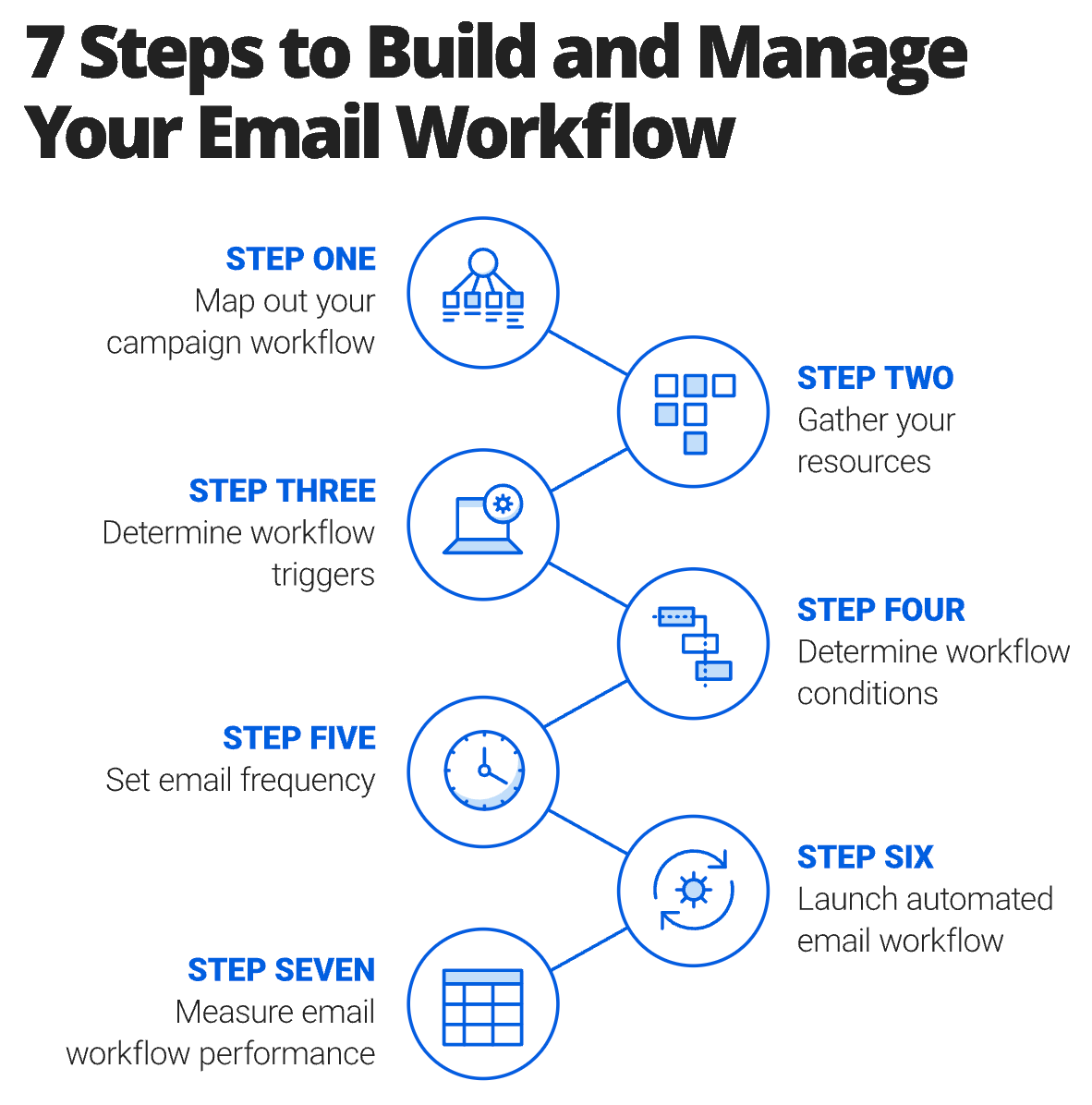
Brenton Way’s email marketing services cover segmentation, automated flows, and campaign testing. Use the workflow below to brief each message before building it.
- Step one: map out your campaign workflow.
- Step two: gather your resources.
- Step three: determine workflow triggers.
- Step four: determine workflow conditions.
- Step five: set email frequency.
- Step six: launch automated email workflow.
- Step seven: measure email workflow performance.
chapter 02
SEO for the cosmetics industry
Brenton Way figures
66%
of US beauty buyers say they prefer to use high-quality products, regardless of price.
77%
of UK adults think technology is having a positive impact on accessing information.
chapter 2 - section 1
Product keyword research
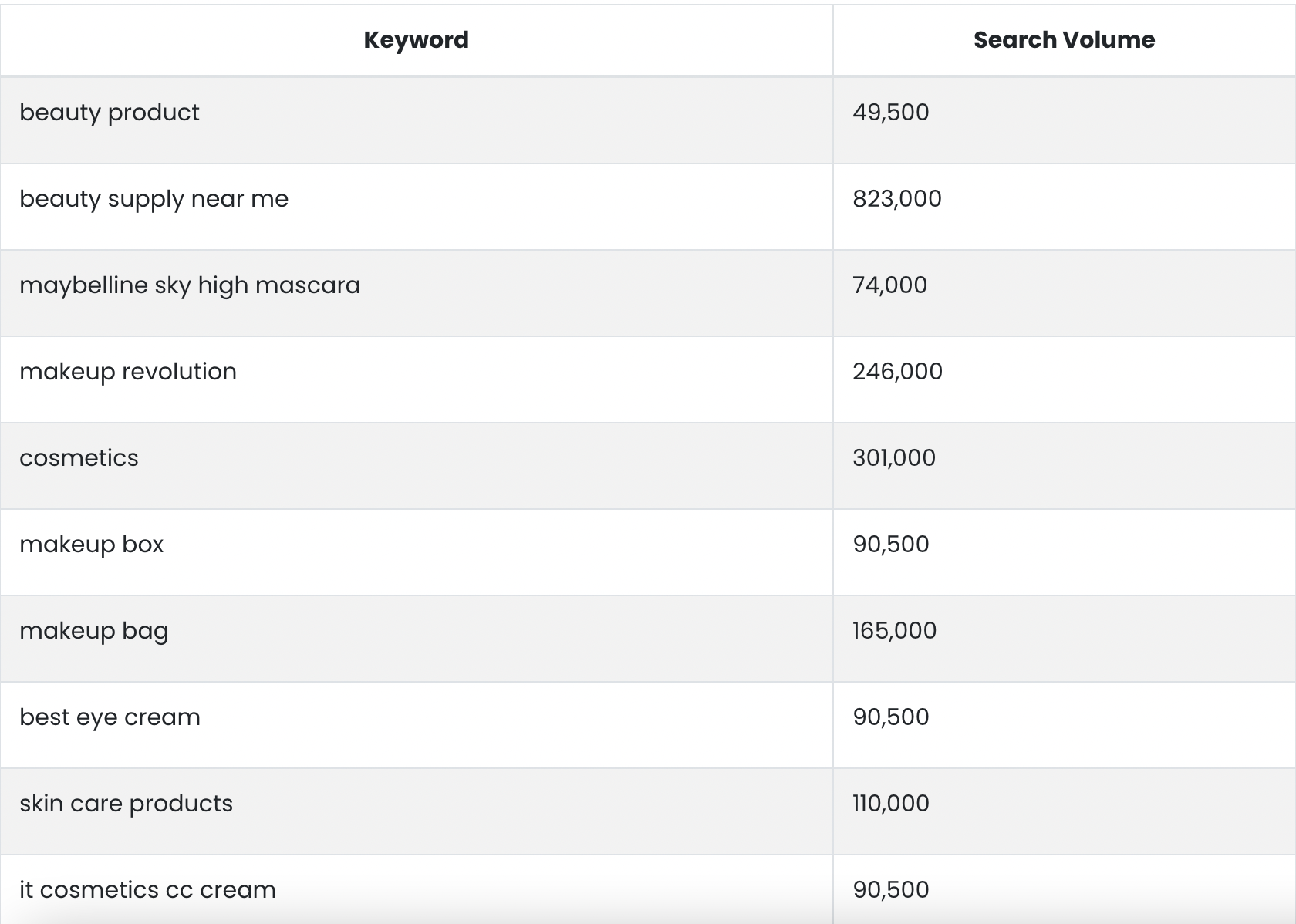
Separate product searches from advice searches. A shopper looking for a shade or product size needs a different page from someone comparing ingredients or building a routine.
Our skincare SEO guide explains how to map those questions to useful pages. Brenton Way’s search marketing services cover keyword research, technical SEO, and content planning.
Use the keyword examples below to decide whether a query belongs on a product page, collection page, or a supporting guide.
chapter 2 - section 2
Research your competitors
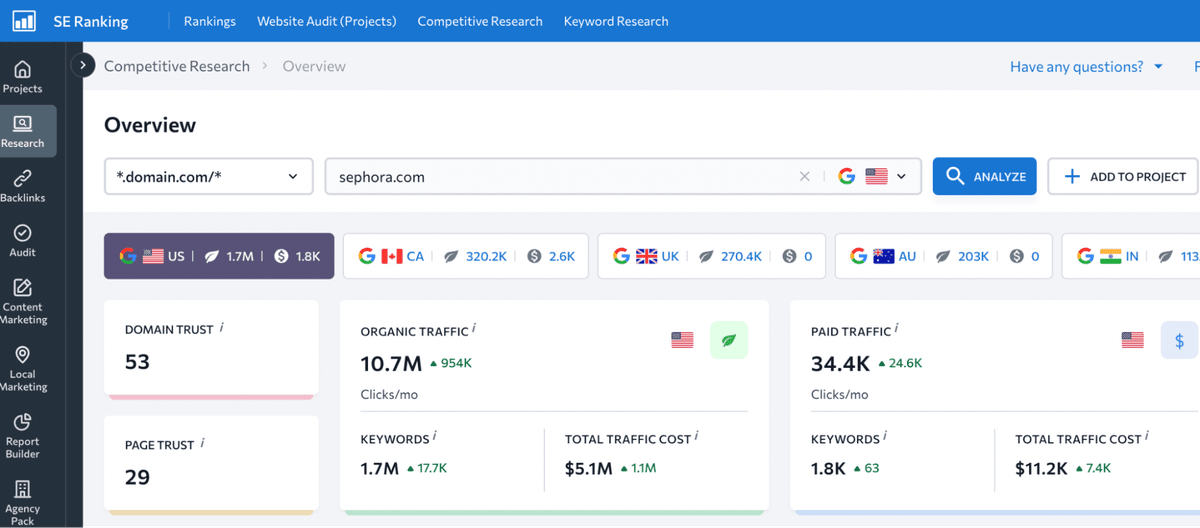
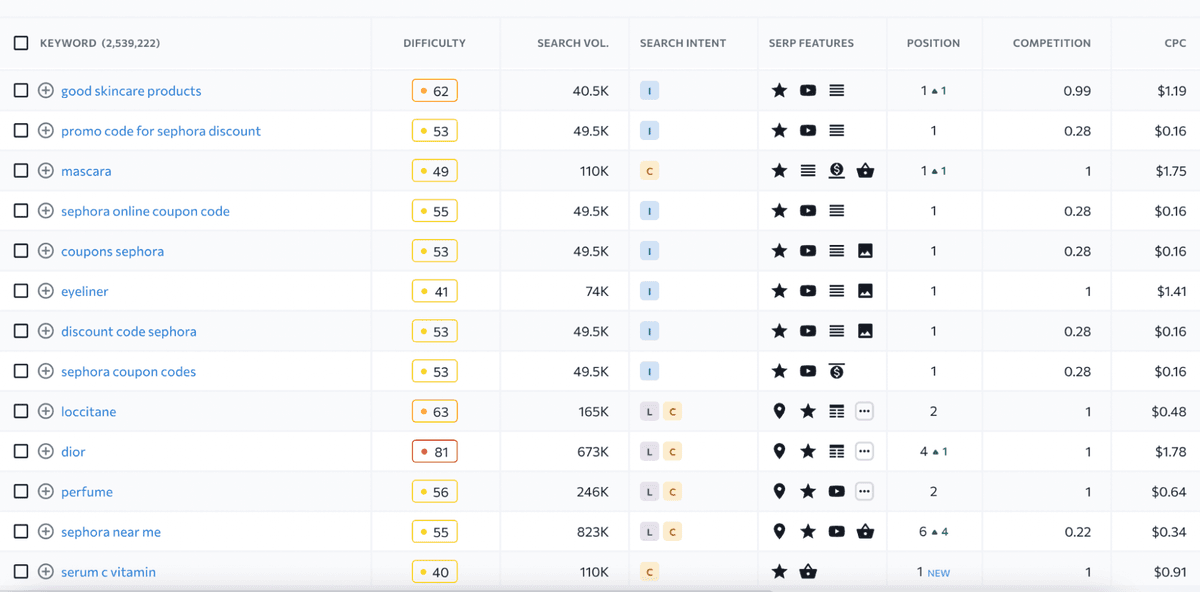
Start with the pages that appear for the product and routine searches you want to serve. Compare the page type, product range, questions answered, and buying information before choosing which gaps to address.
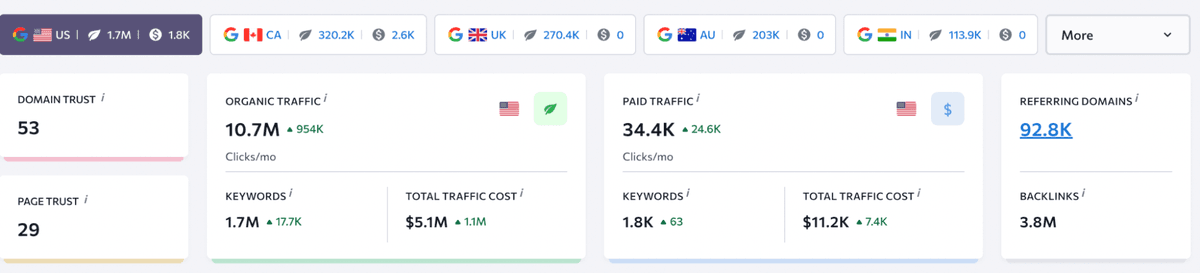
The Sephora research captures show how to inspect keyword intent and ranking pages. Treat the figures as historical examples; refresh the research for your market before using it to plan content or budgets.
Group opportunities into product pages, collections, comparisons, and advice. Prioritize queries you can answer with relevant products and firsthand knowledge.
chapter 2 - section 3
Optimize your website UX
Connect competitor research to the shopping experience. A keyword gap is useful only when the destination helps the visitor find and evaluate the right product.
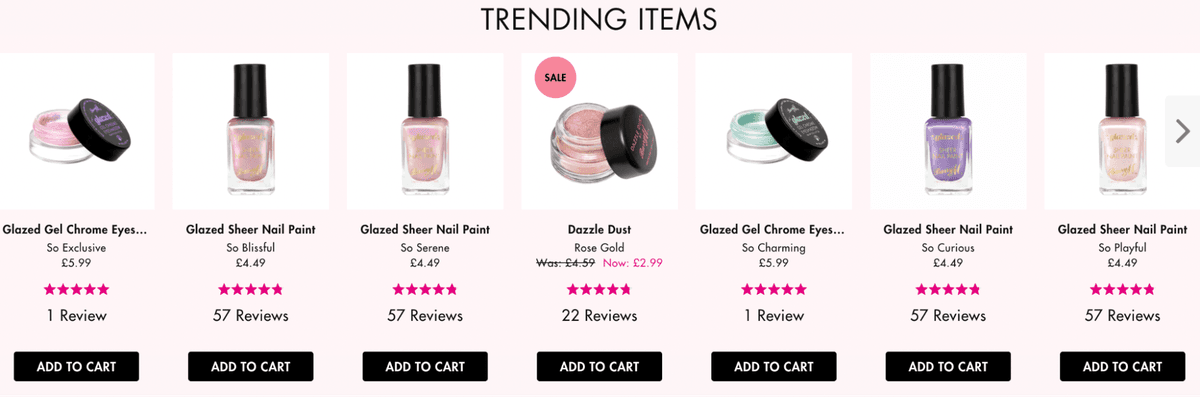
The trending-products example puts product images, prices, ratings, and purchase actions together. Choose a small selection that fits the visitor’s needs and current availability.
Use conversion optimization to test product discovery, product-page clarity, and checkout friction. Compare completed purchases as well as clicks.
chapter 2 - section 4
Make products and buying information easy to find
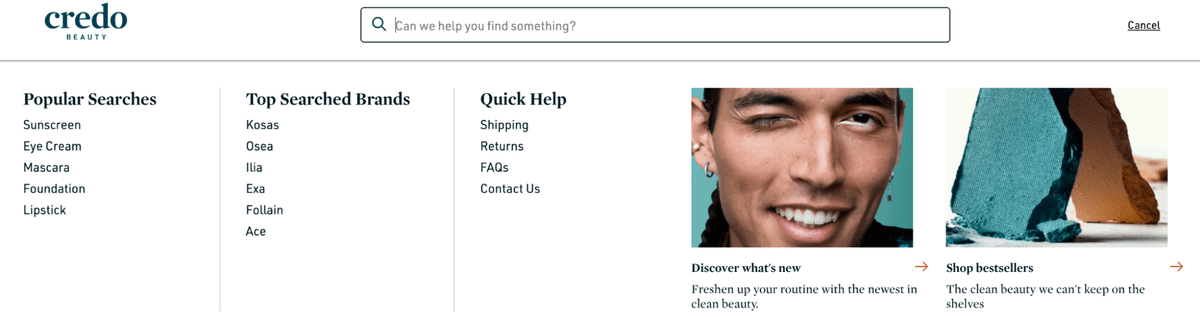
Credo’s search example combines popular searches with shortcuts to shipping, returns, and FAQs. Keep these answers close to the point where shoppers need them.
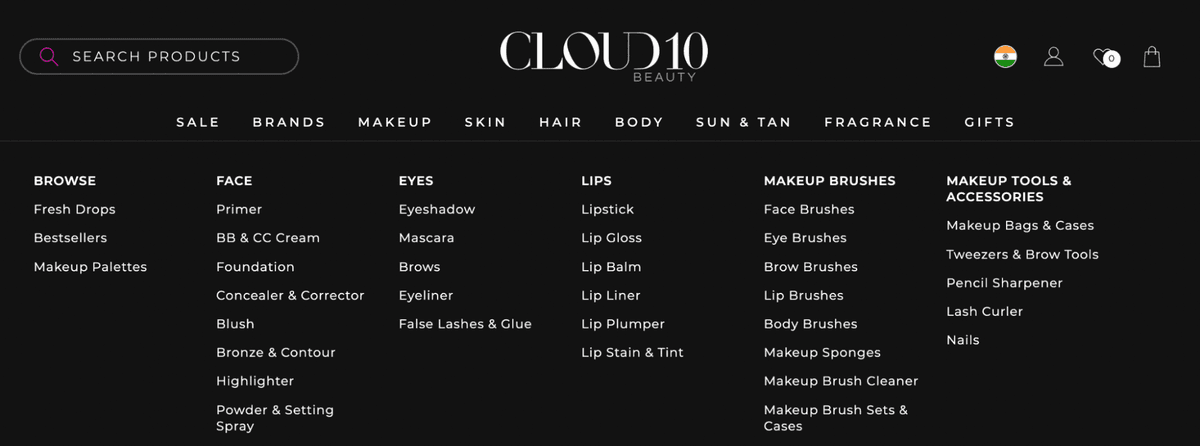
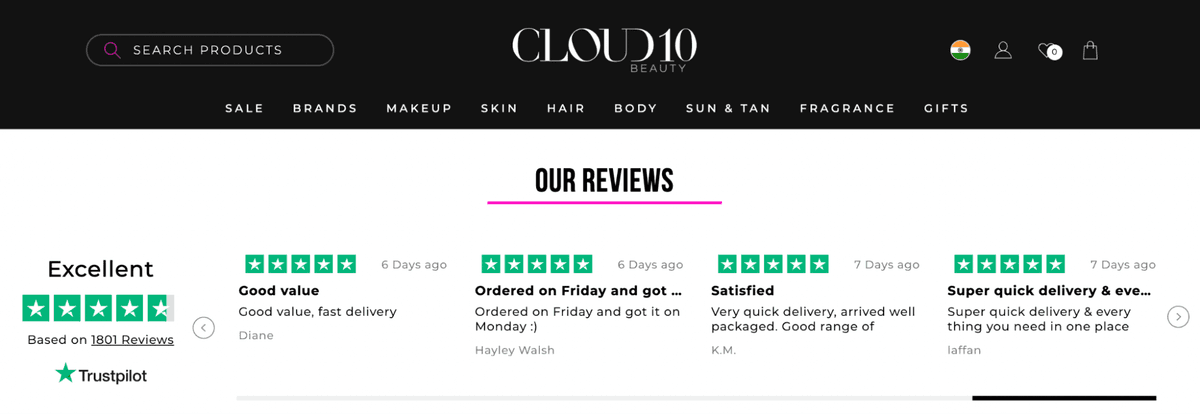
Cloud10’s navigation groups products into recognizable categories. On mobile, check that shoppers can open categories, search, and return to results without losing their place.
The review example shows another source of buying context. Present reviews accurately and make it easy to understand which product or shopping experience they describe.
chapter 2 - section 5
Create useful beauty content with firsthand experience
Show how a product was used, what was observed, and who evaluated it. Original photographs, application notes, and clear comparison criteria give readers something beyond a rewritten product description.
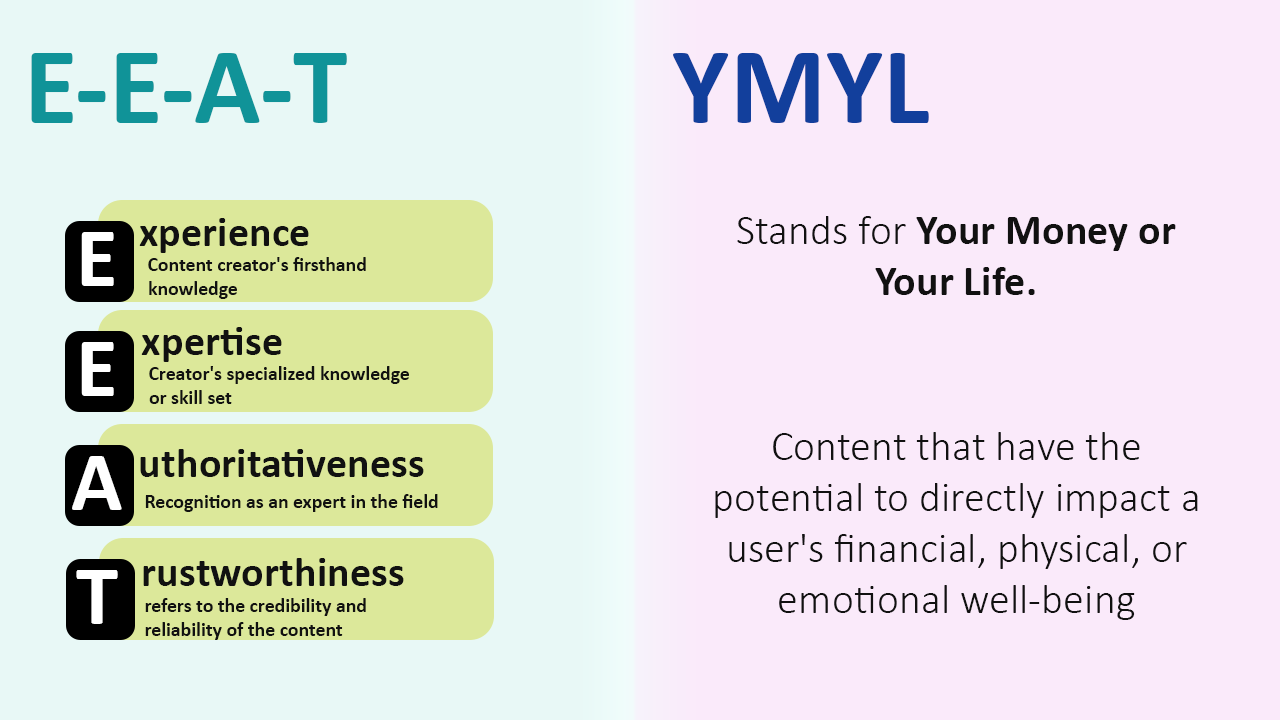
Google’s people-first content guidance describes experience, expertise, authoritativeness, and trustworthiness. E-E-A-T is not a single ranking factor or a certification.
Name the author and relevant reviewer, distinguish observations from product claims, and keep sources close to the statements they support. For a featured product claim, explain what was tested, who took part, how long it was used and what the reported result measures. An ingredient study does not automatically establish the same result for the finished product.
- Document the product, usage conditions, and limits of the review.
- Check factual claims against credible sources.
- Update advice when the product or supporting evidence changes.
chapter 2 - section 6
Answer personal beauty questions
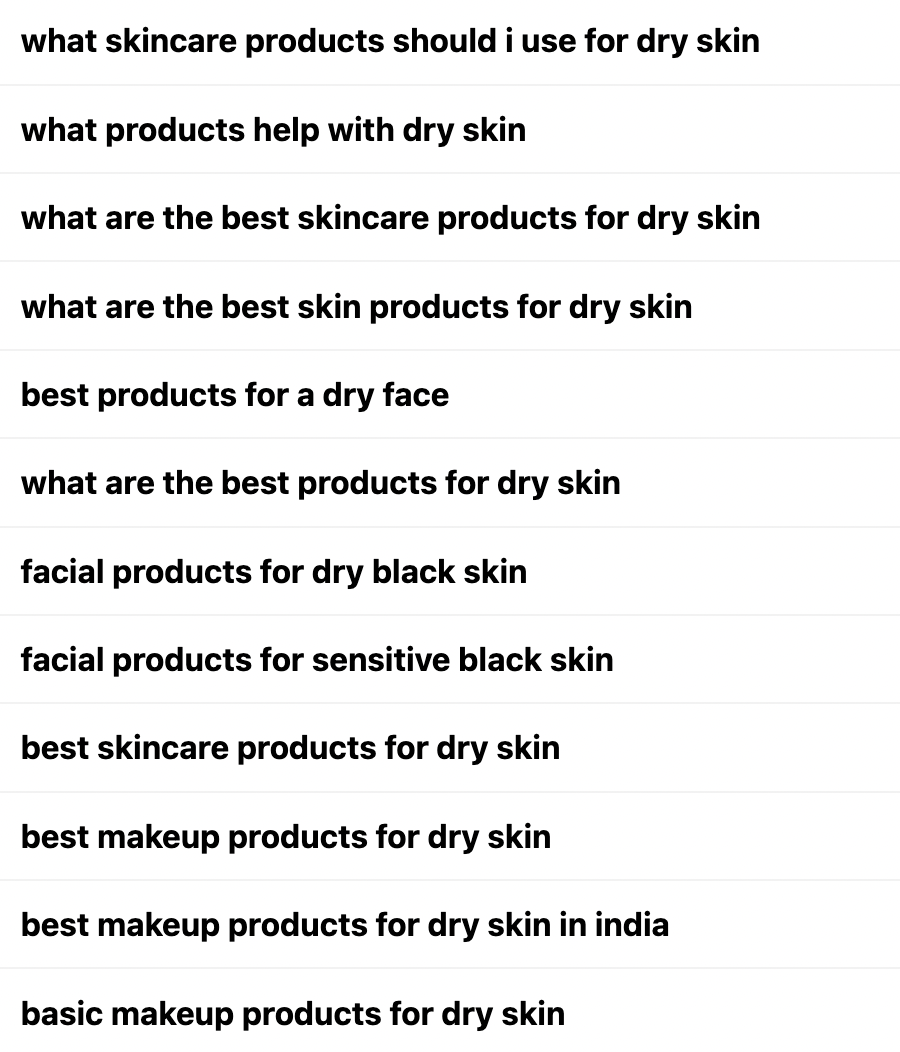
Use customer-service questions, site searches, and search suggestions to find the details shoppers cannot resolve. Group related questions into a useful guide or product FAQ.
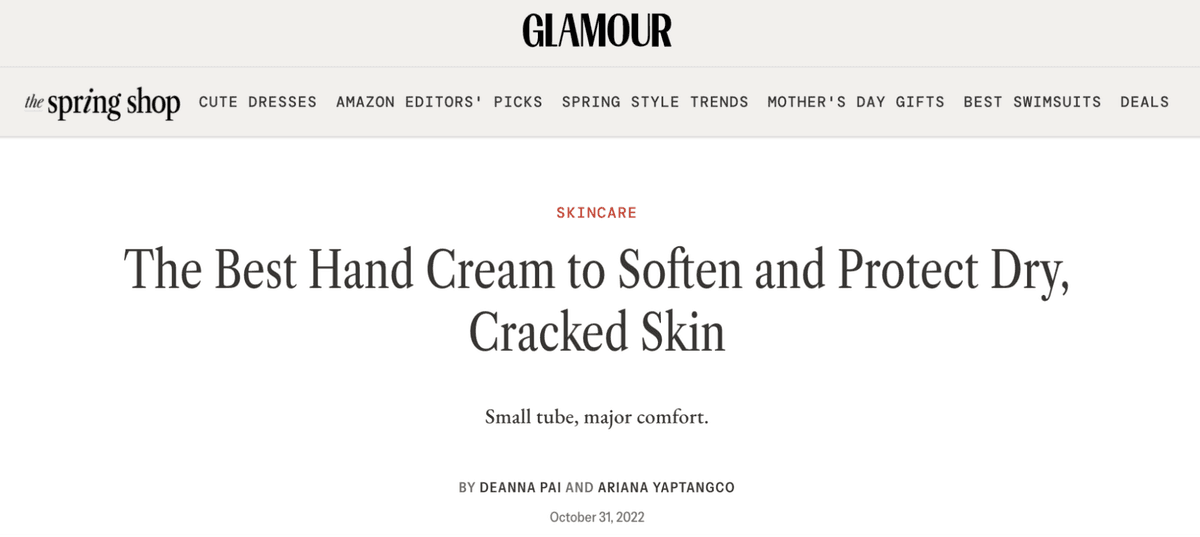
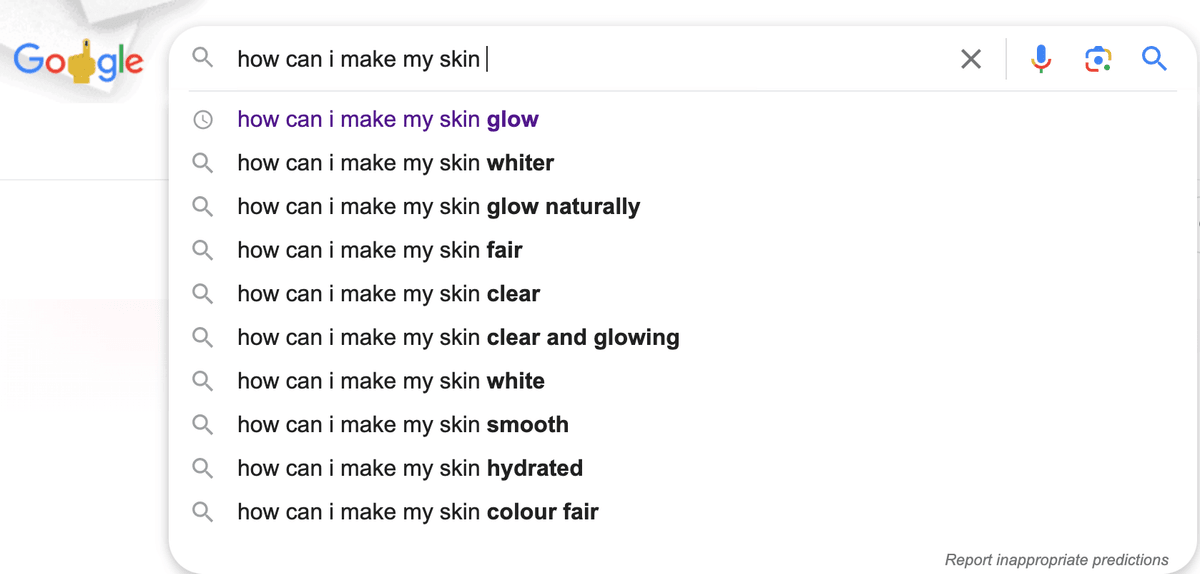
The hand-cream article and search suggestions illustrate two starting points: a specific product need and the language people use to describe it. A suggested query is an idea to investigate, not evidence of search volume.
Build beauty content around a direct answer, practical explanation, and relevant next step. Avoid repeating nearly identical pages for every wording of the same question.
chapter 2 - section 7
Write clear answers within each page
Give each section a descriptive heading and an answer that makes sense without the rest of the page. Follow with the evidence, conditions, and examples that help the reader apply it.
Google’s passage ranking system helps it understand a page’s relevance through individual sections. It does not guarantee a featured snippet or an AI-generated answer placement.
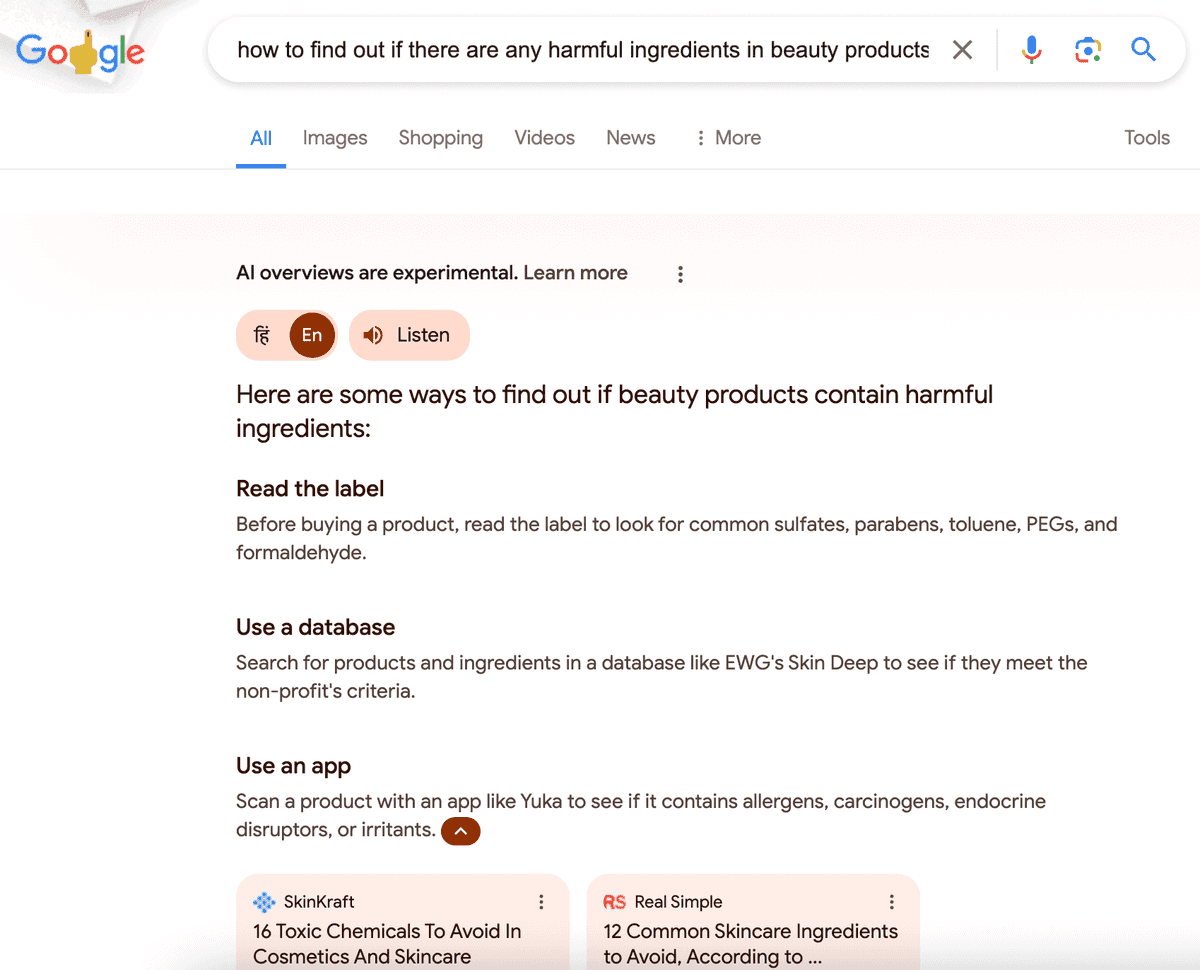
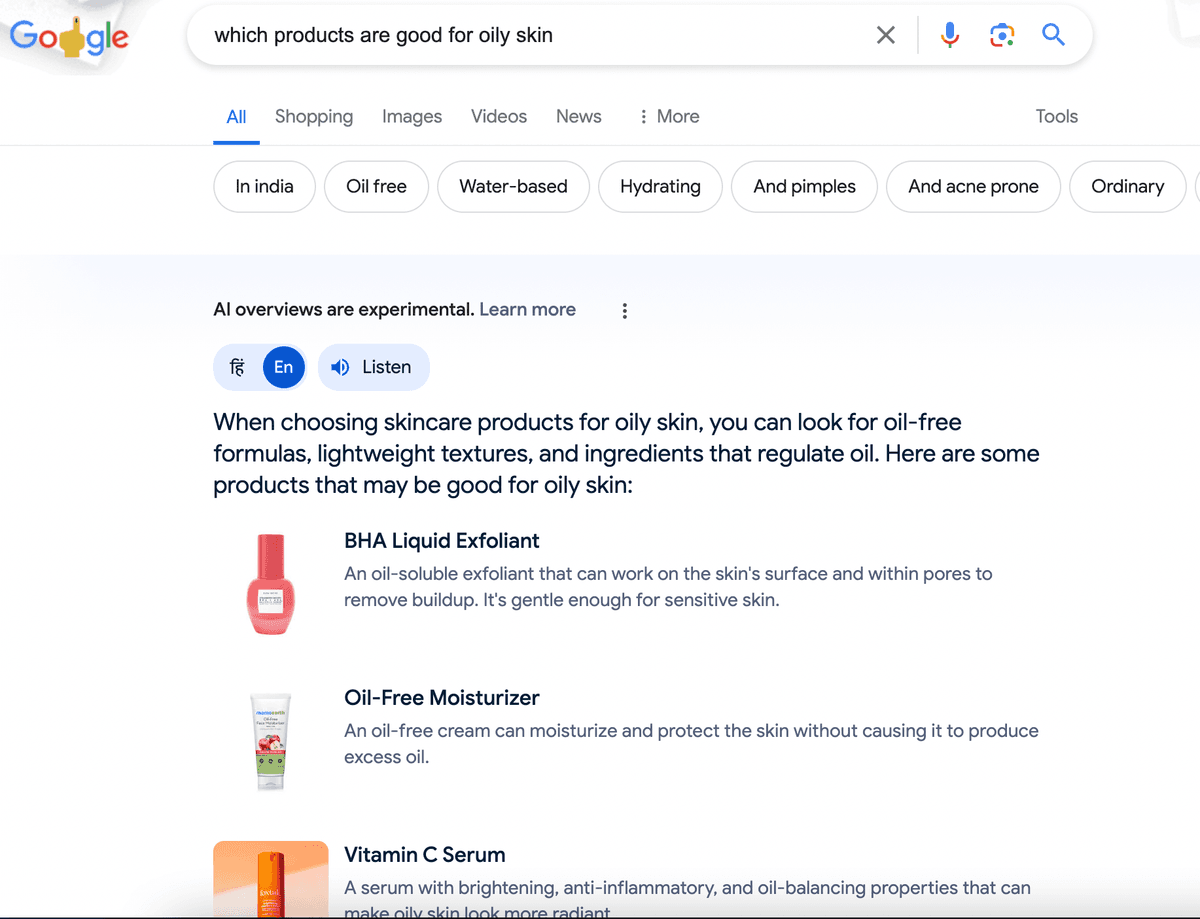
These historical search captures illustrate question-and-answer presentation. They are not current search results, verified product advice, or proof that the featured brands earned traffic from them.
chapter 2 - section 8
Earn relevant editorial links
Build something a relevant publisher would want to reference: original product research, a useful comparison, expert commentary, or a resource that answers a recurring reader question.
Review who links to competing pages and why. A relevant editorial mention can be more useful to your audience than a link from an unrelated site with a high tool score.
Follow Google’s link-spam policies when planning outreach. Buying ranking credit or distributing keyword-heavy links is not an editorial strategy.
- Choose a publication whose readers match the topic.
- Identify the specific resource or expertise you can contribute.
- Evaluate relevance, referral visits, and useful mentions alongside search performance.
chapter 2 - section 9
Create resources and contribute guest articles
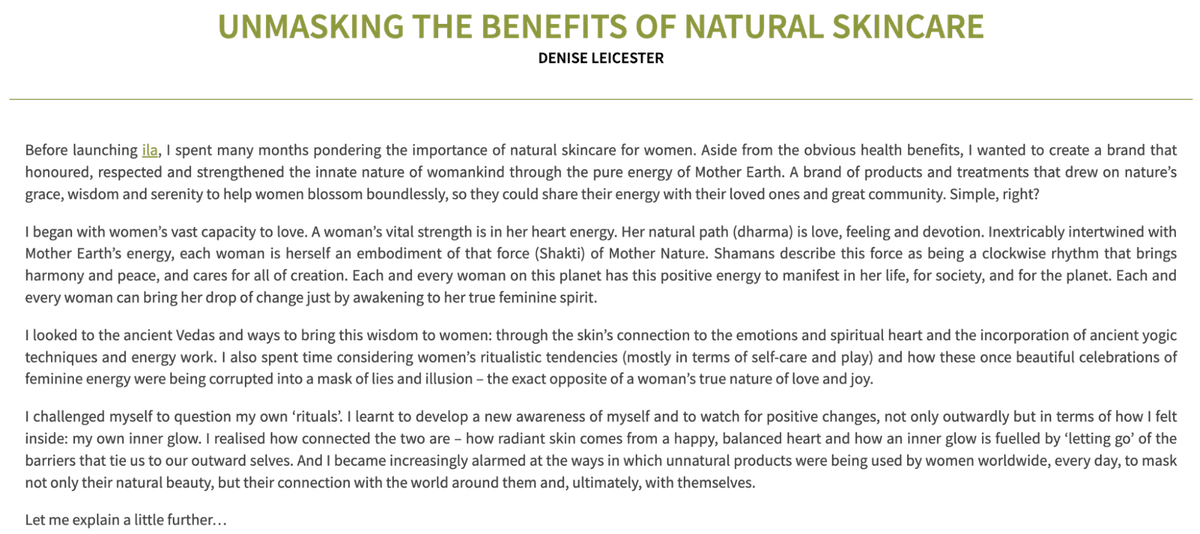
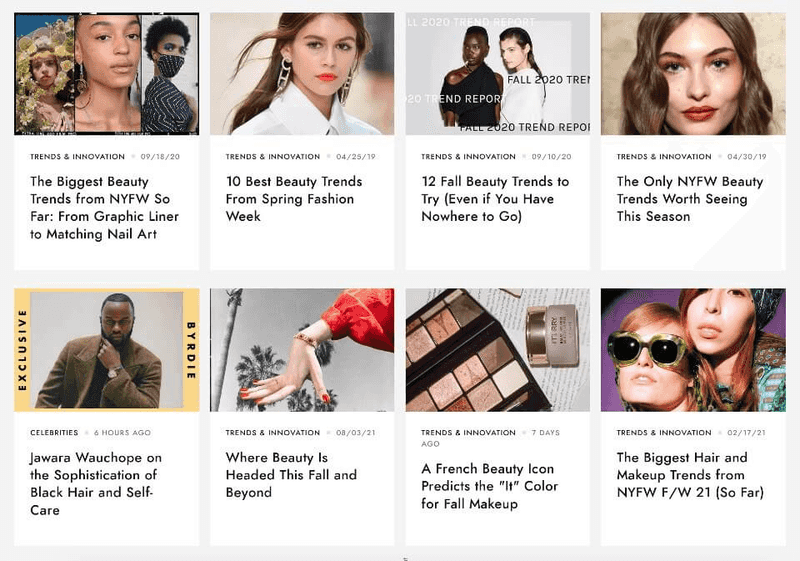
The source examples pair a skincare explainer with a collection of beauty editorial stories. Use them to plan an article that contributes a distinct observation, demonstration, or informed point of view.
For a guest article, agree on the reader need and editorial brief before writing. Link to supporting material where it helps the explanation; do not make an optimized backlink the condition of contributing.
Publish only work you can stand behind, and clearly identify the author and any commercial relationship.

chapter 2 - section 10
Find and replace broken resource links
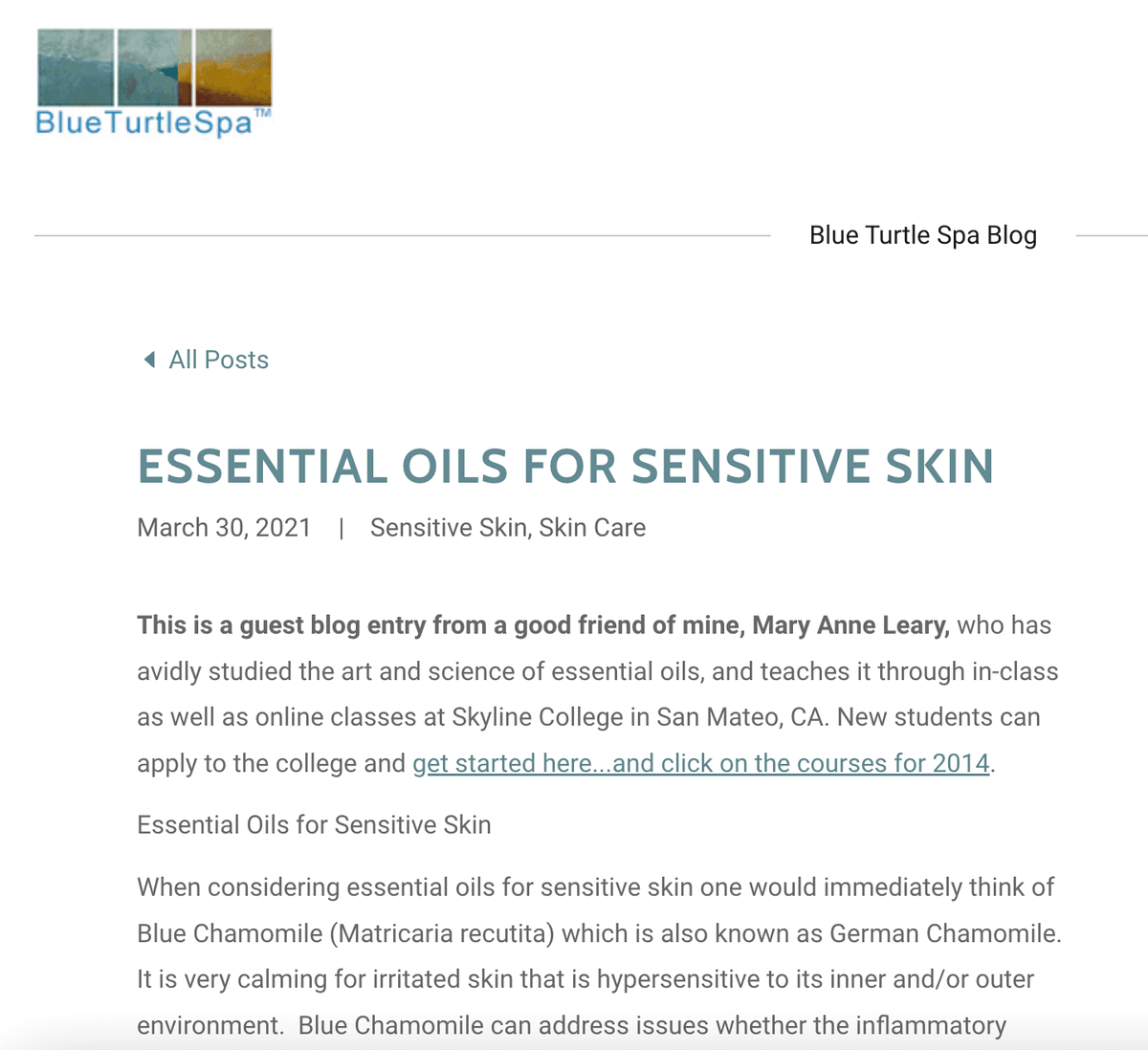
Look for relevant articles whose cited resources are no longer available. Read the surrounding passage to understand what the missing resource was meant to explain.
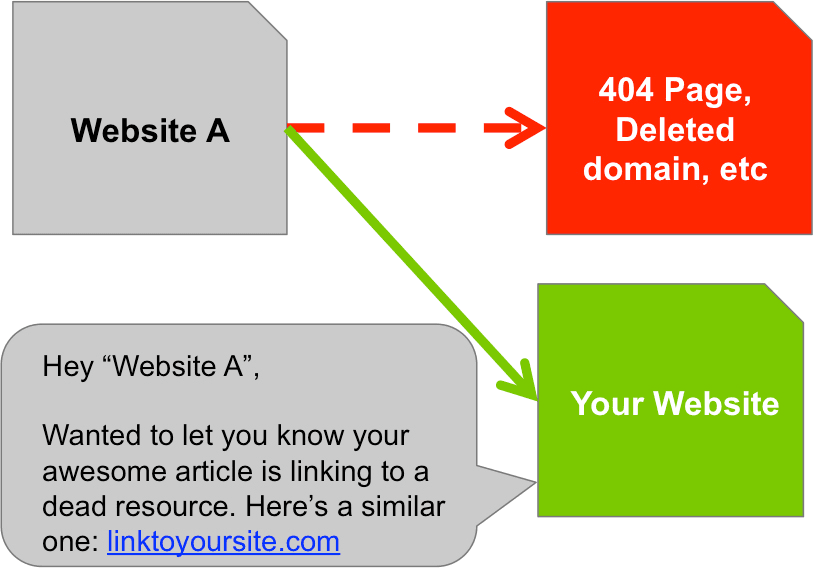
Suggest your page only if it answers that same need. Send the publisher the broken URL, its location, and a short explanation of the replacement; the editorial decision remains theirs.
The article and diagram illustrate the process. Verify each link yourself before outreach, and avoid mass messages to unrelated sites.
chapter 2 - section 11
Give beauty publishers a story worth covering
A useful pitch starts with news or expertise: a product development, a well-supported finding, or a creator collaboration with a clear story for the publication’s audience.
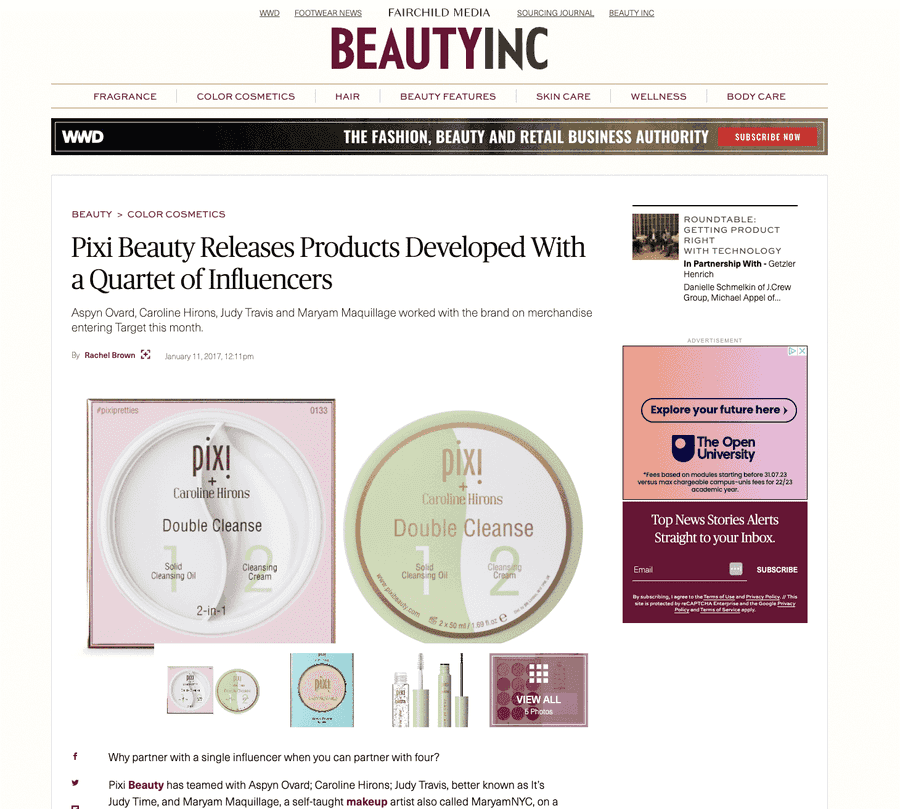
The Pixi coverage example shows how a collaboration can become an editorial topic. Prepare accurate product details, approved images, spokesperson context, and supporting evidence before pitching.
Brenton Way’s digital PR services connect relevant stories with publishers. Coverage and links are editorial decisions, so do not build a launch forecast around guaranteed placements.
chapter 03
PPC marketing for beauty and cosmetics brands
Brenton Way figures
76%
of US adults agree that technology tools should always be supplemented by the availability of human support.
67%
of UK social media users think the use of filters or image retouching in social media posts creates body insecurities.
chapter 3 - section 1
Research commercial and transactional keywords
Separate shoppers comparing options from those searching for a specific product, shade, size, or offer. Give each group an ad and destination that match the decision they are making.
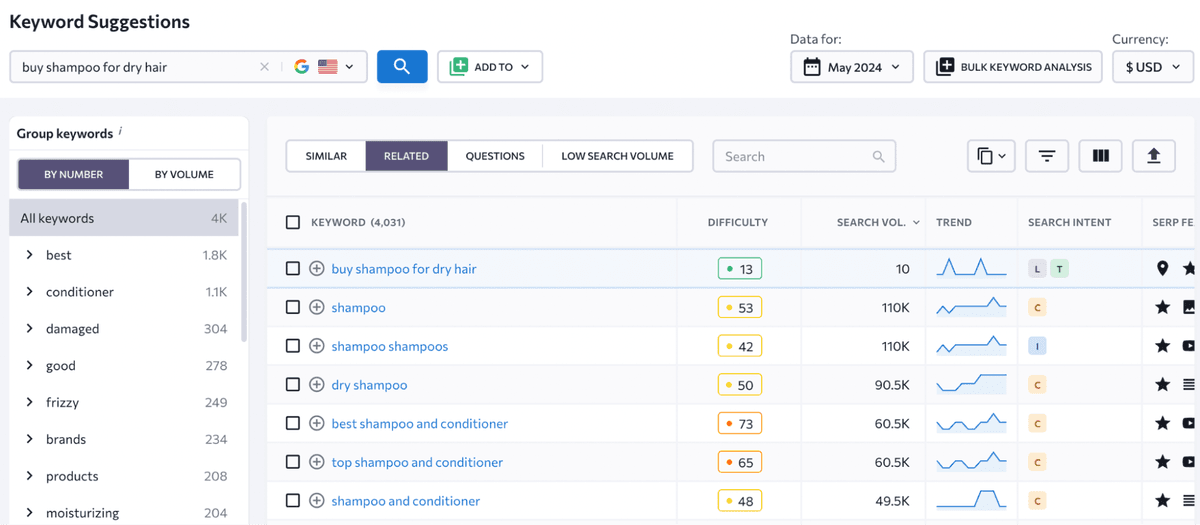
Use keyword tools as a starting point, then review actual search terms and purchase outcomes. Exclude irrelevant searches and separate brand demand from discovery when evaluating acquisition.
Plan the economics with the beauty marketing ROI calculator before setting budgets. Base assumptions on your margins, order values, and observed conversion rates.
- Map each keyword group to a relevant product or collection page.
- Check stock, price, shipping, and offer consistency.
- Set a spending limit and a clear purchase or qualified-lead goal.
chapter 3 - section 2
Write ad copy around a clear product idea
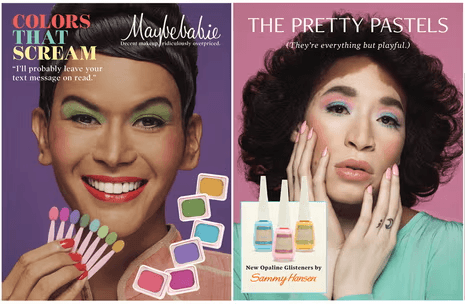
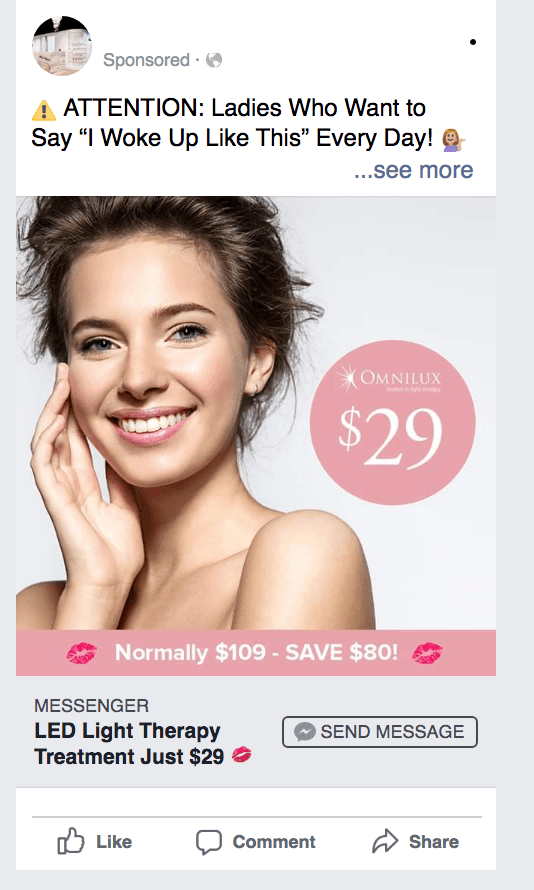
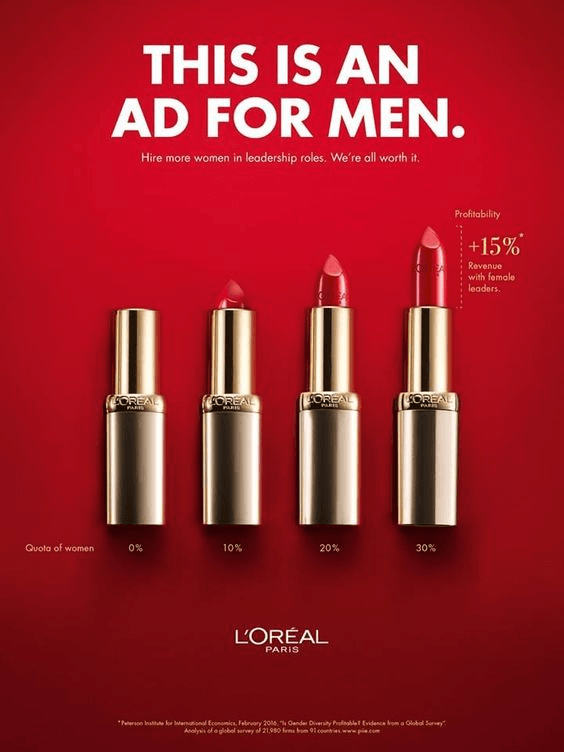
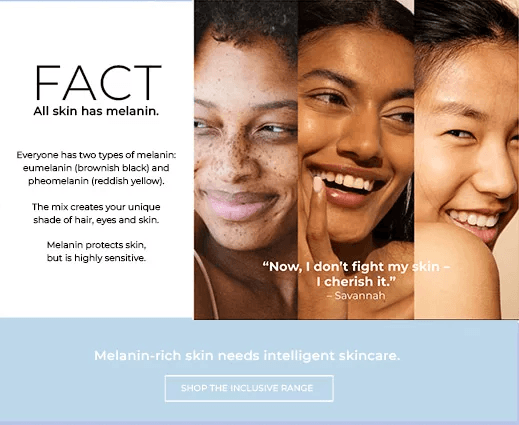
Choose one message for each creative: a product use, a visual demonstration, an offer, or a reason to consider the brand. Make the next action easy to understand.
These original playbook examples use different approaches, including color, offer-led creative, and brand positioning. They illustrate creative choices; their presence does not establish campaign performance or validate every claim in the artwork.
Use the beauty advertising guide to turn those observations into test briefs. Record the audience, message, landing page, and result so the next version has a clear purpose.
chapter 3 - section 3
Connect search intent and social discovery
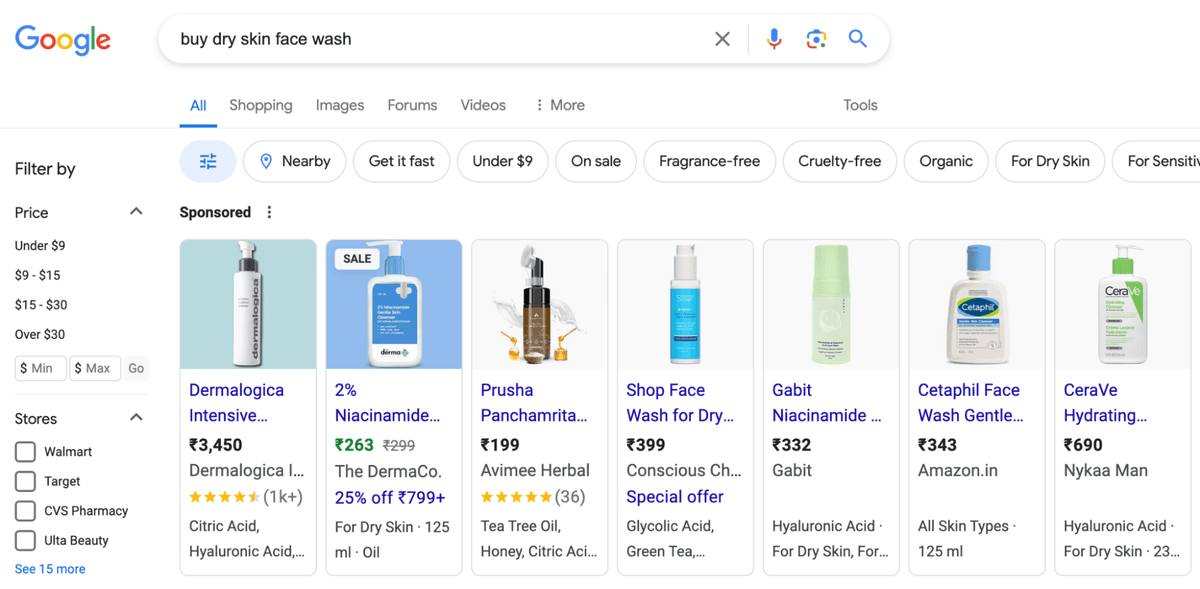
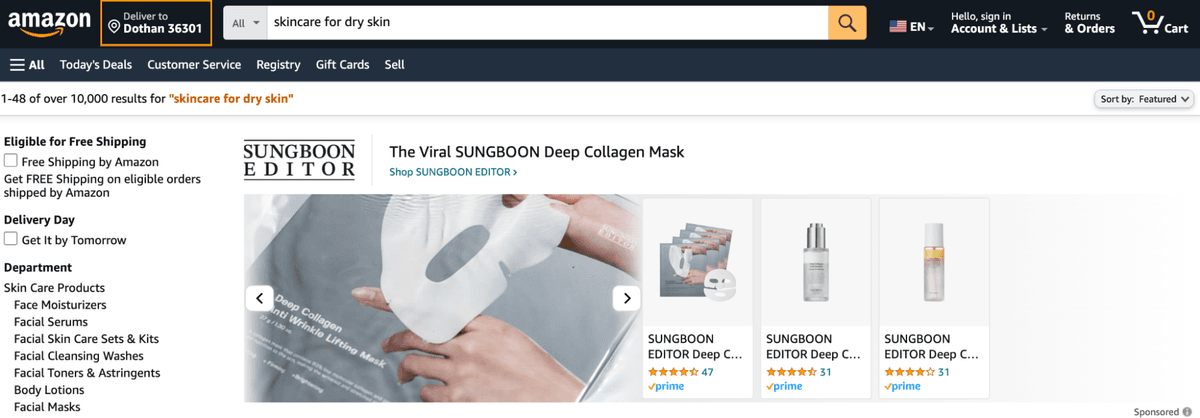
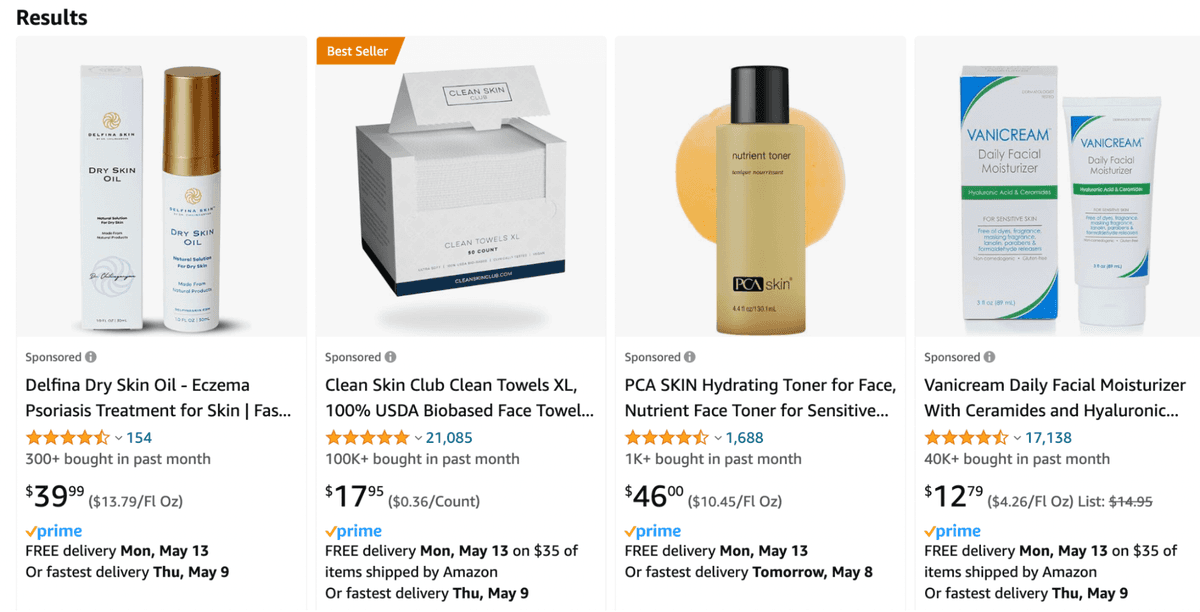
Use search advertising to meet an expressed product need. The shopping-results example makes product image, price, and seller information part of the comparison.
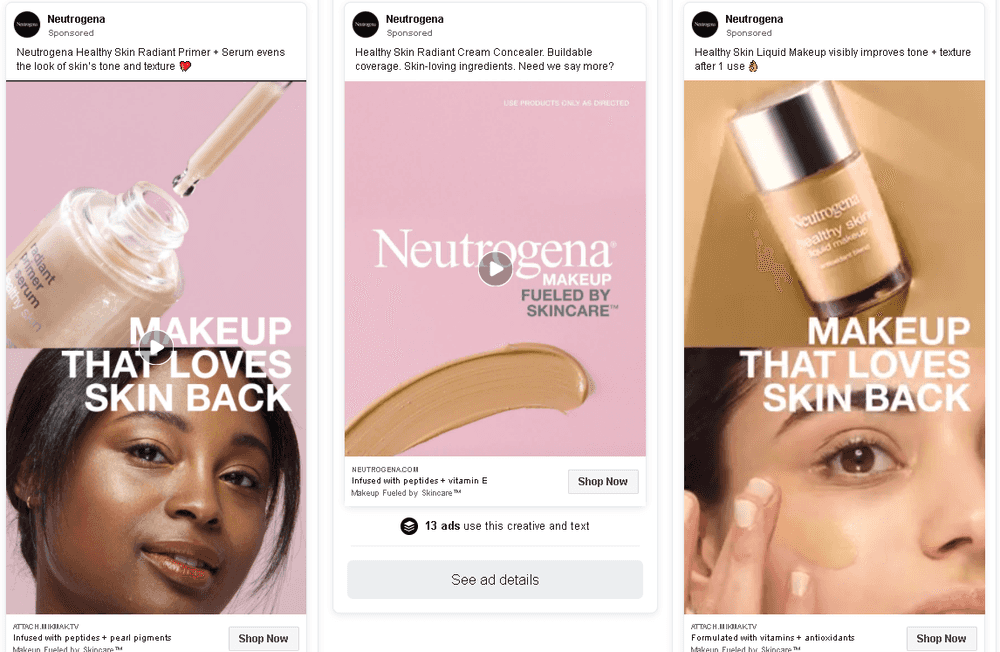
Social creative can introduce a product through a demonstration, a creator’s explanation, or a visual benefit. The Neutrogena examples show variations within a recognizable product message.
Coordinate paid media with creative production and landing pages. Compare purchase quality and acquisition cost as well as engagement; the screenshots do not disclose spend, conversions, or return.
chapter 3 - section 4
Make Facebook and Instagram offers easy to understand
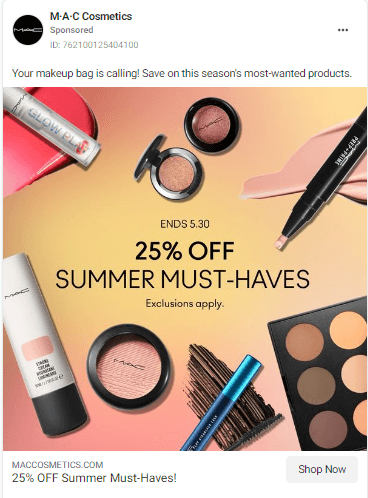
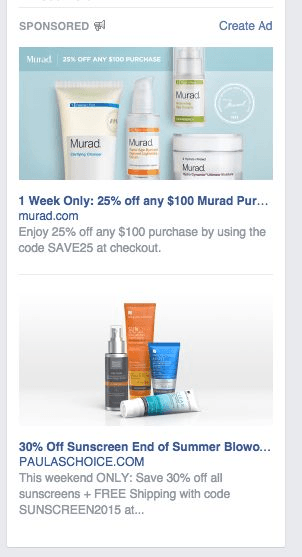
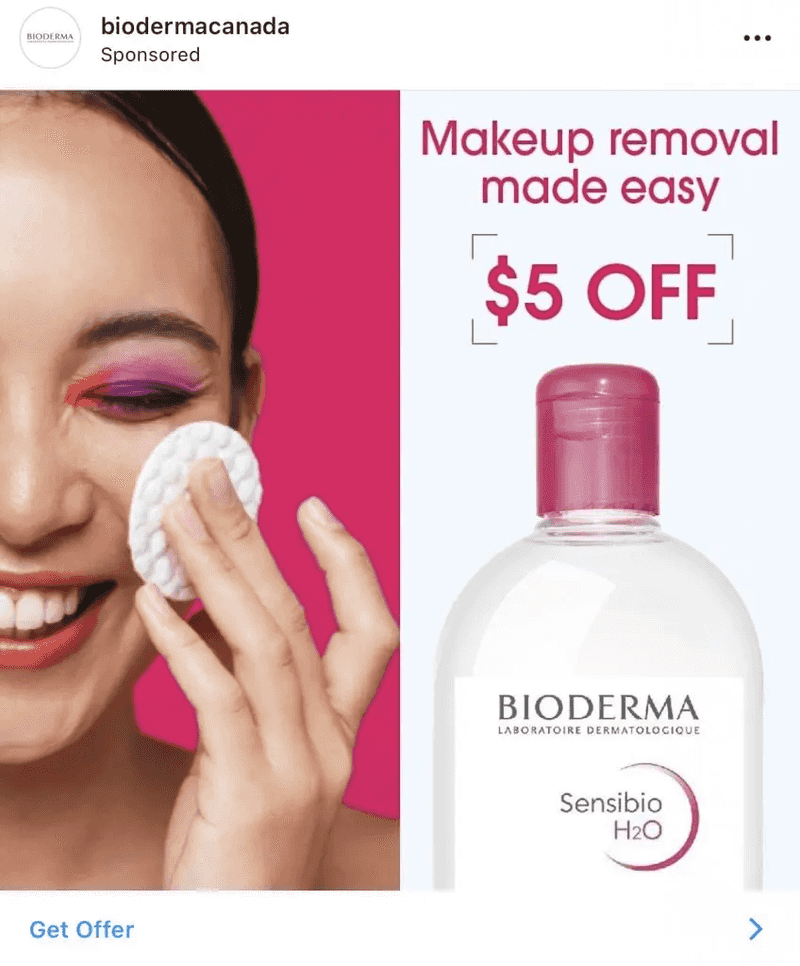
The MAC, skincare, and Bioderma examples put the product and promotion near the main visual. Carry the same offer through to the landing page, including eligibility and end dates.
Test the message and product demonstration before producing many small cosmetic variations. Keep a record of what changed so you can tell which idea deserves another test.
Use these historical ads as creative references. Their discounts are not current offers, and visible creative alone cannot tell you which campaign performed best.
chapter 3 - section 5
Reach beauty shoppers on Amazon
Connect advertising to the product detail page shoppers will evaluate. Check that images, product information, availability, and the offer answer the same need as the ad.
The Amazon examples show products in a shopping context, where buyers can compare alternatives quickly. Research relevant product searches and comparable products before choosing targeting.
Review campaign spend alongside attributed sales and contribution after fees, fulfillment, and returns. Keep marketplace reporting separate from your store’s reporting until you have a consistent way to compare them.
Closing
Bring your beauty growth plan together
Start with the business objective and choose the work that supports it: creative and creator partnerships to build interest, search and paid media to bring shoppers in, a useful website to support the purchase, and email to encourage repeat business.
Brenton Way is a growth marketing agency for scaleups and mid-market brands. Our senior marketers connect full-funnel strategy, creative production, UGC, influencer marketing, acquisition, conversion, and retention around the client’s goals.
Explore Brenton Way’s beauty marketing services to discuss the priorities for your brand.
Beauty Marketing Playbook FAQs
What should a beauty marketing playbook include?
A useful beauty marketing playbook should cover owned audience growth, email automation, segmentation, cosmetics SEO, product-page UX, paid media testing, merchandising, and analytics that connect campaigns to revenue and retention.
Should beauty brands prioritize email, SEO, or paid media first?
Most beauty brands need all three, but the sequence depends on the bottleneck. Email improves retention and launch conversion, SEO captures durable demand, and paid media accelerates creative and offer testing.
How is beauty SEO different from general ecommerce SEO?
Beauty SEO has more concern-led, routine-led, shade-led, ingredient-led, and tutorial searches. Product pages need strong merchandising and structured data, while content needs firsthand product context and credible claims.
How should skincare brands segment email subscribers?
Start with lifecycle segments such as new subscribers, buyers, cart abandoners, repeat purchasers, and dormant customers. Then layer in preference segments such as skin type, concern, product category, shade family, or routine goal.
Related Brenton Way resources
Explore Brenton Way’s beauty marketing guides, services, and planning tools to put the playbook into practice.
Beauty growth pages
Services behind the playbook
Beauty planning resources
Take it with you
Keep the beauty playbook summary
Download the four-page Brenton Way Beauty Marketing Playbook summary for a compact reference to the core email, SEO, website, and paid media priorities. Read the full set of examples and practical guidance above.