Gastroenterology digital marketing agency
Ready to turn GI expertise into measurable growth? We design end-to-end digital engines for gastroenterology groups that convert interest into booked procedures. From precision messaging around screening colonoscopy, GERD, IBD, and advanced endoscopy to seamless online scheduling and referral pathways, our team builds campaigns that educate, reassure, and motivate action. Expect a patient-first website experience, multichannel outreach that meets adults 45+ where they are, and HIPAA-conscious analytics that link every campaign to completed appointments. Partner with us to lift case volume, strengthen referrer relationships, and scale your GI brand with confidence.

Why choose Brenton Way for gi marketing
Increases screening volume
Digital marketing encourages more colonoscopies and early polyp/cancer detection by educating people over 45 about colorectal cancer screening. It also maintains long-term procedure volume by improving adherence to surveillance... Digital marketing encourages more colonoscopies and early polyp/cancer detection by educating people over 45 about colorectal cancer screening. It also maintains long-term procedure volume by improving adherence to surveillance intervals.
Strengthens referral pipelines
PCPs and OB-GYNs find it simpler to refer patients when there are clear digital pathways and liaison outreach, stabilizing the flow of new patients. Referrer loyalty increases through uniform order sets and quicker feedback loops.
Improves reputation & trust
Proactive review capture, service recovery, and reputation management systems improve Google and Healthgrades scores. Publishing quality metrics like ADR and prep adequacy signals clinical excellence to patients and referrers... Proactive review capture, service recovery, and reputation management systems improve Google and Healthgrades scores. Publishing quality metrics like ADR and prep adequacy signals clinical excellence to patients and referrers alike.
Enhances local visibility
Your clinic appears in "near me" searches through local SEO and customized Google Business Profiles. Consistent listings and organized structured data improve click-through rates and map-pack rankings for every location.

Healthcare marketing strategies that drive results
Build a patient-first digital hub
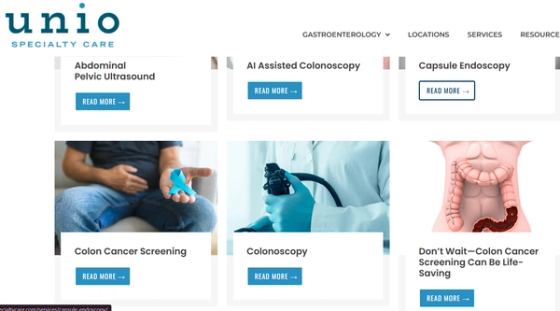
Your gastroenterology website should serve as a comprehensive and reliable guide for GI care. Surface subspecialties including advanced endoscopy (EUS/ERCP), GERD and motility disorders, IBD treatment, liver/NAFLD clinics, screening colonoscopies, capsule endoscopies, and hemorrhoid therapies with clear next steps.
Place primary calls to action where visitors look: "Refer a Patient," "Book Screening Colonoscopy," and "Request New-Patient Consult." Replace technical jargon with straightforward explanations of symptoms, preparation, sedation, and recovery. A patient-first digital hub is the foundation of any successful healthcare marketing strategy.
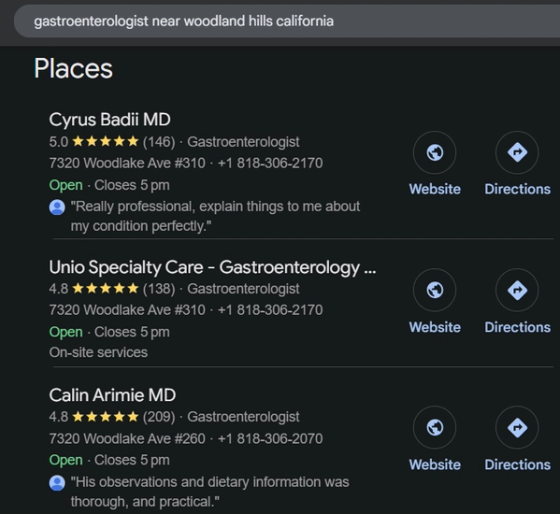
Own your local market presence
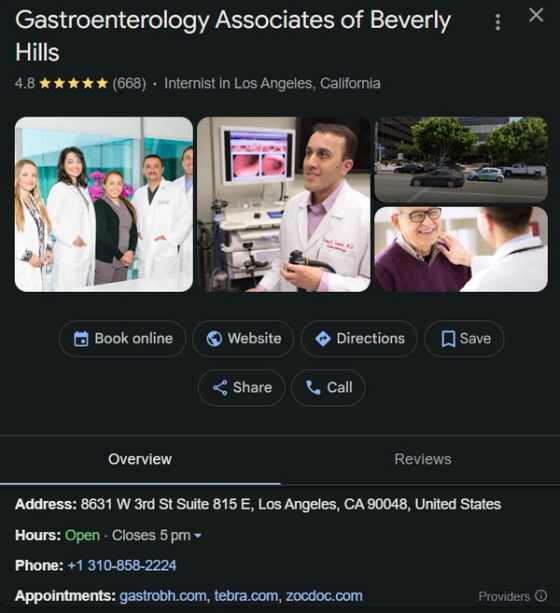
Make all locations simple to locate and trustworthy. Ensure your Google Business Profile is complete and up to date, including services, insurance details, working hours, and genuine images for each location. Include geo-intent terms naturally on service pages: "GERD specialist [neighborhood]," "colonoscopy near me," and "gastroenterologist in [city]."
Standardize your name, address, and phone number across directories and establish a consistent process for requesting, tracking, and responding to reviews. Strong local presence is a core pillar of effective healthcare SEO.
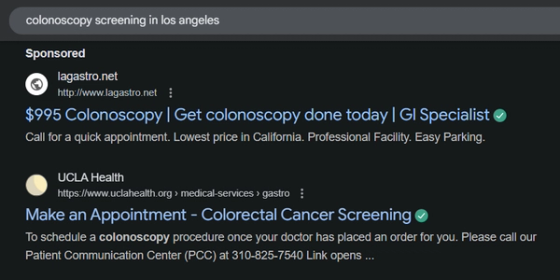
Capture high-intent demand with paid search
Focus on specific procedure and condition queries such as "book colonoscopy," "same-week endoscopy," "ERCP specialist," and "IBS doctor" within a tight geo-radius and highly targeted ad groups. Utilize sitelinks to direct users to valuable pages like "New Patients," "Insurance & Costs," and "Colonoscopy Prep."
Retarget users who looked at prep content but didn't schedule, and enable call and location extensions. Keep your copy outcome-focused and empathetic to persuade hesitant searchers. Pair PPC with a solid healthcare marketing plan for maximum ROI.
Make referrals effortless for clinicians
Reduce friction for PCPs and OB-GYNs. Provide fast-track pathways such as urgent dysphagia slots, positive FIT to colonoscopy within 14 days, a direct referral line, and guaranteed consult windows. Make referring to your practice as seamless as possible.
Provide referrers with EMR-friendly order sets, printable prep links, and same-day post-visit notes so they feel encouraged, knowledgeable, and secure when sending the next patient. Digital referral optimization is an often-overlooked component of healthcare social media marketing and broader practice growth.

Educate to reduce fear
Publish resources that patients actually use: split-dose prep walkthroughs, nutrition schedules, sedation comparisons, insurance-specific cost ranges, and "what to expect" videos. Develop decision aids that include benefits and drawbacks, explain surveillance intervals, and contrast colonoscopy with stool testing.
Include downloadable discussion checklists that patients can bring to their PCP to speed up referrals and improve prep adherence. Educational healthcare content marketing reduces fear and drives follow-through at every stage of the patient journey.
Earn and amplify trust with reviews
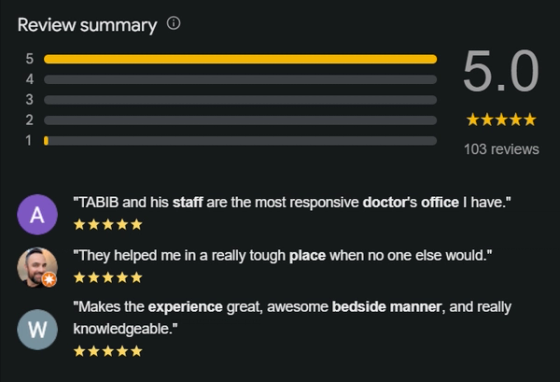
Automate pleasant review requests 24-48 hours after visits and forward low ratings to a service-recovery lead the same day. Monitor trends by service line, including wait times, parking issues, and prep confusion, then address the underlying causes and share results on your website.
Maintain up-to-date clinician profiles with qualifications and friendly headshots that reflect the tone of patient reviews. A proactive review strategy is a key differentiator within your overall gastroenterology marketing approach.
Support patients before and after procedures
Use thoughtful email and SMS sequences including scheduled prep reminders (T-7, T-3, and T-24), day-of recommendations, and post-procedure care messages. Link recall reminders to pathology-driven surveillance intervals (3-, 5-, and 10-year) to preserve results and maintain procedure volume.
Allow patients to select their preferred language and communication channel, and respect quiet hours. These nurture sequences reduce no-show rates while improving patient satisfaction and long-term retention.

Measure what matters
Create dashboards that link channels to finished procedures rather than just leads. Track appointments, call conversions, show rate, prep adequacy, and adenoma detection rate (ADR) by endoscopist. A/B test prep templates, landing pages, and headlines to continuously refine performance.
Only collect the information that is required, steer clear of sensitive remarketing, support performance claims with internal quality measurements, and regularly review and update clinical content. HIPAA-conscious measurement is non-negotiable for any healthcare marketing plan.
Results that speak for themselves
SEO traffic increase
Paid ROAS
Revenue growth
See how gastroenterology brands grow with Brenton Way





Become a part of the successful story
View all case studiesMarketing for gastroenterologists: FAQs
Gastroenterology marketing is the practice of using digital strategies — including SEO, paid advertising, content marketing, and reputation management — to attract new patients to GI practices. It focuses on reaching patients searching for GI-specific procedures and conditions, building referral relationships with primary care physicians, and differentiating your practice in a competitive market.
Paid search campaigns can start generating leads within the first 2-4 weeks. SEO results typically begin showing meaningful improvement within 3-6 months, with compounding returns over time. Most of our GI practice clients see a significant ROI within the first 90 days through a combined paid and organic approach.
Healthcare marketing requires compliance with HIPAA regulations, sensitivity to patient privacy, and understanding of medical terminology and patient psychology. It also involves navigating advertising restrictions on platforms like Google and Facebook that have specific policies for healthcare-related ads.
We track key metrics including new patient appointment bookings, cost per patient acquisition, organic search rankings for target keywords, website conversion rates, review volume and ratings, and referral source attribution. Every metric is tied back to actual practice revenue impact.
We work with GI practices of all sizes — from solo practitioners to large multi-location groups. Our strategies are customized to your practice size, goals, and budget. Whether you need to fill a new provider's schedule or scale across multiple markets, we tailor our approach accordingly.