How AI Is Reshaping Digital Marketing in 2026

TL;DR
AI is reshaping digital marketing by changing how teams research audiences, create campaigns, personalize journeys, measure performance, and show up in AI search.

Ask AI about this
Get an AI-powered summary of this article
Table of Contents
Artificial intelligence is no longer a future-facing add-on for digital marketing. It is now part of the operating layer: the way teams research audiences, build creative, personalize journeys, forecast revenue, and measure what actually moved demand. The old version of this article treated AI as a set of disconnected tactics. The current reality is more structural: AI changes the speed, scale, and feedback loops of marketing, but it only works when humans still own the strategy, judgment, data quality, and brand standards.
HubSpot’s 2026 State of Marketing calls this the biggest disruption marketers have seen in a decade, and Salesforce’s State of Marketing research points to the same shift: AI only becomes useful when it is connected to cleaner data, more relevant personalization, and a stronger measurement loop.
That is why the better question is not “Which AI tool should we buy?” It is “Which part of our marketing system needs more leverage?” For some teams, the answer is audience research. For others, it is content production, answer-engine visibility, lifecycle automation, creative testing, or analytics.
What AI means for digital marketing in 2026
AI in marketing is the use of machine learning, generative models, predictive analytics, automation, and agentic workflows to make marketing decisions and execution faster. That can mean summarizing customer research, producing first-draft creative, scoring lead intent, segmenting audiences, recommending next-best actions, forecasting performance, or analyzing how brands appear in AI answer engines.
The important shift is that AI is moving from “content assistant” to “marketing system.” A modern AI marketing stack connects first-party data, customer context, creative production, channel execution, and measurement. If the data is weak or the strategy is vague, AI simply makes weak marketing happen faster.
Why marketers are rebuilding their workflows around AI
The best AI use cases are not just about writing more copy. They remove bottlenecks between insight, execution, and learning. A paid media team can turn customer reviews into ad angles, produce ten creative variations, launch structured tests, and read the results faster. An SEO team can compare SERP intent, answer-engine visibility, internal-link gaps, and content decay without waiting for a quarterly audit. A lifecycle team can use real behavior to trigger more relevant messaging instead of broadcasting the same nurture sequence to every contact.
- Research gets faster: audience, competitor, keyword, review, and social listening data can be summarized into sharper hypotheses.
- Creative production gets broader: teams can test more hooks, landing-page variants, video scripts, product angles, and localization.
- Personalization becomes more practical: AI can help match message, proof, offer, and channel to different segments.
- Measurement gets more conversational: marketers can query performance, spot anomalies, and translate data into decisions without waiting for a full analyst pass.
Search visibility expands beyond Google: buyers now ask ChatGPT, Perplexity, Gemini, Claude, and other answer engines for recommendations, which makes tools like Brenton Way’s AI Search Visibility Tool part of the research and QA process rather than a one-off novelty.
The new AI marketing stack: where AI actually helps
1. Strategy and audience intelligence
AI can compress research, but it should not replace market understanding. Use it to find patterns across reviews, forums, social profiles, sales calls, search results, and competitor positioning. Then have a strategist turn those patterns into a point of view. This is where content marketing and audience research workflows become stronger together.
2. Content, SEO, and answer-engine visibility
The old content playbook was built around ranking pages in blue-link search. The new playbook still needs SEO fundamentals, but it also needs citation-worthy answers, stronger authorship, entity clarity, topical authority, and monitoring for how AI systems describe the brand.
3. Creative production and testing
AI video, image, and copy tools make it easier to create variations. That is valuable only when the variations are tied to real hypotheses: audience pain points, proof angles, objections, offers, and visual hooks. Pair this with disciplined paid media and conversion testing.
4. Lifecycle and CRM automation
AI is especially useful when it sits on top of first-party customer data. It can help prioritize accounts, personalize email/SMS journeys, identify churn risks, or surface the next best message for a buyer stage.
5. Measurement and revenue intelligence
Marketing teams need fewer dashboards that no one reads and more decision systems. AI can help summarize performance, detect shifts, explain attribution conflicts, and turn data into next actions.
Recommended AI marketing tools to feature now
The original article recommended a small set of older tools. A better 2026 version should feature a full-stack set of tools by job-to-be-done. These are not random AI apps; they map to the workflows where marketers actually need leverage. Each tool below includes a homepage screenshot, a direct website link, and the audience most likely to benefit from using it.
Growth Virality Tools — curated discovery for marketing stacks
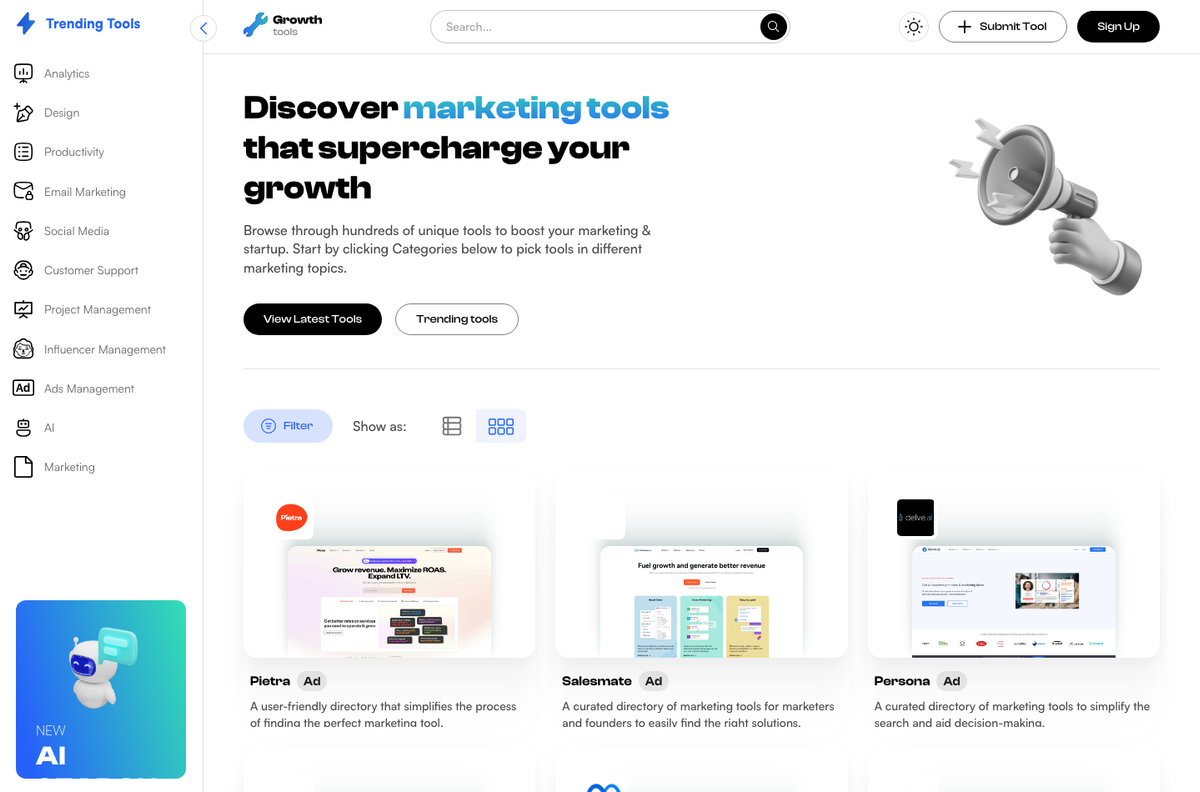
Growth Virality Tools is the discovery layer in this list: a curated directory with 500+ marketing tools across AI, content SEO, social, paid, email, productivity, analytics, and more.
- Relevant audience: Founders, growth leads, agency strategists, and lean marketing teams that need a faster way to discover and compare tools by category before committing budget.
- Best use: Use it as the discovery layer when a team needs to compare category options instead of relying on whatever tool is trending on LinkedIn that week.
- Why it belongs in the stack: The directory groups tools by categories such as AI, Ads Management, Social Media, Email Marketing, Analytics, and Marketing, making it a natural reference for readers evaluating stacks.
Profound — AI search visibility and answer-engine optimization
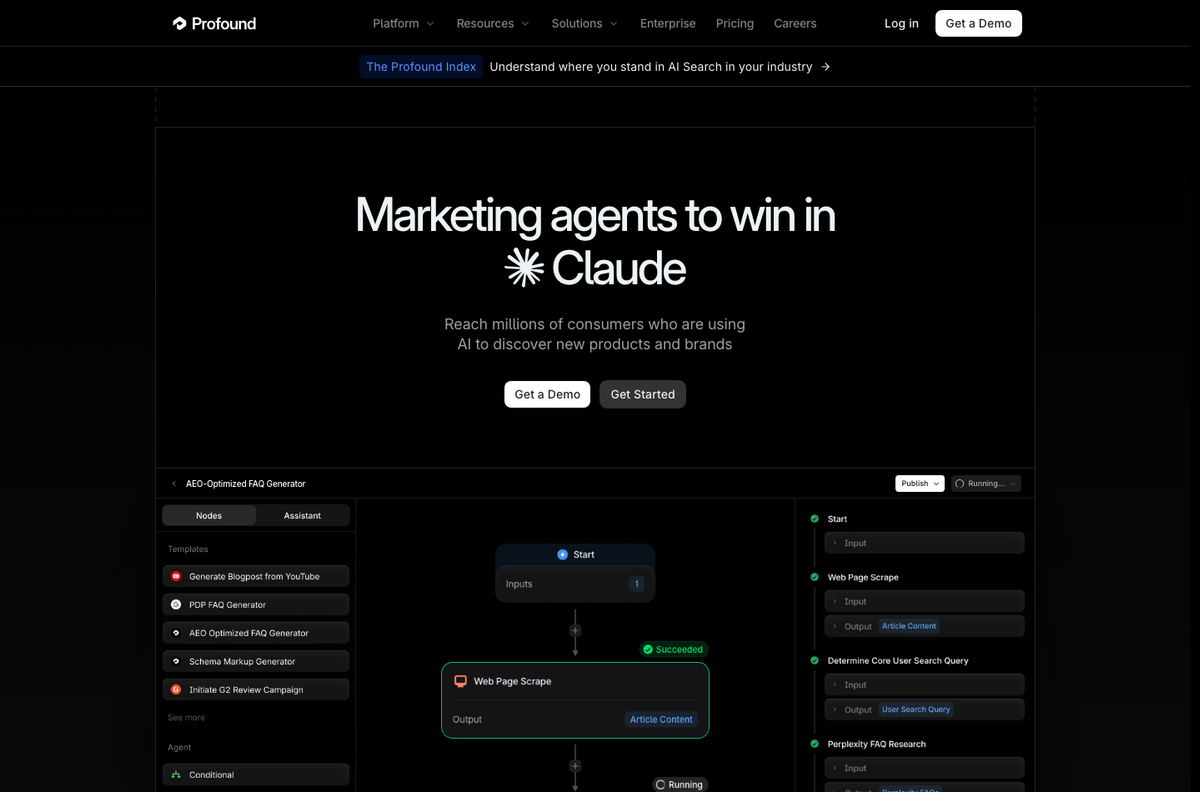
Profound is built for monitoring and improving how brands appear in AI-generated answers, which makes it useful when AI search visibility becomes a board-level question instead of an SEO side project.
- Relevant audience: SEO leaders, brand teams, category creators, SaaS companies, healthcare groups, ecommerce brands, and agencies that need to know how answer engines describe and recommend them.
- Best use: Track how ChatGPT, Perplexity, Gemini, Claude, and other answer engines mention a brand, competitors, categories, and buying questions.
- Why it belongs in the stack: AI search is becoming a separate visibility channel. Marketing teams need to know whether answer engines can understand, cite, and recommend them.
SparkToro — audience research before content and creative
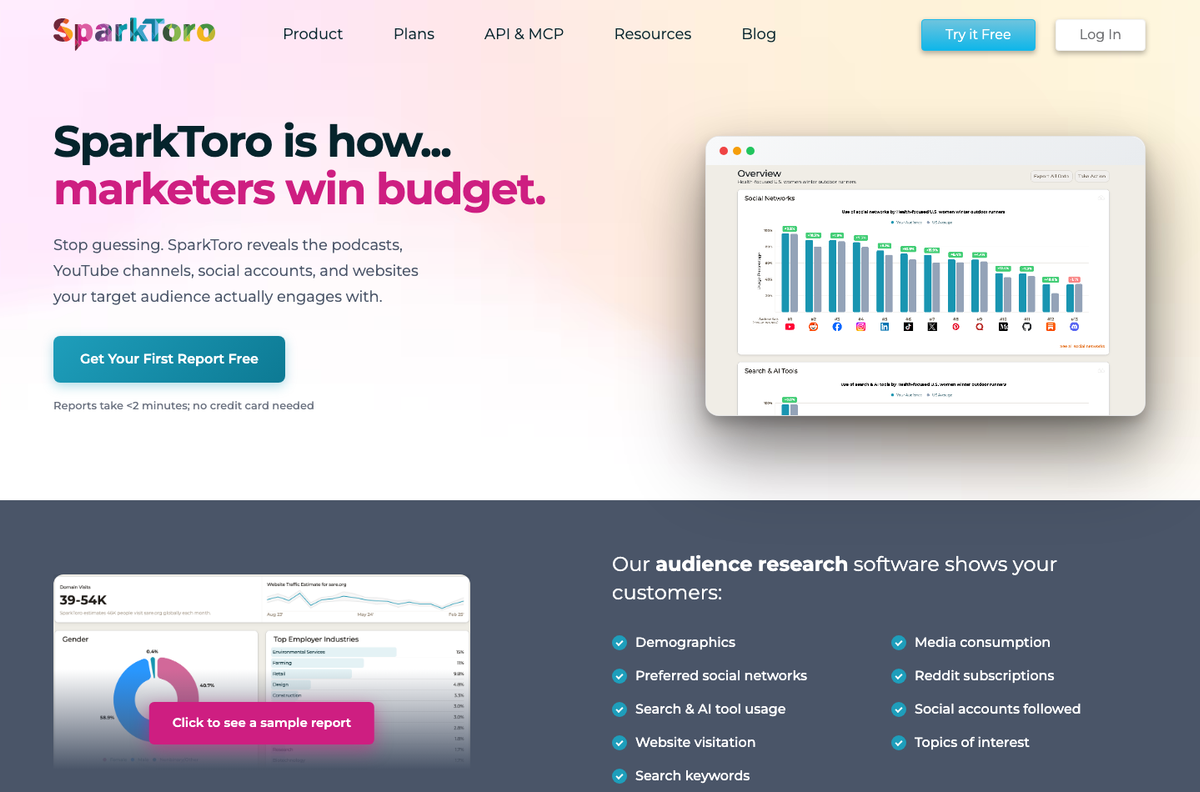
SparkToro helps teams discover the websites, social accounts, podcasts, YouTube channels, and publications that already reach a target audience before they brief content or creative.
- Relevant audience: Content teams, paid-social strategists, PR teams, partnership marketers, and B2B founders that need to understand where buyers already spend attention.
- Best use: Use it before campaign planning, SEO briefs, influencer research, partnership lists, and paid creative angles.
- Why it belongs in the stack: AI-generated copy is only useful if it is grounded in real audience context. SparkToro gives teams a faster way to understand where buyers already pay attention.
Clay — AI-assisted GTM data and outbound workflows
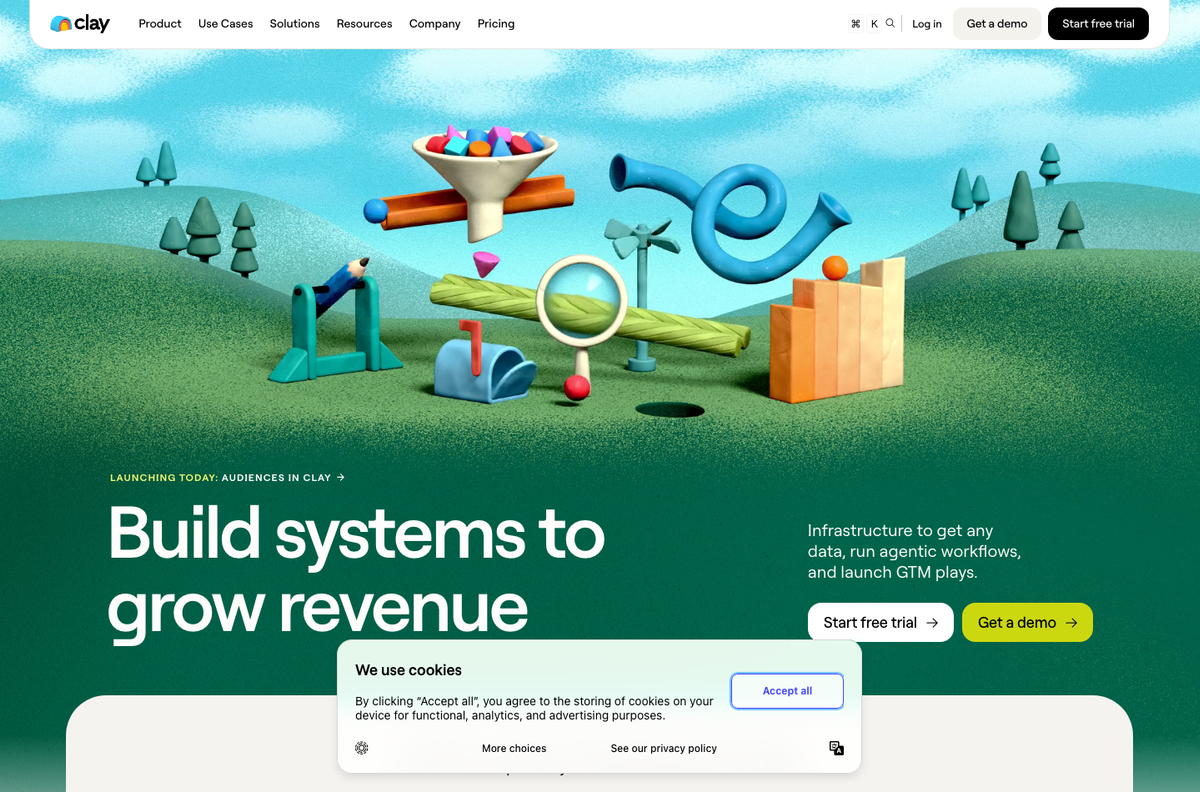
Clay connects enrichment, agentic workflows, and revenue plays so B2B teams can test sharper account-based motions without waiting on custom engineering for every data experiment.
- Relevant audience: B2B revenue teams, outbound operators, sales-led startups, agency prospecting teams, and GTM engineers building account-based workflows.
- Best use: Build account lists, enrich leads, personalize outbound triggers, and connect data sources without forcing every experiment through engineering.
- Why it belongs in the stack: Clay is valuable for B2B teams because AI personalization works best when it is attached to real company, role, hiring, funding, technology, and intent signals.
Customer.io — behavior-based lifecycle marketing
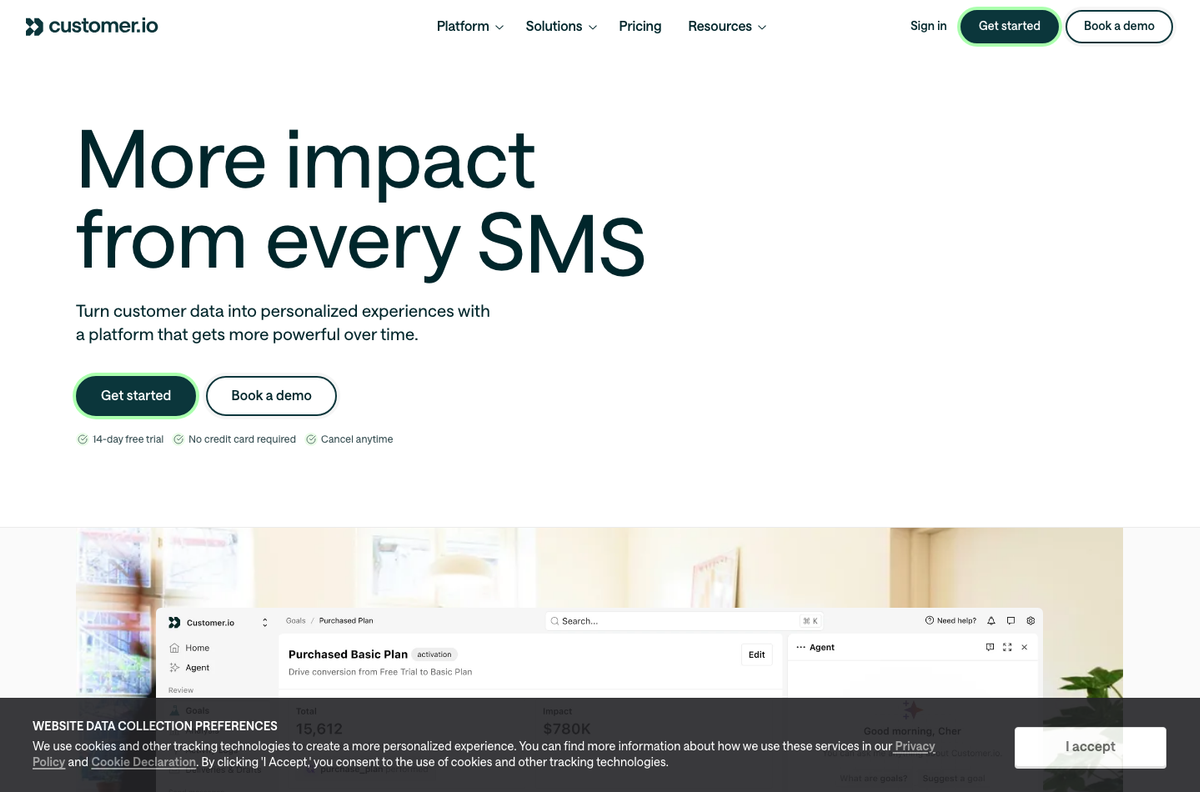
Customer.io is useful when personalization needs to be tied to first-party behavior across email, push, SMS, and in-app journeys rather than static newsletter segments.
- Relevant audience: Lifecycle marketers, SaaS teams, subscription brands, marketplaces, and ecommerce operators that need customer journeys based on behavior instead of static newsletter segments.
- Best use: Trigger email, push, SMS, and in-app campaigns based on product behavior, lifecycle stage, and customer attributes.
- Why it belongs in the stack: AI marketing should not stop at acquisition. Lifecycle teams need systems that turn behavioral data into more relevant retention and expansion journeys.
Mutiny — AI-assisted website personalization
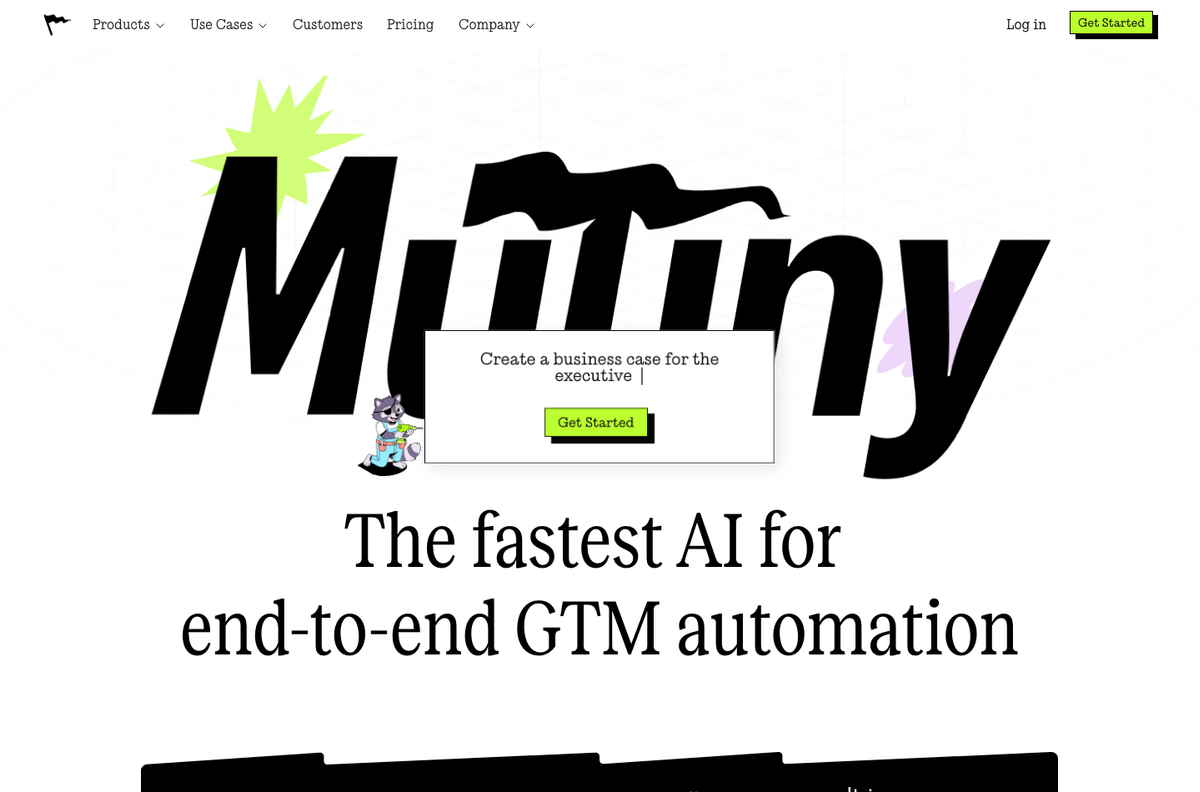
Mutiny focuses on AI-assisted website personalization, especially for teams that need customer-facing experiences tailored to segments, accounts, campaigns, or buyer intent.
- Relevant audience: B2B SaaS marketers, demand generation teams, ABM teams, and conversion-focused growth leaders that need landing pages tailored to segments, accounts, or campaign intent.
- Best use: Create landing-page variants for different industries, accounts, campaigns, objections, and buyer stages.
- Why it belongs in the stack: The biggest conversion wins often come from matching proof and messaging to the visitor. AI makes personalization more scalable, but strategy still decides the segments and claims.
HeyGen — AI video localization and ad creative production
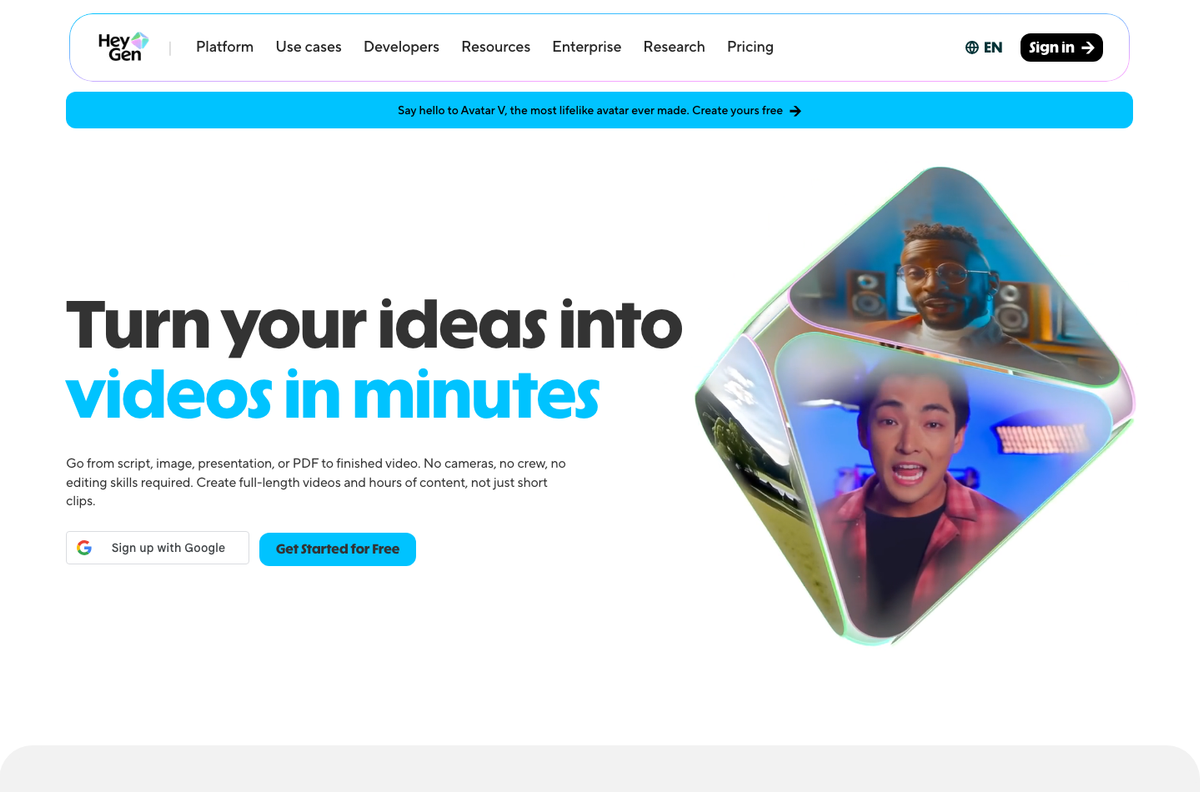
HeyGen helps teams generate videos from text, images, or audio with narration, captions, visuals, and animations, making it strongest when the creative strategy is already clear.
- Relevant audience: Paid-social teams, content marketers, ecommerce brands, education companies, and global teams that need more video variations or localized creative without a full studio cycle.
- Best use: Produce explainer videos, spokesperson clips, localized ads, product education, and social creative variations.
- Why it belongs in the stack: Video remains one of the hardest creative formats to scale. HeyGen helps teams test more messages and localize content without turning every iteration into a full studio shoot.
Triple Whale — ecommerce analytics and attribution
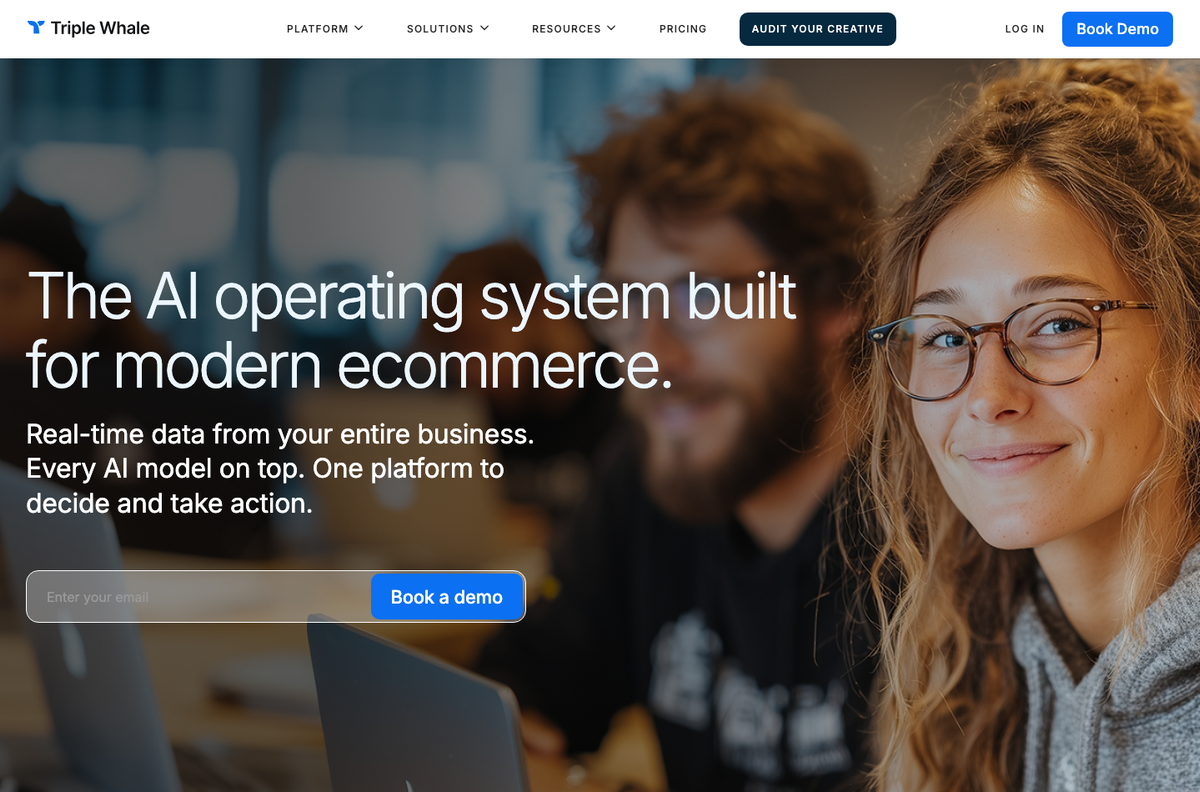
Triple Whale gives ecommerce teams a unified analytics and attribution layer across spend, revenue, cohorts, and profitability before they automate decisions.
- Relevant audience: Shopify brands, DTC growth teams, media buyers, and ecommerce founders that need one operating view of spend, revenue, cohorts, and profitability.
- Best use: Give ecommerce teams a single view of spend, revenue, attribution, customer cohorts, and performance trends.
- Why it belongs in the stack: AI recommendations are dangerous when the underlying numbers are scattered. Ecommerce teams need a reliable measurement layer before automating decisions.
FeedHive — AI-assisted social media workflows
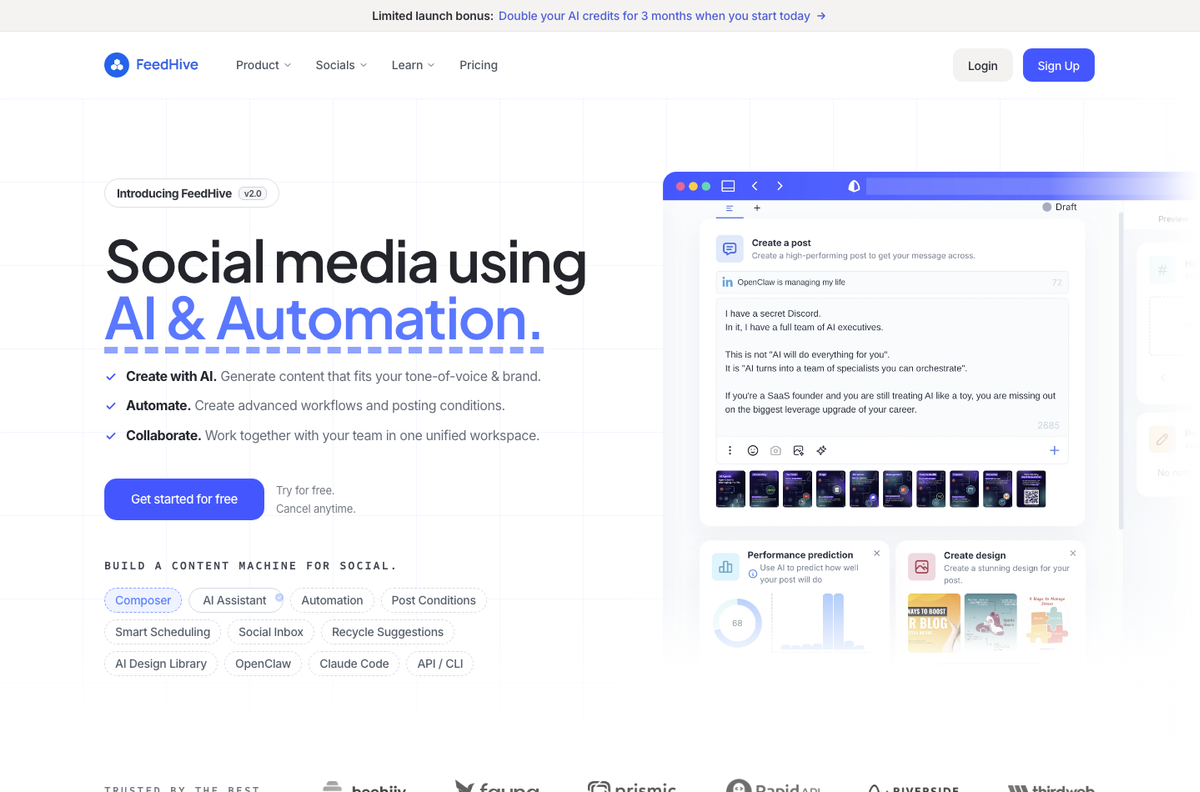
FeedHive supports social planning, creation, scheduling, and repurposing when teams need more content velocity without removing editorial review.
- Relevant audience: Founders, creators, social media managers, agencies, and small marketing teams that need a repeatable publishing workflow without losing editorial control.
- Best use: Draft, organize, schedule, and repurpose social posts while keeping approvals and human editing in the workflow.
- Why it belongs in the stack: Social content velocity matters, but generic AI posts are forgettable. FeedHive is useful when paired with a strong brand point of view and approval process.
How to choose the right AI marketing tools
Do not buy AI tools by category buzzword. Buy them by workflow pain. The right tool should either increase the quality of strategic input, reduce manual production drag, improve personalization, or make measurement clearer.
- If your team lacks audience insight, prioritize SparkToro and structured customer-research workflows before buying another writing tool.
If your brand depends on search demand, add AI search visibility tracking, strengthen entity clarity, and build citation-worthy content assets instead of treating SEO and AI search as separate silos.
- If your paid media team is creative-constrained, use AI video and landing-page tools to increase the number of controlled tests.
- If you have weak CRM data, fix data capture, enrichment, and lifecycle segmentation before layering AI personalization on top.
- If reporting is fragmented, consolidate the measurement layer first so AI summaries are based on trustworthy data.
What AI still cannot replace
AI can accelerate marketing, but it does not replace positioning, taste, customer empathy, ethical judgment, or accountability. A model can generate ten campaign ideas. It cannot know which one your brand has the right to say, which claim legal will approve, which proof point a skeptical buyer will believe, or which tradeoff is worth making.
Teams also need governance. That means approved claims, source requirements, human QA, privacy controls, brand voice standards, and clear rules for what AI can draft versus what humans must approve.
How Brenton Way uses AI in digital marketing
At Brenton Way, AI is most useful when it becomes part of a disciplined growth system: research, positioning, creative strategy, campaign execution, conversion optimization, and analytics. The goal is not to flood channels with AI-generated output. The goal is to build a faster learning loop while protecting brand quality.
For brands trying to understand how they appear in AI answers, start with Brenton Way’s AI Search Visibility Tool. For teams ready to build a more complete AI-assisted growth engine, explore AI Marketing Systems, Answer Engine Optimization, and our broader digital marketing services.
How digital marketers can use AI in digital marketing
Start with a marketing problem, not an AI tool. Digital marketers can use AI to summarize customer research, cluster search intent, draft campaign variations, flag unusual performance changes, and personalize approved messages by segment. Each use case should have a named owner, reliable inputs, a review step, and a metric tied to marketing success.
For content creation, generative AI can help a team move from keyword research to briefs, outlines, variations, and repurposed formats. It should not invent expertise or publish unchecked claims. Search engine optimization still depends on useful information, sound technical delivery, credible sources, and a clear answer to the reader’s question.
Benefits of AI for a digital marketing strategy
The practical benefits of AI are faster analysis, more consistent execution, and better use of first-party data across marketing channels. AI and machine learning can surface market trends, predict likely actions, and help teams decide where to focus creative or budget. Those gains matter only when the underlying analytics and CRM data are trustworthy.
AI-powered tools can also improve customer engagement through better routing, behavior-based lifecycle messages, and AI chatbots for well-defined questions. The team should disclose automated interactions where appropriate, protect personal data, and give people an easy path to a human. AI integration is a workflow and governance project, not a one-click feature.
Conclusion: AI is reshaping marketing operations, not just marketing content
The winners will not be the teams that use the most AI tools. They will be the teams that connect AI to better customer understanding, sharper creative, cleaner data, faster testing, and stronger decision-making. AI makes marketing faster. Strategy makes it worth doing.
Frequently Asked Questions
AI is changing digital marketing by speeding up research, creative production, personalization, customer journey automation, analytics, and search visibility monitoring. The biggest shift is operational: teams can test and learn faster when AI is connected to clean data, clear strategy, and human review.
Useful tools include Growth Virality Tools for discovery, Profound for AI search visibility, SparkToro for audience research, Clay for GTM data workflows, Customer.io for lifecycle automation, Mutiny for personalization, HeyGen for AI video, Triple Whale for ecommerce analytics, and FeedHive for social content workflows.
No. AI should remove repetitive work, speed up analysis, and increase testing capacity. Humans still need to own positioning, creative judgment, source quality, compliance, customer empathy, and final approvals.
Start with the workflow bottleneck: audience research, content and AEO visibility, creative production, lifecycle personalization, or measurement. Then choose tools that solve that bottleneck and integrate with your existing customer data and approval process.
The useful categories include audience-research tools, generative AI assistants, SEO and answer-engine platforms, creative-production tools, CRM and lifecycle automation, personalization software, and analytics tools. The right stack depends on the workflow and data, not on using the most tools.
AI is the broader category of systems that perform tasks such as generation, classification, prediction, and decision support. Machine learning is one approach that learns patterns from data. In marketing, teams use them for analysis, forecasting, personalization, content operations, and campaign optimization.
AI does not remove existing privacy obligations. Marketers should use consented data, minimize what is shared with tools, restrict access, document vendors and retention, and avoid inferring sensitive traits. Human review remains necessary for high-impact decisions.
Tags
Let's Grow Your Brand With Us
Book a free consultation and get a custom growth strategy tailored to your business.
Book Free ConsultationGet marketing insights in your inbox
Join our newsletter for the latest digital marketing tips and strategies.
By subscribing, you agree to our Privacy policy .

About the author
Kevin SozanskiContent Writer at Brenton Way


