Psychiatry PPC Agency
Looking for a marketing agency that specializes in healthcare marketing and deeply understands psychiatrist advertising? We are a team of psychiatry marketing experts dedicated to helping your practice increase patient reach, generate qualified leads, and improve conversion rates. We develop and manage data-driven psychiatry PPC campaigns, patient-centered SEO strategies, engaging social media outreach, and informative email marketing programs to connect you with patients seeking specialized psychiatric care.

Why Do Psychiatrists Need PPC Digital Marketing Services?
Immediate Visibility in a Competitive Market
The field of psychiatry is extremely competitive. PPC advertising enables psychiatrists to rapidly rank at the top of search engine results, bypassing the time-consuming process of organic SEO and ensuring heightened online presence when potential patients are actively seeking mental health treatments.
Reaching Patients Actively Seeking Help
PPC targets people already looking for mental health services with searches like psychiatrist near me or help with depression. With intent-based marketing, return on investment is maximized by targeting users who have a high chance of becoming actual patients.
Flexible Budget Control & Measurable ROI
PPC platforms like Google Ads let psychiatrists set daily or monthly budgets for total control over advertising costs. Track which keywords, ads, and landing pages generate appointments through comprehensive analytics to easily monitor return on investment and modify plans for improved outcomes.
Targeted Geographic Reach
Due to licensure restrictions, psychiatrists typically treat patients within a specific state or geographic area. PPC campaigns can be carefully adjusted to display advertisements only to users in relevant cities, zip codes, or regions, ensuring marketing budgets are used more effectively and ethically.
PPC Marketing Strategies To Grow Your Psychiatry Practice
Keyword Research & Intent Targeting
Comprehensive keyword research is the first step in every successful PPC campaign in psychiatry. We focus on broad and long-tail keywords related to mental health services, such as online psychiatry consultation, psychiatrist near me, and ADHD treatment psychiatrist. We use tools like Google Keyword Planner and SEMrush to take advantage of intent-driven queries, particularly those indicating urgent mental health requirements. Negative keywords are equally important to eliminate unwanted traffic and reduce wasted ad spend.
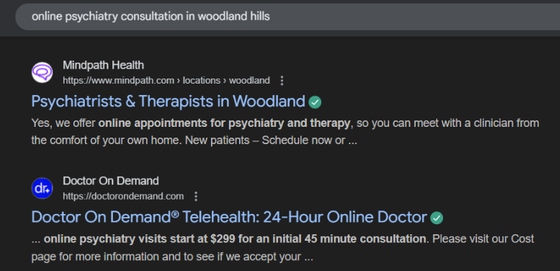
Compassionate, Compliant Ad Copy
Due to the sensitive nature of psychiatry, we apply healthcare content marketing principles to craft ad copy that is trustworthy, sympathetic, and compliant with healthcare advertising regulations. We emphasize special value propositions such as evidence-based treatment approaches, board-certified psychiatrists, telemedicine accessibility, and insurance acceptance, with clear calls to action like Speak with a Psychiatrist Today or Book a Confidential Consultation. All claims are supported by medical evidence and free of stigmatizing language.

Geo-Targeting & Ad Scheduling
Psychiatric clinics usually serve particular regions. We use geo-targeting to limit ad visibility to users in your service areas, while considering broader targeting for telepsychiatry that adheres to relevant licensing regulations. Ad scheduling further optimizes campaigns by displaying ads during peak search times or business hours, increasing the likelihood of patient engagement.
Landing Page Optimization
We route PPC traffic to landing pages that are highly relevant and conversion-optimized. Pages are HIPAA-compliant and centered around a single primary action such as making an appointment. Credibility and conversion rates are enhanced by incorporating trust badges, patient testimonials, physician credentials, and straightforward contact forms. All pages are mobile-responsive and fast-loading, since many people use mobile devices to search for mental health assistance.
Ad Extensions & Enhanced Features
We utilize ad extensions to enhance visibility and provide additional information through call, sitelink, and location extensions. Call extensions facilitate direct communication between your clinic and potential patients, while sitelinks advertise particular services such as Anxiety Treatment and Medication Management to improve ad relevance and click-through rates.

Remarketing Campaigns
We re-engage users who have visited your website but did not convert through remarketing campaigns. Customized remarketing ads gently encourage prospective patients to take action by addressing specific concerns and providing reassurance about scheduling a confidential initial consultation with your practice.
Conversion Tracking & Optimization
We implement comprehensive conversion tracking using Google Ads conversion tags and Google Analytics, monitoring key performance indicators including conversion rate, cost per acquisition, and click-through rate. We regularly evaluate data to determine high-performing keywords and ad creatives, then reallocate funds appropriately to maximize return on investment. All advertising content is verified for compliance with HIPAA and Google's healthcare advertising policies.
Results That Speak for Themselves
SEO Traffic Increase
Paid ROAS
Revenue Growth
Frequently Asked Questions on Psychiatry PPC Marketing
We conduct full-scale keyword research examining search volume, competition, and user intent to ensure your ads target the most valuable mental health search terms for your practice.
Yes, we manage consolidated search campaigns covering all psychiatry-related terms across multiple locations to maximize reach while maintaining location-specific messaging and compliance.
Absolutely. We provide full transparency with real-time dashboards, frequent reports, and regular client engagement to keep you informed on performance and budget allocation.
Ready to Grow Your Psychiatry Practice?
Schedule a free PPC consultation and discover how targeted paid search can help you attract more patients to your mental health practice.