Key Trends Shaping Gastroenterology Marketing
Gastroenterology Marketing Trends And Healthcare Insights For Gastroenterology Practices. The global gastroenterology market size is USD 41.19 billion in 2025 and is expected to reach USD 70 billion b

Table of Contents
Gastroenterology doesn’t usually scream “edge.” But the clinics winning today are the ones turning gut talk into bold, memorable brand moments; no beige waiting rooms, no bland messaging, no squeamish tiptoeing around the topic. This is a space where trust, precision, and real talk collide, and the numbers back the momentum.
Global Gastroenterology Market Size & Market Dynamics
The Global Gastroenterology Market Size clocked in at USD 38.85 billion in 2024, grew to USD 41.19 billion in 2025, and is projected to reach USD 69.68 billion by 2034, growing at a CAGR of 6.04% from 2025 to 2034.
Gastrointestinal Products Market is valued at an estimated 14.7 billion in 2024 and is projected to reach USD 19.7 billion by 2029, at a CAGR of 6.1% during the forecast period.
North America leads the global gastroenterology market with a 40% market share by 2025.
North America 40%
The US Gastroenterology Market was valued at approximately USD 13.8 billion in 2025 and is expected to reach USD 23 billion by 2030.
Asia Pacific is expected to grow at the fastest CAGR during the forecast period of 2024-2034.
Translation: demand is exploding, competition is sharpening, and the clinics that stand out will own their voice, their data, and their patient experience. From TikTok myth-busting to zero-friction scheduling, from physician-as-creator to AI-powered symptom pathways, GI marketing is moving from sterile to standout, fast. This isn’t about being loud for the sake of it; it’s about clarity with punch, empathy with swagger, and education that actually converts. Buckle up because your brand’s gut check starts now.
The 45–75 CRC Screening Window is the Single Biggest Growth Lever For GI
Demand-side tailwinds: USPSTF’s recommendation to start at 45 remains decisive, yet screening rates are still below national targets, leaving major room for patient activation campaigns.
Here is what you can do:
- Target 45–49 with tailored awareness (first-time screeners) across search, social, and employer channels.
- Pair symptom education with screening paths: colonoscopy vs. stool tests, with clear “what to expect” pages.

- Promote open-access colonoscopy where clinically appropriate to cut friction.
ASCs Keep Gaining Share, Shifting Discovery to Local-Intent Search
GI volume in ASCs continues to expand, with active investment and M&A sharpening competition at the ZIP-code level.
What this means for healthcare marketing:
- Double down on local SEO for each ASC and clinic location: unique pages, NAP accuracy, service-area pages, and schema.
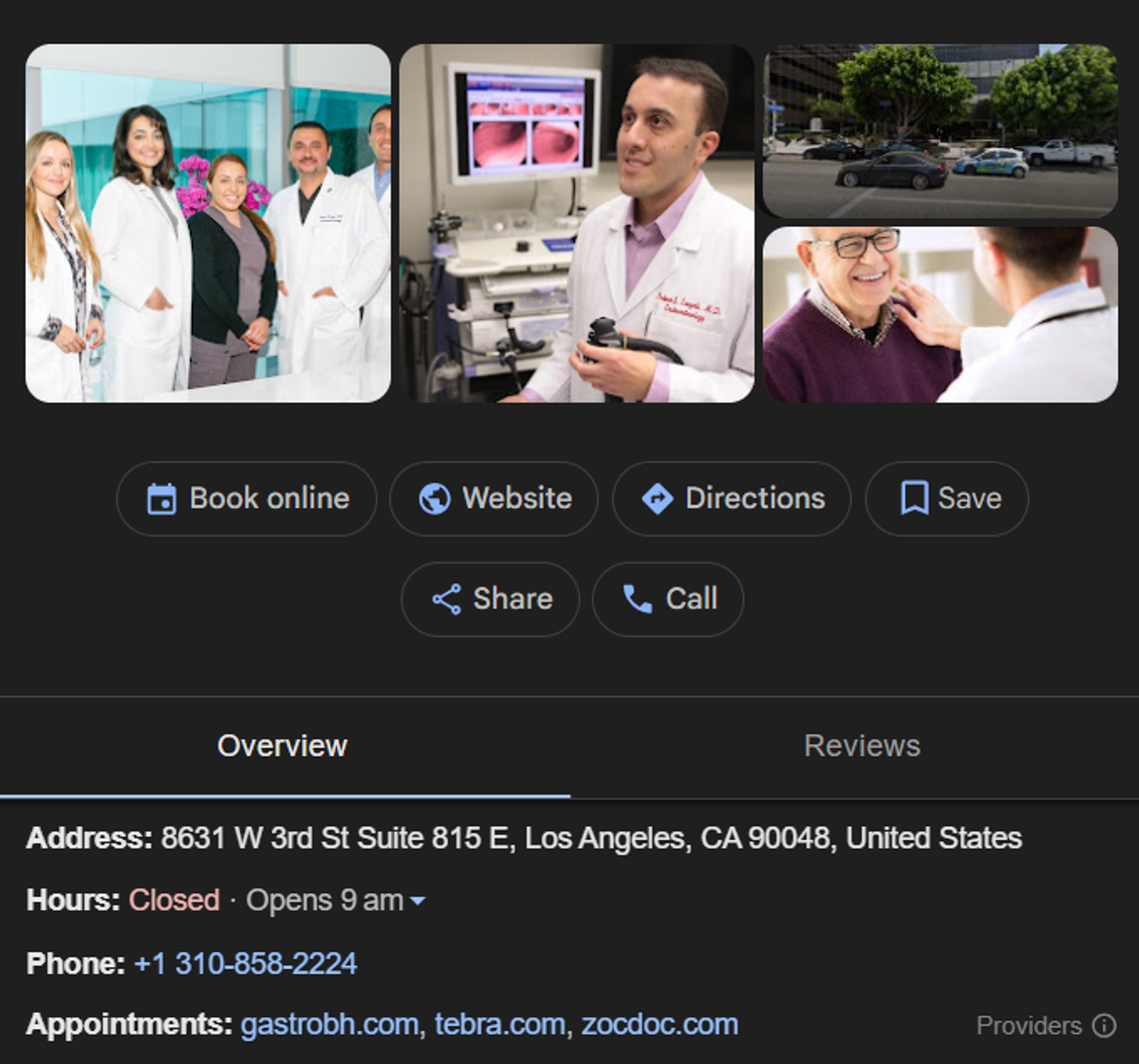
- Showcase ASC benefits (cost, convenience, outcomes) with data and patient proof.
- Use geofenced ads (privacy-compliant) around employer hubs and primary care clusters to capture referrals and self-directed patients.
Google’s AI Overviews are Rewriting Healthcare SEO
AI Overviews can compress answers above traditional organic results, especially for FAQs, symptoms, and “prep” questions.
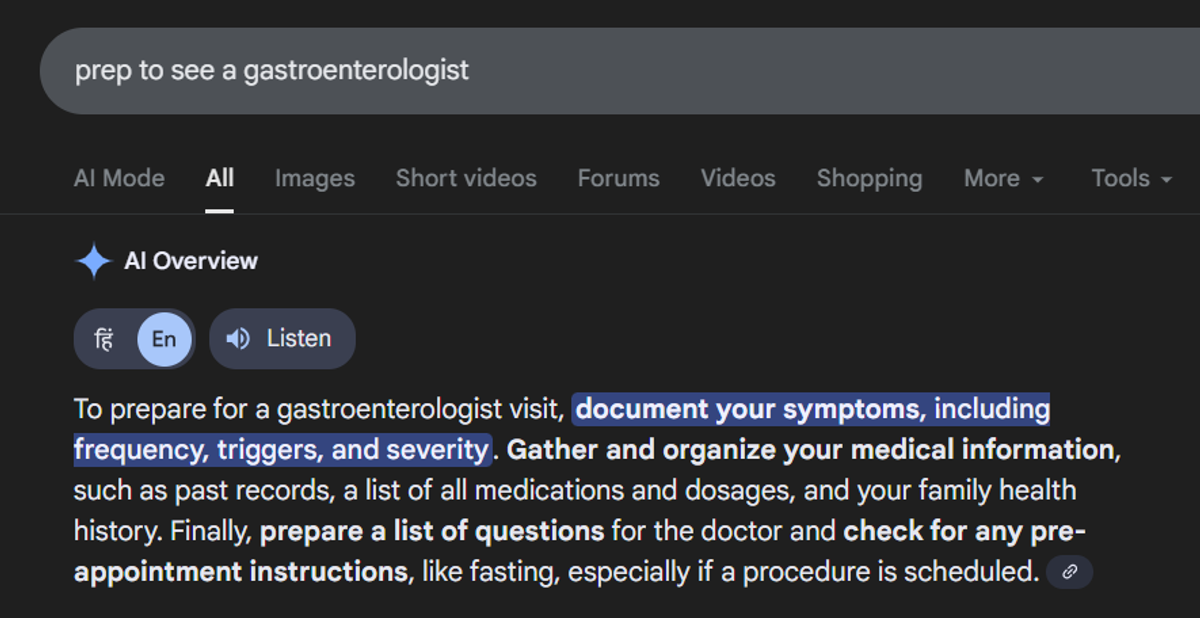
Your YMYL content must demonstrate real expertise (E-E-A-T), with clear authorship, citations, and plain-language explanations that patients can act on.
- Build topic authority hubs: CRC screening, colonoscopy prep, IBS vs. IBD, reflux diagnostics, ulcerative colitis, colorectal cancer, fatty liver disease.
- Publish structured FAQs optimized for AI Overviews and featured snippets; use medical schema and cite trusted sources.
- Strengthen entity SEO: consistent physician bios, credentials, research, and affiliations across the web.
Reviews and Reputation Management are Make-or-Break
Patients increasingly choose based on online ratings and how practices respond to feedback.
- Systematize post-visit review requests via SMS/email with compliant vendors.
- Respond to reviews with empathy and specificity; feature testimonials (with consent) on service pages.
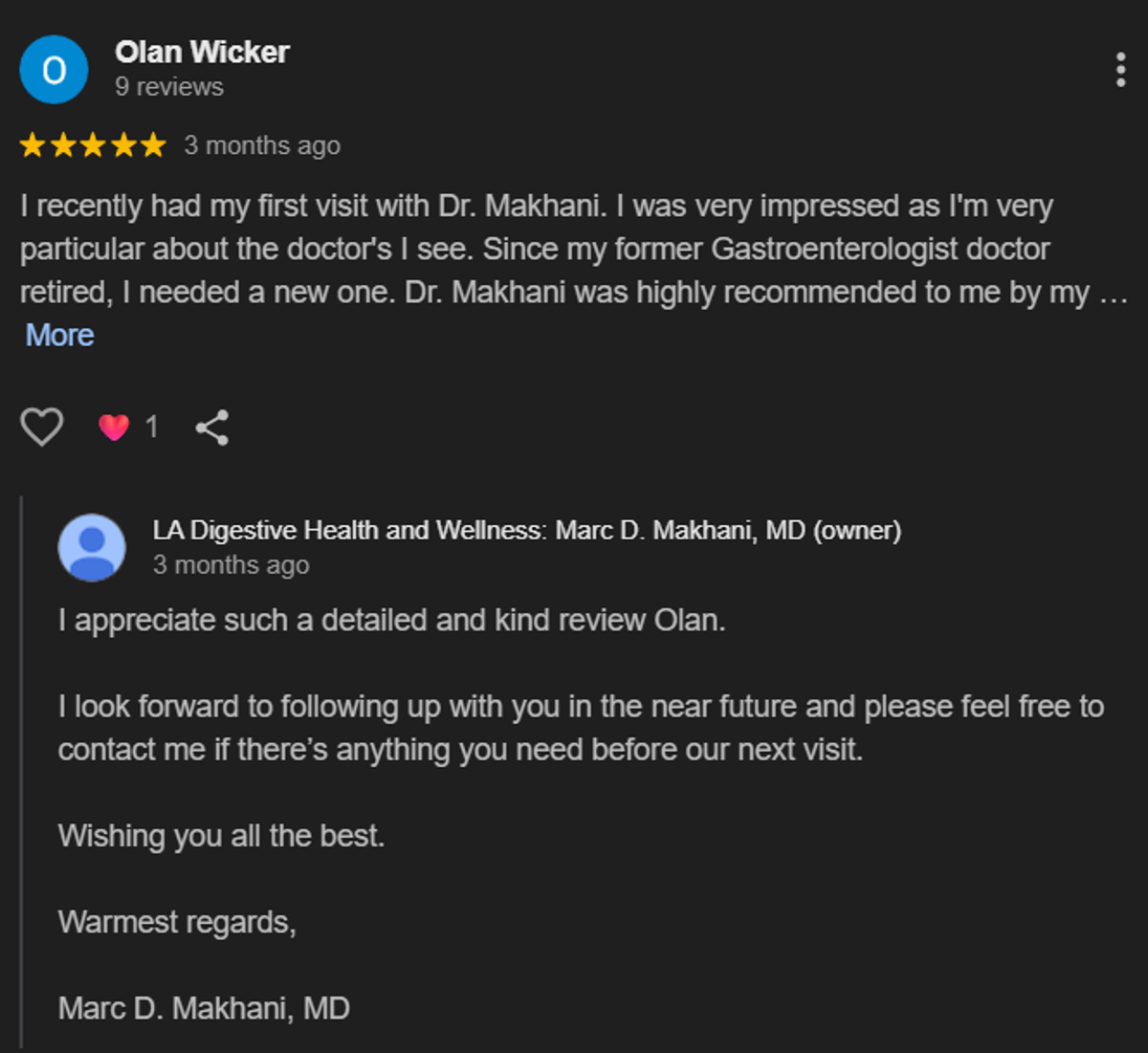
- Monitor provider-level profiles (Google, Healthgrades, Vitals) and ensure data parity.
HIPAA-Compliant Analytics and Advertising
HHS/OCR clarified rules on tracking technologies. Many common ad pixels and cross-site trackers can be noncompliant on pages where PHI can be inferred.
- Use HIPAA-ready analytics (server-side, IP masking, no cross-site identifiers) and Business Associate Agreements.
- Avoid retargeting tied to PHI; use privacy-safe, context-based audience strategies.
- Maintain consent logs and a data inventory of trackers.
Omnichannel Growth: Connect PCP Referrals, Employer Outreach, and Direct-To-Patient
High-growth GI brands blend provider marketing, employer education, and consumer activation.
- Build PCP referral pipelines with rapid access clinics, next-available slots, co-branded materials, and a concierge line.
- Offer employer screening programs for 45–49 and 50–64 populations; promote on LinkedIn and local biz associations.
- Use email/SMS to reduce no-shows (prep steps, checklists, ride reminders), increasing margin and reviews.
Gastroenterology Content That Wins: Practical, Authored, Safety-First
The best-performing GI content marketing is precise, empathetic, and action-oriented:
- Colonoscopy prep checklists (PDF + video) tailored to your protocols.
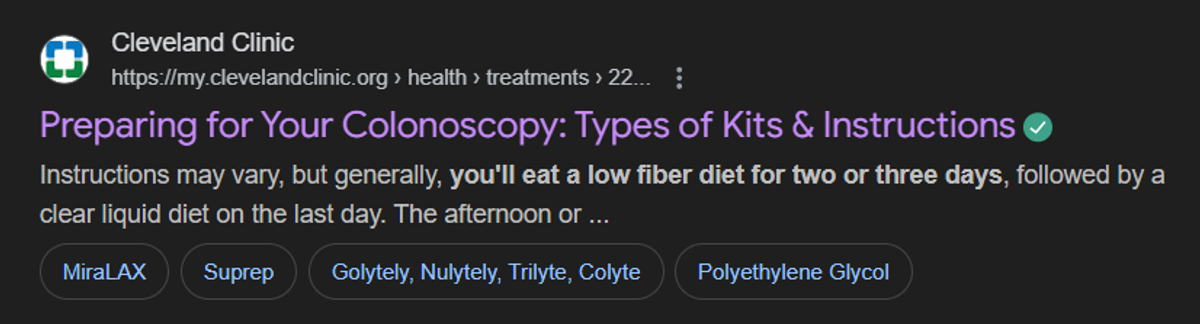
- “What to expect” pages with visuals for sedation, recovery, and ride policies.
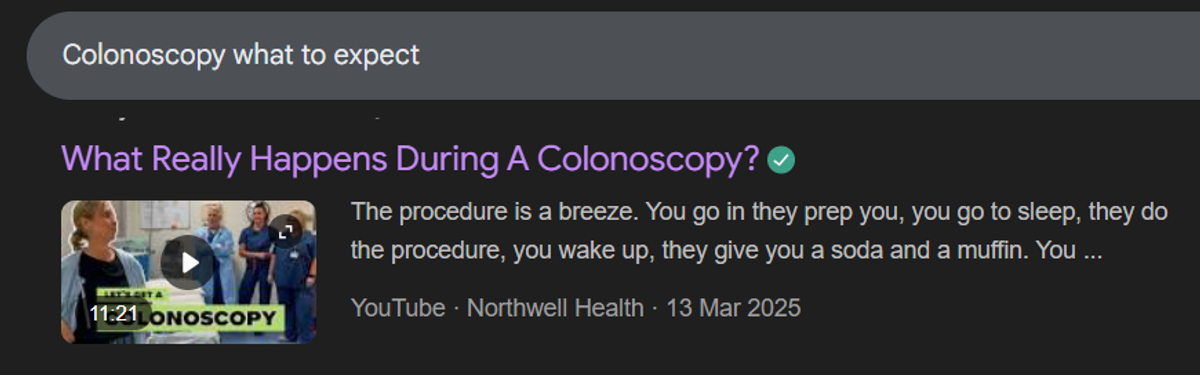
- Symptom navigators with triage guidance and clear next steps.
- Nutrition guidance for GERD, IBS, and NAFLD written/reviewed by your RDs and physicians.
Pair every content asset with medically reviewed bylines, citations, last-updated dates, and structured data.
Conversion Experience Matters As Much As Awareness
Patients want 3-click scheduling and clear insurance info. Every extra step lowers completion.
Quick wins:
- Prominent “Book now,” “Next available,” and “Open-access colonoscopy” CTAs.
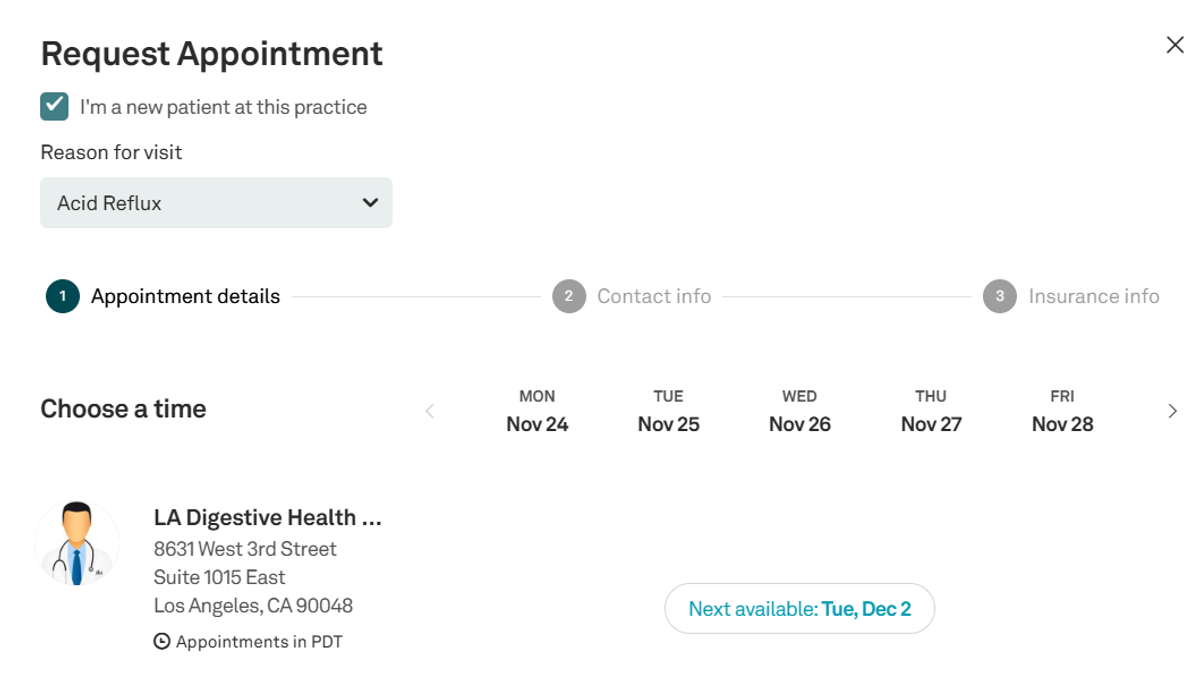
- Eligibility screener for direct access, with routing to appropriate visit types.
- Prep instructions delivered via SMS with language options; automate reminders and two-way confirmations.
- Instant insurance estimator by procedure + plan.
Channel-By-Channel Playbook For Gastroenterology Practices
Gastroenterology SEO
- Build authority hubs around CRC screening, prep for endoscopic gastrointestinal disorders, IBS/IBD, GERD, inflammatory bowel disease, hemorrhoids, gallbladder, fatty liver, and celiac.
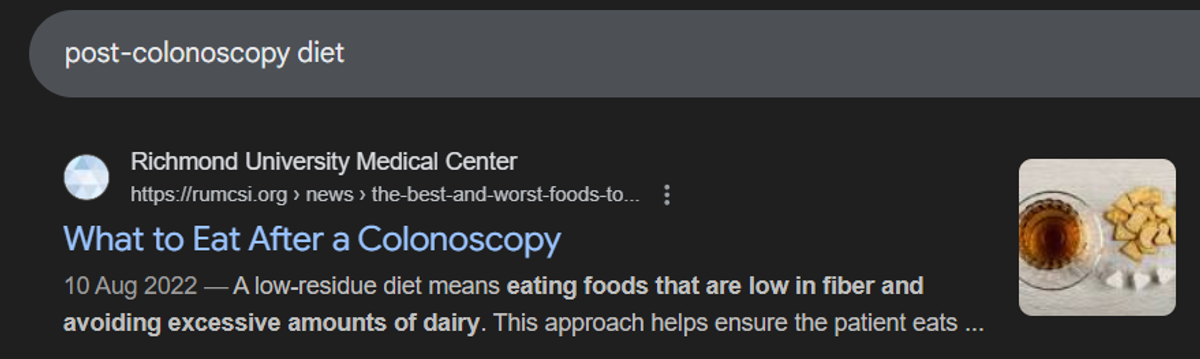
- Target long-tail, practical queries: “colonoscopy prep for morning procedure,” “45 years old colonoscopy or FIT,” “post-colonoscopy diet.”
- Use FAQPage, MedicalWebPage, and Physician schema; maintain physician entity pages with publications and hospital affiliations.
Gastroenterology Paid Search (PPC)
- Segment branded, competitor, and service-line campaigns with separate QS strategies.
- Use call extensions, location assets, and “book online” to capture high-intent queries.
- Measure qualified leads, not just calls, with HIPAA-safe form events.
Local SEO
- Individual Google Business Profiles per location and per provider where allowed.
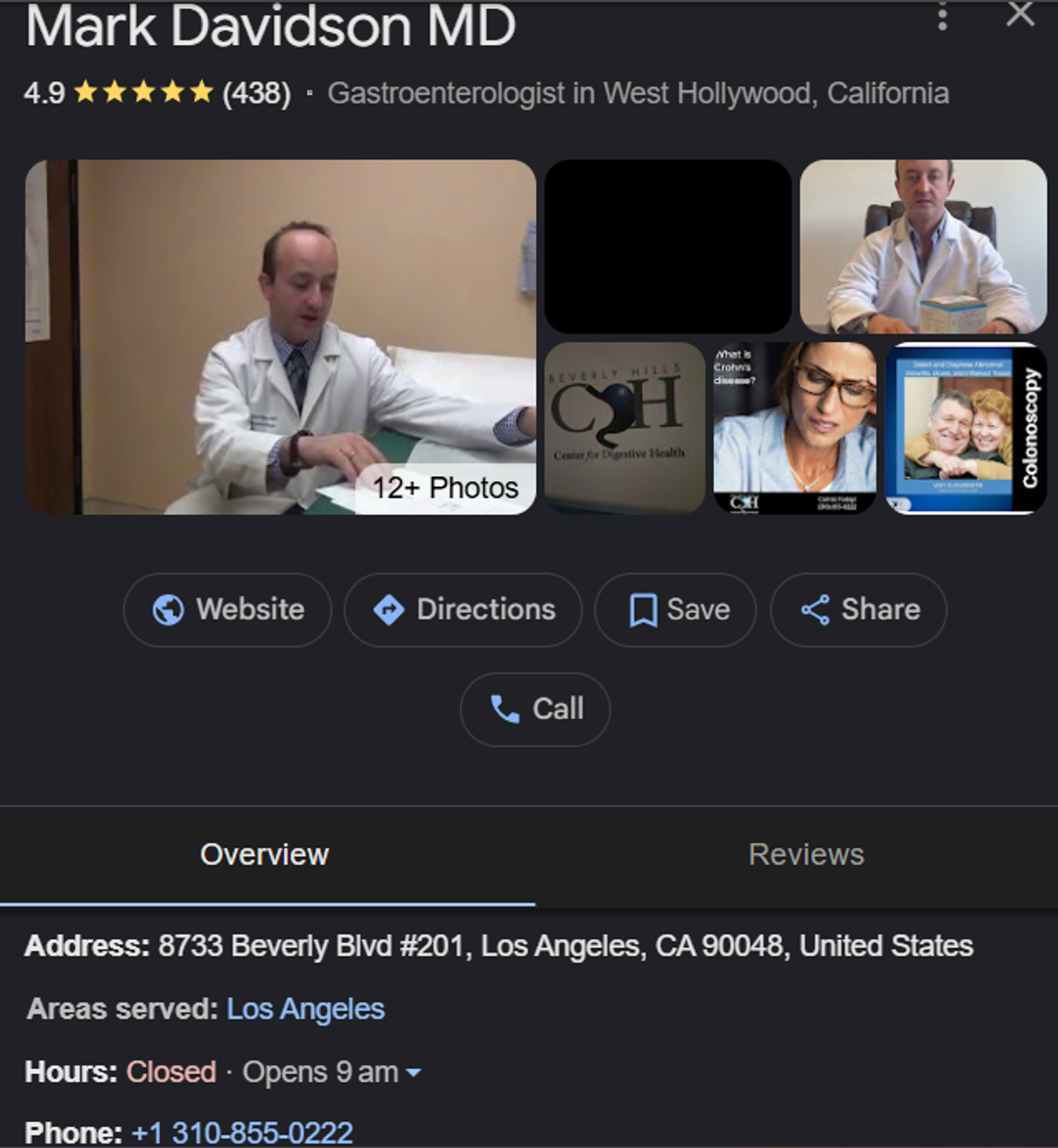
- Post weekly updates (screening reminders, prep tips). Add UTM tags to track profile traffic.
Healthcare Social Media Marketing
- Short-form video: “endoscopy prep tips from our nurses,” “demystifying anesthesia,” “what a FIT test looks like.”
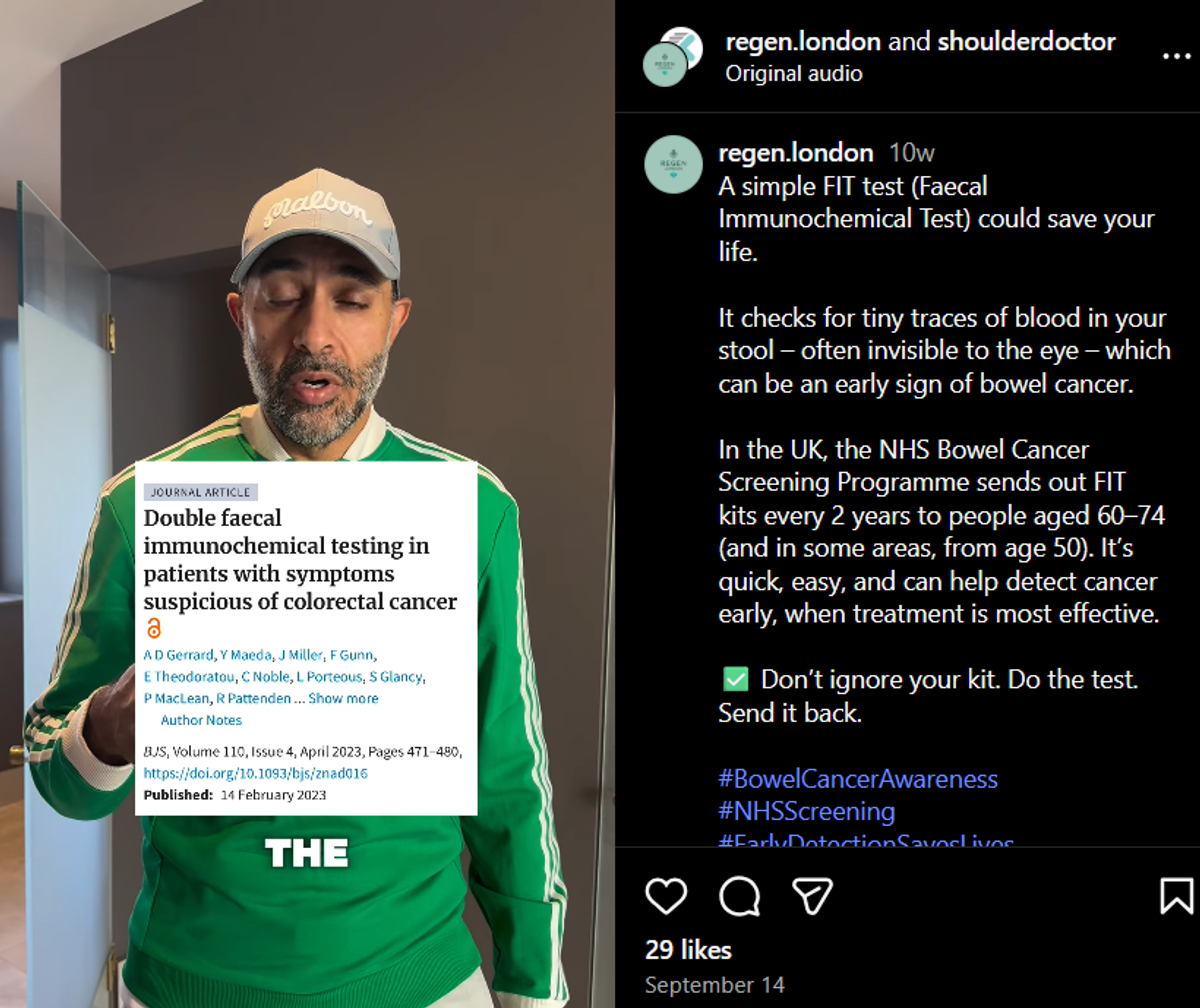
- LinkedIn for employer and PCP outreach (screening programs, new access lines).
Email/SMS
- CRC screening lifecycle campaigns: age 45 welcome, 50 milestone, overdue nudges, post-negative follow-up cadence.
- Procedure-prep journeys reduce cancellations and improve reviews.
Referral Marketing
- Quarterly PCP education kits (algorithm cards for reflux, anemia, and positive FIT routing).
- 24–48 hour feedback loop to referring offices; portal access and direct lines.
Community and PR
- March CRC Awareness Month: local screenings, employer lunch-and-learns, TV/radio segments on age-45 screening.
Measurement and Analytics (Privacy-Safe)
Core KPIs
- New patient appointments by service line and source
- CRC screening completions by age band (45–49, 50–64, 65–75)
- Referral leakage rate and time-to-appointment
- No-show and cancellation rates by prep protocol
- Review volume, average rating, response time, and physician-level distribution
- Cost per qualified appointment and per completed procedure
Analytics Notes
- Implement server-side tagging with IP truncation and no cross-site IDs.
- Contract only with vendors offering BAAs.
- Maintain consent logs for any marketing cookies; avoid retargeting tied to PHI.
7 High-ROI Campaign Ideas You Can Launch This Quarter
“I’m 45, what now?” starter kit
Landing page + video + downloadable checklist; simple screener to route to colonoscopy or stool test, then booking.
Open-access colonoscopy fast lane
Self-assessment form, nurse review, next available slot by location, with ride-reminder automation.
Prep success program
Multi-channel prep reminders (SMS, email, video) with language options; measure cancellation reductions.
Employer CRC bundle
On-site or virtual sessions for employees 45–65; priority scheduling blocks and on-the-spot eligibility checks.
IBS/IBD relief navigator
Symptom-to-care path, nutrition micro-hub, and rapid access to GI consults.
PCP super-referrer kit
Simple order sets, “who to refer when” cards, co-branded patient handouts, and a referral concierge hotline.
Reputation flywheel
Automated post-visit review asks, service-recovery routing, public responses, and testimonial curation (with consent).
On-Page Template That Ranks
- H1: Clear intent (“Colonoscopy Prep: Step-by-Step Guide from Board-Certified Gastroenterologists”)
- Intro: 2–3 sentences addressing fear, clarity, and outcome
- Jump links: Prep timeline, what to expect, diet, medications, day-of, recovery
- Expert box: Physician author, credentials, last reviewed date
- Visuals: Simple diagrams/photos of prep materials, day-of steps
- Key FAQs: Direct, concise, medically reviewed answers
- CTA: “See next-available appointments” + insurance info
- Structured data: MedicalWebPage + FAQPage
- Internal links: CRC screening hub, sedation safety page, recovery diet
Team and Process Foundations
- Governance: Medical review board for content; SLA for updates when guidelines change.
- Operations: Weekly stand-ups across marketing, clinical, and front-desk to remove friction from scheduling and prep.
- Tech stack: HIPAA-compliant analytics, reputation platform with BAA, scheduling with API, server-side tagging.
- Training: Front-desk scripting for age-45 callers; consistent insurance explanations reduce abandonment.
Get marketing insights in your inbox
Join our newsletter for the latest digital marketing tips and strategies.
By subscribing, you agree to our Privacy Policy.
Content Strategist


