The Opthalmology Marketing Playbook: Ideas & Trends To Grow Your Practice

TL;DR
Discover ophthalmology marketing strategies for your ophthalmology practice. Explore digital marketing trends and ideas to attract new patients.

Ask AI about this
Get an AI-powered summary of this article
Table of Contents
Running a successful ophthalmology practice takes more than clinical expertise. You can be the best ophthalmologist in your city, but if potential patients cannot find you online, your schedule stays empty. The reality is that the way people choose an eye doctor has fundamentally changed, and your marketing plan needs to reflect that.
This article covers the most practical and effective ophthalmology marketing strategies working right now, broken down in a way that actually makes sense for busy practice owners and administrators.
Why Ophthalmology Marketing Deserves Its Own Strategy?
Not all medical practices face the same online marketing challenges, and ophthalmology is completely different than the rest of the medical fields. You are marketing everything from routine annual exams to high-stakes procedures like cataract surgery, LASIK, and glaucoma management. Each of those requires a different patient conversation and a different approach to digital marketing.
Someone researching cataract surgery is going to spend weeks reading, comparing, and looking at reviews before they ever call your office. Someone with sudden vision changes needs to find you immediately. A patient curious about refractive surgery options is looking for information and reassurance before they commit. Your marketing strategy has to speak to all of these people without sounding like it was written by a committee.
The practices that grow consistently are the ones that treat ophthalmology marketing as a long-term investment rather than something they think about when the schedule slows down.
Here are the top healthcare marketing trends for ophthalmology you can act on now:
The Foundation: Your Online Reputation
Before anything else, your online reputation is the thing that either opens or closes the door for new patients. When someone is referred to you by their primary care physician, the first thing they do is Google your name. When a patient searches for "cataract surgeon near me," they are looking at your star rating before they even read your website.
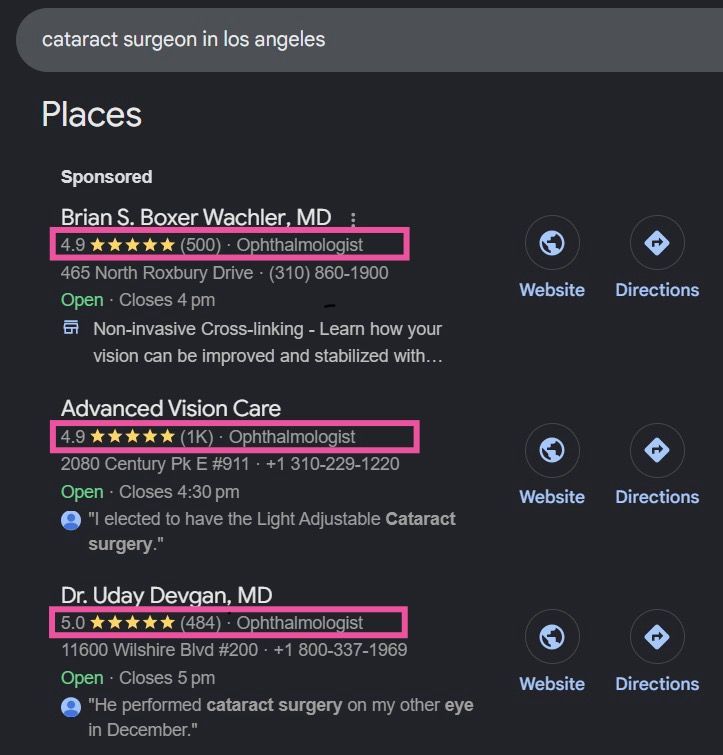
Building a strong online reputation starts with making it easy for satisfied patients to leave reviews. Most happy patients simply do not think to leave a review unless you ask. A brief, genuine follow-up after their appointment, whether through a text or email, asking them to share their experience on Google can make a significant difference over time.
The other side of reputation management is how you respond to negative reviews. Responding professionally, without being defensive, actually builds trust with potential patients reading those reviews.
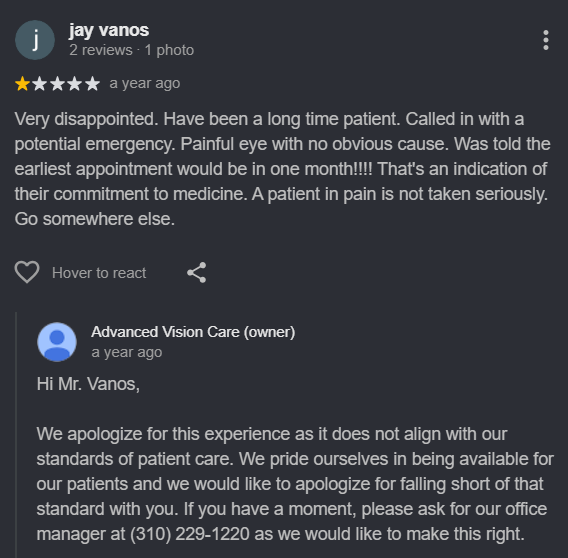
People are not expecting perfection. They are looking for a practice that takes patient experience seriously.
Your online reputation feeds directly into your local search rankings. Google pays attention to review volume and recency when deciding which ophthalmology clinics show up in local results.
Local SEO for Ophthalmology Practices
Local search optimization is one of the highest-return investments an eye care practice can make. When potential patients search for an ophthalmologist in your area, appearing in the top local results can be the difference between a full schedule and a slow month.
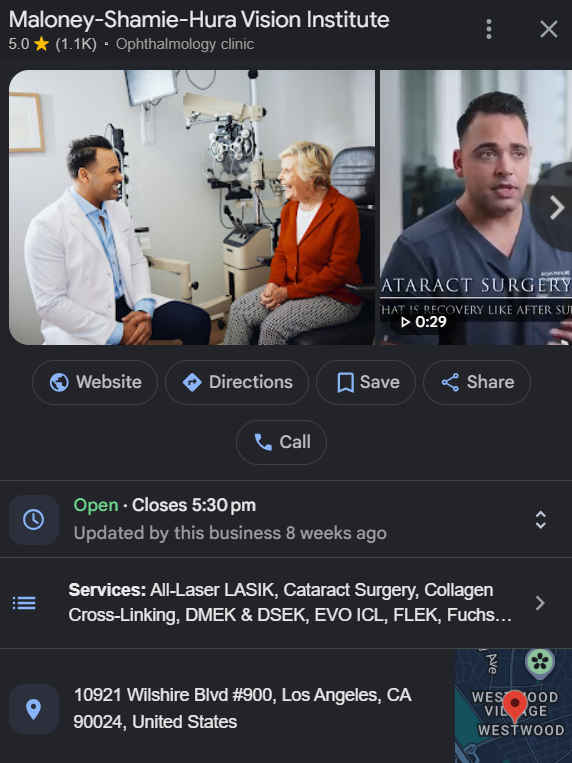
SEO for ophthalmology practices is not just about stuffing keywords onto your website. It is about building relevance and trust with search engines over time. This starts with your Google Business Profile. Keeping it accurate, complete, and regularly updated with photos, posts, and current hours tells Google that your practice is active and engaged.
Your website also plays a major role. Pages built around specific services, like cataract surgery, glaucoma treatment, LASIK consultations, and refractive procedures, help search engines understand exactly what you offer and who you serve.
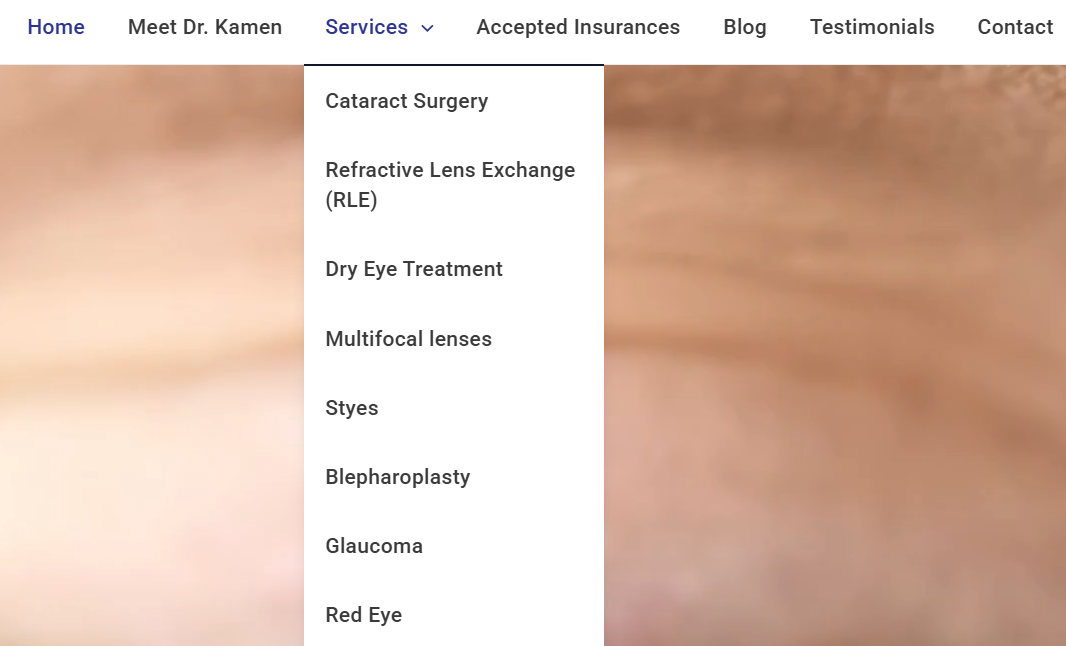
Each of these pages should speak naturally to the patient's concerns, not just list features of the procedure.
Local SEO also involves consistency. Your practice name, address, and phone number should be identical across every directory, listing, and platform where your practice appears. Inconsistencies confuse search engines and can quietly hurt your local search rankings.
Healthcare Content Marketing That Attracts New Patients
One of the most underused tools in ophthalmology marketing is simply publishing useful, honest content. When a patient starts researching whether they are a good candidate for LASIK, or what to expect from cataract surgery recovery, they go to Google first. If your practice's website answers those questions well, you build credibility before the patient even calls.
Blog posts, FAQs, and educational pages that address real patient questions serve two purposes. They help with search engine optimization because they align with what people are actually searching for, and they position your practice as the kind of place that takes the time to educate patients. That matters to people making decisions about their vision.
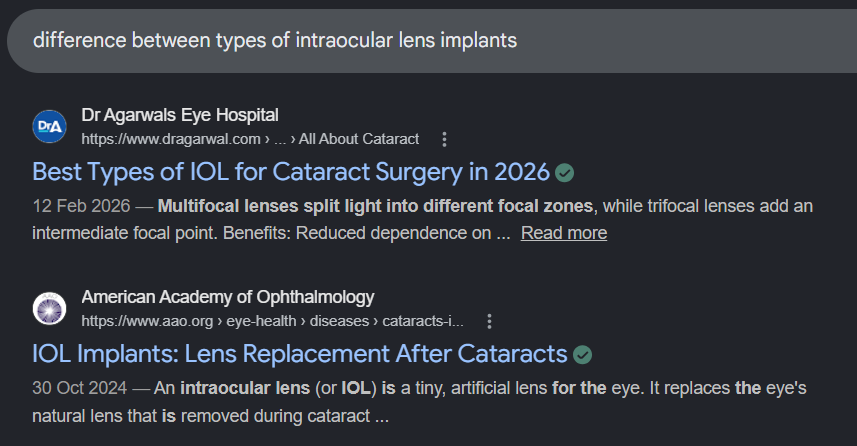
Content about refractive surgery options, the difference between types of intraocular lens implants, or what early glaucoma symptoms look like can attract patients who are in the early stages of research and convert them into booked appointments over time.
The key is writing like a human, not a medical textbook. Patients are not clinicians. They want clear explanations, realistic expectations, and a sense that the practice understands their concerns.
Digital Marketing Channels Worth Your Attention
Beyond your website and Google, there are several digital marketing channels that help ophthalmology clinics in their marketing efforts depending on your patient population and service focus.
Email marketing is one of the most cost-effective ways to stay in touch with existing patients and encourage them to return for annual exams, refer friends and family, or consider a procedure they have been thinking about. A consistent, informative email to your patient list costs very little and keeps your practice top of mind.
Healthcare social media marketing, particularly with Facebook and Instagram, can work well for your eye care clinic if the content is genuinely useful or engaging. Patient success stories with permission, educational videos about common conditions, and behind-the-scenes content about your practice can build connection with your community.
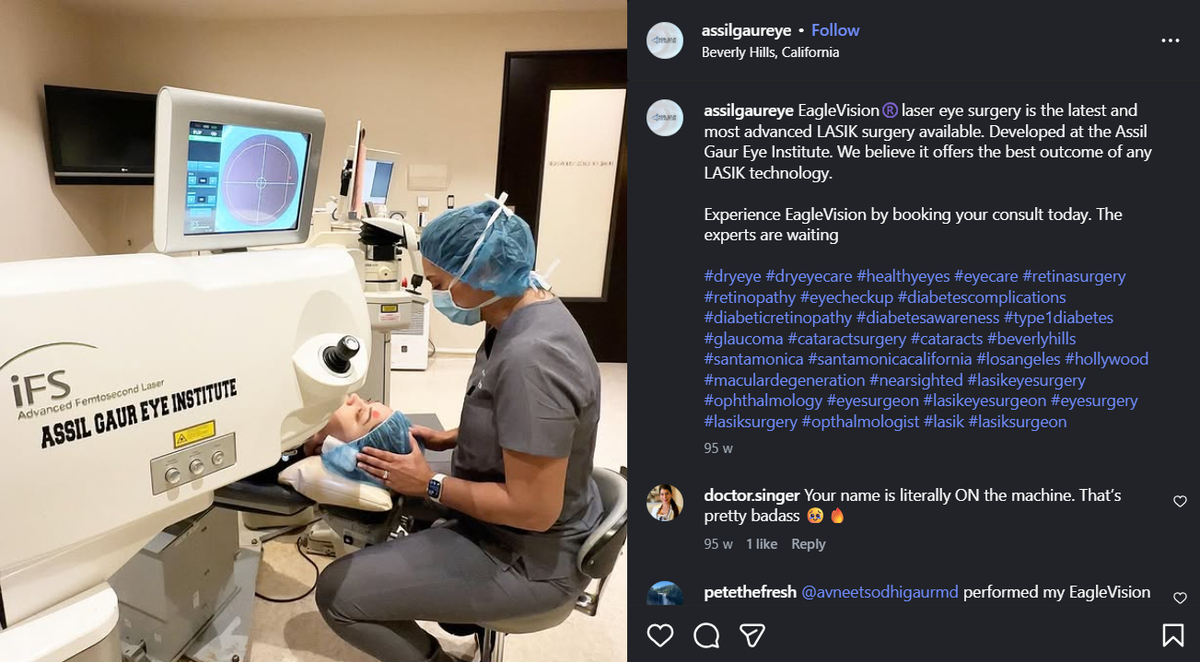
It is not the right channel for every practice, but for those that use it consistently, it can support both new patient acquisition and retention.
Video content is increasingly relevant as well. Short videos explaining what a cataract surgery consultation looks like, or a quick explainer on what glaucoma means for a patient's long-term vision health, can perform well on social media and on your website.
Google Ads: Paid Search for Ophthalmology Advertising
Organic SEO builds long-term visibility, but it takes time. Google Ads can put your ophthalmology practice in front of potential patients immediately, particularly for high-intent searches like "LASIK consultation," "best cataract surgeon," or "ophthalmologist accepting new patients."
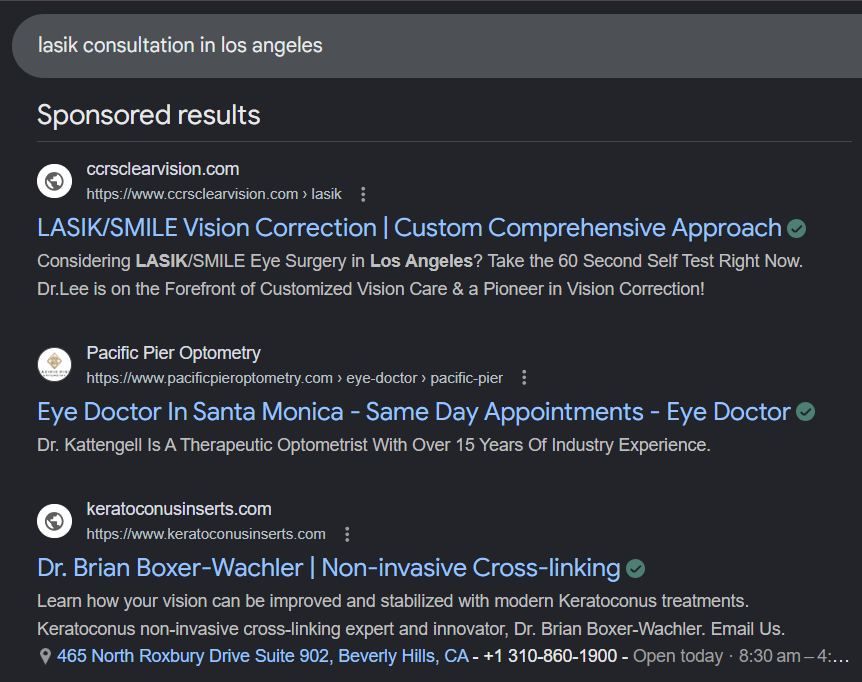
The reason paid ads works well for ophthalmology is that the people clicking on those ads are often ready to take action. They are not casually browsing. They are looking for a specific service and are comparing their options.
That said, Google Ads for medical practices requires a thoughtful approach. Bidding on overly broad terms wastes budget. Targeting the right geographic area matters enormously for a local practice. And your landing page, the page a patient lands on after clicking the ad, needs to do the work of converting that click into a call or a booking.
By investing in both Google Ads and organic SEO you can see the strongest results because they are visible at every stage of the patient's search journey.
The Rise Of AI Overviews And Zero‑Click Search
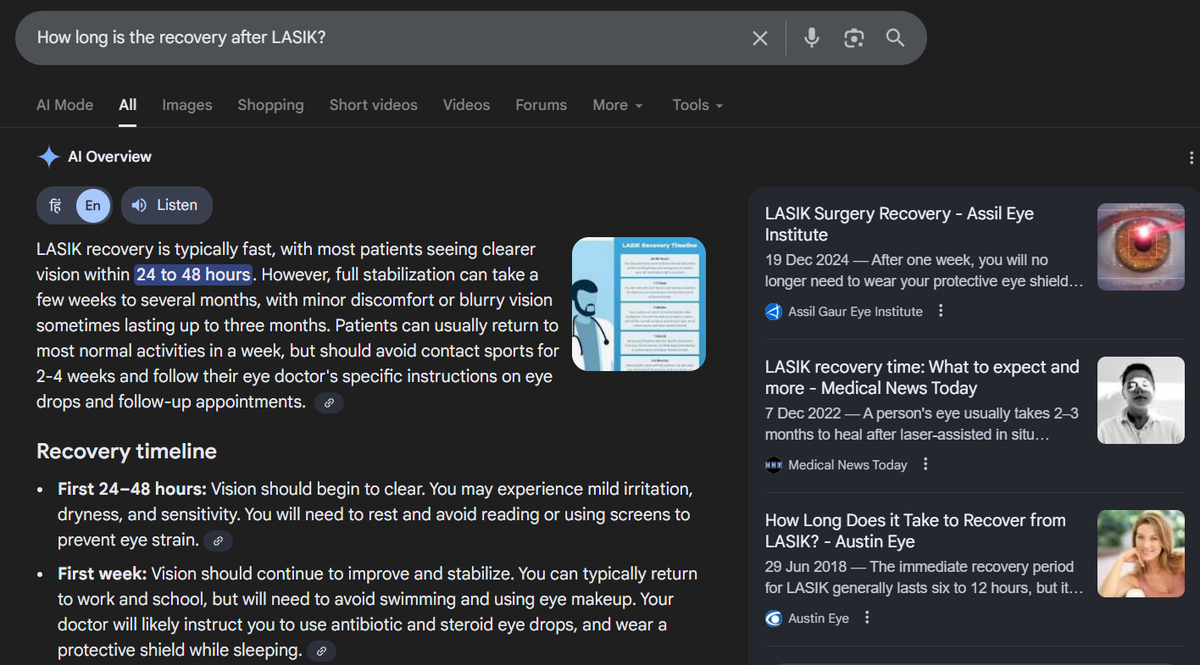
AI Overviews and featured answers mean fewer clicks and more "answers on Google." Multiple studies show a significant rise in zero-click searches, while organic clicks have dipped year over year.
There is a serious shift from classic SEO to GEO. Structure your pages and content to feed AI answers like FAQ blocks, concise definitions, schema, and authoritative internal linking.
Search engines and AI-powered platforms increasingly prioritize content that delivers direct, concise answers to user queries. Structuring your blog around real search questions, such as “Is cataract surgery covered by insurance?” or “How long is the recovery after LASIK?” can significantly improve your chances of appearing in featured snippets and generative AI responses.
Start each section with a clear 2–3 sentence answer that immediately addresses the query, then follow with more detailed insights, examples, and supporting information. This format not only improves readability for users but also helps search engines better understand and surface your content for high-intent searches.
Tracking What Is Actually Working
One of the most common mistakes in ophthalmology marketing is spending money without knowing what is driving results. Every practice should have a basic system for tracking where new patients are coming from.
Ask patients how they heard about you, and actually record the answers. Connect your Google Ads account to call tracking. Look at your Google Business Profile insights to see how many people are calling or requesting directions. Monitor your website traffic over time.
None of this requires a large marketing team or expensive software. But without it, you are making decisions in the dark, and it is hard to grow something you cannot measure.
Privacy-First Analytics Replaces Risky Tracking Pixels
HIPAA web tracking guidance has been in legal flux, but the safest path for clinics is clear: stop sending PHI to ad/analytics platforms and move to consent-forward, BAA-backed analytics.
- Avoid placing pixels on authenticated portals or pages that infer PHI. Do not pass names, emails, or conditions in URLs or events.
- If operating in the EU/UK, implement Consent Mode v2; in the US, prefer HIPAA-aligned analytics (BAA, data residency, no ad-matching).
- Maintain a data map and a vendor risk register. When in doubt, de-identify.
90-day Healthcare Marketing Plan For Ophthalmology Practices
For a broader planning sequence, see our healthcare marketing plan.
Here are the healthcare marketing strategies to attract new patients:
Weeks 1–2: Foundation and Compliance
- Audit privacy and pixels. Remove risky tags; adopt BAA-backed analytics.
- Implement Consent Mode v2 where required; configure first-party conversion tracking.
- Identify the top three service lines to scale (e.g., cataract with premium IOLs, refractive, dry eye).
Weeks 3–6: Local Authority and Content Sprints
- Launch or revamp 5 core service pages using the blueprint above, each with an embedded 45–60s MD video.
- Overhaul Google Business Profiles; roll out SMS review requests; commit to 2x weekly Q&A posts.
- Publish 10 FAQ posts aligned to AI Overview questions; add FAQ schema.
Weeks 7–10: Demand Capture and Measurement
- Build branded and non-brand search campaigns; add call tracking with a BAA-backed vendor.
- Spin up YouTube Shorts/Reels series answering patient questions; embed on pages.
- Create a physician and location schema; interlink symptoms → service → surgeon → location.
Weeks 11–13: Scale what Works
- Analyze calls and bookings by channel and service line; shift budget to high-LTV terms.
- Expand referral marketing with OD/PCP partners; add co-branded referral kits and landing pages.
- Add calculators (IOL options, LASIK candidacy) and recovery timelines to reduce no-shows.
FAQ (Quick Answers you can Reuse On-Page)
- Does insurance cover cataract surgery? Medically necessary cataract surgery is typically covered; premium IOLs and femto laser upgrades are often not and may be out-of-pocket.
- How long is LASIK recovery? Many patients see functional vision within 24 hours; stabilization can take several weeks.
- Can I drive after dilation? Usually not for several hours; arrange transportation.
- Do I need a referral to see an ophthalmologist? Many plans allow direct booking for medical eye issues; check your insurer.
On-Page SEO Checklist for Each Service Page
- One intent per page with a clear H1 and matching title tag.
- Answer-first intro, then detailed sections with jump links.
- Embedded short video, unique local testimonials, and surgeon credentials.
- FAQ with schema; internal links to surgeon and location pages.
- Prominent CTAs and phone number; fast, accessible mobile layout.
Optional Schema Starter (JSON-LD)
- Add to service pages and location pages; tailor to your clinic. Example: LocalBusiness + MedicalSpecialty + Physician snippets omitted here for brevity; implement with your developer to avoid conflicts and ensure accuracy across locations and providers.
Also See: Top 20 Healthcare Marketing Agencies to Boost Your Brand in 2026
Key Takeaways
- Compete where patients decide: Map Pack, AI answers, and short-form video.
- Build trust signals relentlessly: reviews, responses, physician credentials, and current citations.
- Measure ethically: consent-forward, HIPAA-safe analytics, and clear conversion definitions.
- Specialize to grow: double down on high-LTV service lines with focused content and frictionless booking.
Let's Grow Your Brand With Us
Book a free consultation and get a custom growth strategy tailored to your business.
Book Free ConsultationGet marketing insights in your inbox
Join our newsletter for the latest digital marketing tips and strategies.
By subscribing, you agree to our Privacy policy .

About the author
Joydeep BhattacharyaContent Writer at Brenton Way
Joydeep Bhattacharya is an SEO strategist, SEOsandwitch founder, and Semrush contributing author with more than a decade of experience in search and content marketing.


